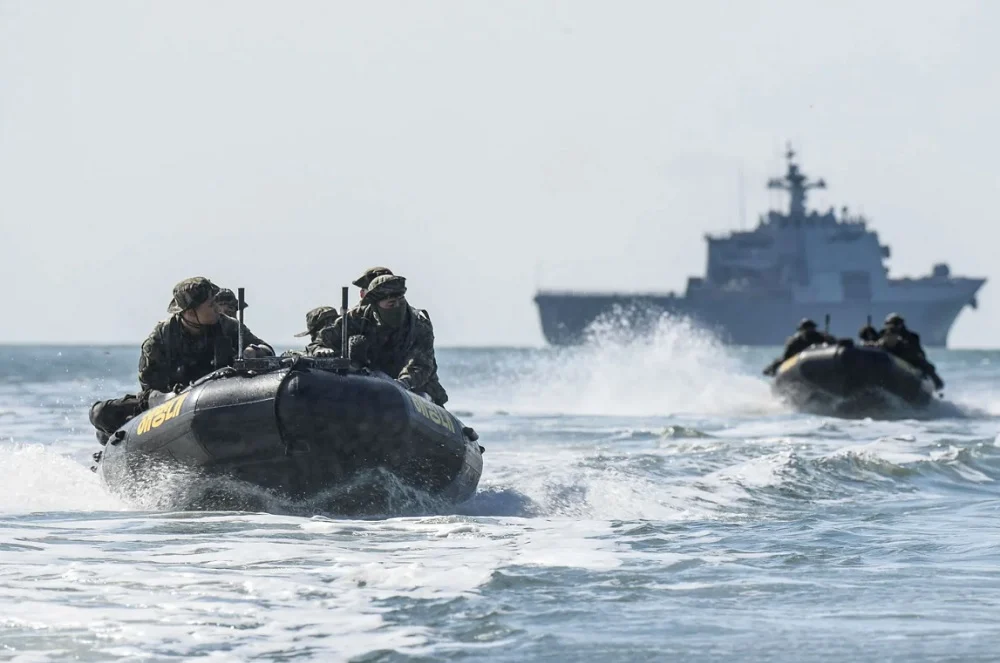
The Ministry of National Defense of the Republic of Korea announced on Thursday, November 5, 2026, a strategic shift in its maritime security posture, confirming the expansion of the operational mandate for the Cheonghae Anti-Piracy Unit. This decision, reported by the national broadcaster KBS, marks a significant adjustment in Seoul’s military presence in the Middle East, specifically extending the unit’s operational reach to the waters near the Strait of Hormuz. The move is designed to enhance the protection of South Korean merchant vessels transiting through one of the world’s most critical maritime chokepoints, a region that has become increasingly volatile since the escalation of hostilities between the United States and Iran in early 2026.
Strategic Realignment and Force Structure
The expansion involves more than just a change in geographical scope; it includes a tangible increase in military resources. According to reports from the Yonhap news agency, the South Korean government plans to deploy 75 additional personnel to the Cheonghae Unit. This infusion of manpower will bring the total strength of the unit to approximately 395 soldiers, including specialized maritime interdiction teams and support staff.
The Cheonghae Unit, which has historically been tasked with counter-piracy operations off the coast of Somalia, represents a critical element of South Korea’s power projection capabilities in the Indian Ocean. By shifting these assets toward the Strait of Hormuz, Seoul is signaling a heightened sensitivity to the security of its energy supply chain. South Korea is heavily dependent on imported petroleum, with a significant percentage of its crude oil imports passing directly through the Strait of Hormuz. Any disruption in this corridor poses an existential risk to the South Korean economy, which relies on consistent energy flows to sustain its massive manufacturing and industrial sectors.
Chronology of the 2026 Middle East Crisis
The decision to expand the operational theater of the Cheonghae Unit follows months of intense internal deliberation within the administration of President Lee Jae-myung. The regional instability in the Middle East reached a breaking point in February 2026, when a coordinated military operation involving the United States and Israel was launched against Iranian targets.
- February 2026: A series of precision strikes conducted by U.S. and Israeli forces against Iranian military installations triggers widespread regional alarm and retaliatory threats from Tehran.
- March–May 2026: Global energy markets experience extreme volatility. South Korea begins formal reviews regarding the safety of its merchant fleet in the Persian Gulf and the Gulf of Oman.
- June 2026: The South Korean Ministry of Foreign Affairs initiates diplomatic outreach with regional partners to discuss the safety of commercial shipping lanes.
- August 2026: Preliminary discussions within the Ministry of National Defense focus on whether the existing anti-piracy mission can be legally and operationally repurposed for regional security monitoring.
- November 5, 2026: The official announcement confirms the deployment of additional personnel and the extension of the operational zone toward the Strait of Hormuz.
The Diplomatic Tightrope: Avoiding Combat Involvement
Despite the necessity of protecting its economic interests, the South Korean government remains acutely aware of the risks associated with being drawn into a broader conflict. President Lee Jae-myung has been firm in his public stance, explicitly closing the door on the deployment of combat troops. His administration has repeatedly emphasized that the expansion of the Cheonghae Unit is strictly limited to the protection of South Korean citizens and commercial interests, such as oil tankers and cargo ships.
In a recent press briefing, a spokesperson for the Ministry of National Defense clarified that the unit would operate under a strictly defensive mandate. The government is currently preparing the necessary documentation to seek approval from the Cabinet and the President, followed by a formal motion to the National Assembly. This procedural step is essential to ensure that the mission maintains public and legislative legitimacy, particularly given the historical sensitivity of deploying troops to regions of active international conflict.
Economic Implications and Energy Security
The Strait of Hormuz is widely regarded as the world’s most important "oil chokepoint." Approximately 20 to 30 percent of the world’s total global petroleum consumption passes through this narrow waterway. For South Korea, a country with limited domestic natural resources, the stability of this region is a matter of national security.
Economic analysts point out that the cost of shipping insurance for vessels passing through the Strait has skyrocketed since the conflict began in February. By providing a visible, albeit defensive, military escort presence, the South Korean government aims to reassure the global maritime insurance industry and the shipping companies that handle its imports. This is a pragmatic economic maneuver intended to prevent supply chain disruptions that could cause inflation and industrial slowdowns within the South Korean domestic market.
Regional Reactions and Geopolitical Context
The decision by Seoul has been met with cautious observation by regional powers. Iran, which views the presence of foreign military vessels in the Strait as a provocative act, has not yet issued an official response to the specific expansion of the Cheonghae Unit. However, analysts suggest that Tehran will be monitoring the situation closely to determine whether South Korean assets are coordinating with the United States Navy’s Fifth Fleet.
The U.S. and its regional allies have generally welcomed the move, viewing it as a burden-sharing measure that contributes to the overall stability of maritime traffic in the region. By taking responsibility for its own maritime security, South Korea is demonstrating a degree of strategic autonomy while remaining a reliable partner within the international maritime security architecture.
Analysis: The Future of Maritime Security
The move to reposition the Cheonghae Unit highlights a broader trend in global maritime security: the shift from purely anti-piracy operations toward regional stability and the protection of strategic supply chains. As geopolitical tensions become increasingly decentralized, nations that rely on maritime trade are finding it necessary to maintain a more flexible and robust naval presence.
However, the risk of "mission creep" remains a valid concern for the South Korean government. As the unit moves closer to the Strait of Hormuz, the potential for accidental friction with Iranian naval forces or other regional actors increases. The success of this deployment will depend heavily on the clarity of the Rules of Engagement (ROE) provided to the unit’s commanders. If the Cheonghae Unit can successfully navigate the complexities of the Persian Gulf without becoming a party to the broader U.S.-Iran conflict, it may serve as a model for other middle-power nations seeking to protect their interests in contested waters.
Procedural Next Steps
The Ministry of National Defense has indicated that the deployment of the additional 75 personnel will not occur immediately. The process requires a thorough review by the Cabinet to ensure that the move aligns with the current national defense strategy and international law. Once the executive branch has finalized its assessment, the proposal will be presented to the National Assembly for a parliamentary vote.
Opposition lawmakers are expected to scrutinize the plan, particularly regarding the potential for escalation. The government’s ability to clearly communicate the defensive nature of the mission will be key to securing the necessary support in the legislature. Should the motion pass, the expansion of the Cheonghae Unit will likely be implemented in stages, allowing the military to adjust its posture based on real-time developments in the security environment of the Strait of Hormuz.
In conclusion, the decision to expand the operational mandate of the Cheonghae Unit reflects the complex reality of a nation balancing its economic dependencies with the dangers of regional geopolitical turmoil. By increasing its naval footprint, South Korea is taking proactive steps to safeguard its energy future, while simultaneously navigating a high-stakes diplomatic environment that requires precision, restraint, and constant vigilance. As the situation in the Middle East continues to evolve, the actions of the Cheonghae Unit will undoubtedly remain a focal point of South Korean foreign and defense policy in the coming year.