The Indonesian government has intensified its efforts to secure long-term water self-sufficiency across the eastern provinces, spanning from Papua and Maluku to the Nusa Tenggara islands. This strategic initiative, led by the Ministry of Public Works, addresses the critical vulnerability of these regions to prolonged dry spells, particularly as the nation grapples with the lingering effects of the 2026 drought. The comprehensive program encompasses the development of advanced System of Drinking Water Provision (SPAM), the installation of deep groundwater wells, the expansion of extensive piping networks, and the implementation of state-of-the-art desalination technology for coastal and island communities.
The 2026 Drought Context and Regional Impact
The urgency of this infrastructure push is underscored by the climate conditions experienced throughout the second half of 2026. Data from the Meteorology, Climatology, and Geophysics Agency (BMKG) covering the period of October 13-19, 2026, indicated that while isolated rainfall began to manifest in parts of Papua, the broader dry season conditions had not yet fully dissipated. This meteorological reality has left thousands of residents in eastern Indonesia struggling with restricted access to clean water.
In the Mimika region of Central Papua and parts of West Papua, the drought has necessitated emergency humanitarian interventions. By early October 2026, the National Zakat Amil Agency (BAZNAS) in Mimika was actively distributing clean water to residents in the SP 5 area, many of whom have historically relied on rainwater harvesting. As precipitation patterns shifted, the failure of these traditional collection methods exacerbated the local crisis.
Simultaneously, in the village of Weri, East Fakfak, the environmental degradation reached a point where traditional wells and natural springs—the primary lifelines for the local population—began to run dry. The situation necessitated a collaborative response involving the Ministry of Transmigration’s "Patriot Expedition" team and local law enforcement, who coordinated water delivery efforts while simultaneously conducting emergency repairs on degraded access roads leading to critical water sources. These incidents serve as a microcosm of the challenges facing remote eastern Indonesian communities, highlighting the need for more resilient, engineered solutions rather than relying on ephemeral water sources.
Strategic Infrastructure Deployment and Technological Diversification
The Ministry of Public Works has adopted a multi-faceted strategy that tailors infrastructure to the specific geographical characteristics of the target regions. Recognizing that a "one-size-fits-all" model is ineffective in a nation defined by its diverse terrain—ranging from high-altitude mountains to swampy lowlands and isolated small islands—the government is deploying localized solutions.
In areas where groundwater is saline, the government is prioritizing the deployment of desalination and brackish water treatment technologies. In mountainous areas, gravity-fed pipeline systems are being expanded to tap into reliable high-altitude springs. For low-lying regions, the focus has shifted toward building larger reservoirs and water impoundment facilities that can buffer against seasonal rainfall variability.
Papua Selatan: The KSPEAN Initiative and Irrigation Milestones
A cornerstone of the national water strategy is the development of the National Food, Energy, and Water Self-Sufficiency Area (KSPEAN) located in Wanam, Merauke, Papua Selatan. This project is not merely an agricultural endeavor; it is a structural transformation of the region’s water management capacity. As of July 2026, the Ministry of Public Works reported the successful completion of 44 kilometers of primary irrigation channels. This represents a significant portion of the total 135.4-kilometer target set for the Merauke Food Production Center.
The project is designed to integrate large-scale agricultural needs with household water security. However, the transition has not been without its challenges. Papua Selatan Governor Apolo Safanpo noted on October 5, 2026, that the region is witnessing a concerning depletion of rivers and wetlands that are typically resistant to tidal influence. The governor emphasized that the regional government is aggressively pursuing the construction of deep wells across various districts and villages to mitigate the immediate shortfall.
"The current situation represents a significant operational challenge for both provincial and district-level administrations," Governor Safanpo stated. "Our long-term strategy involves moving away from the sole reliance on groundwater extraction. We are pivoting toward the utilization of surface water combined with advanced water treatment technologies to ensure a sustainable supply that can withstand climate fluctuations."
Strengthening Urban and Peri-Urban Access in Central Papua
While rural development remains a priority, urban centers in Central Papua are also seeing massive upgrades to their water distribution systems. In the Mimika Regency, the local government has initiated the expansion of the SPAM network across 13 strategic locations, encompassing the districts of Kwamki Narama, Kuala Kencana, Wania, and Mimika Baru.
This expansion project is a prime example of public-private synergy. The initiative was bolstered by a significant contribution from PT Freeport Indonesia, which donated 1,724 high-quality pipes. These materials are being used to construct primary distribution lines and individual household connections, effectively bridging the gap between existing water treatment plants and the residential areas that have faced chronic water shortages.
Analysis: Economic and Social Implications
The implications of these infrastructure projects extend far beyond immediate drought relief. By stabilizing water access, the government aims to achieve several long-term socio-economic objectives:
- Public Health Outcomes: Consistent access to treated water is directly correlated with a reduction in waterborne diseases, particularly in remote regions where sanitation infrastructure has historically lagged.
- Food Security: The synergy between the KSPEAN project and local irrigation networks is expected to insulate the national food supply from climate shocks. By providing a reliable water source for the Merauke rice belt, the government is attempting to reduce the nation’s dependence on food imports.
- Regional Economic Equity: For decades, infrastructure investment was concentrated in the western parts of Indonesia. The focus on the east is a deliberate policy effort to rectify regional development imbalances. Providing basic water services is the foundational step required to attract further investment into these regions.
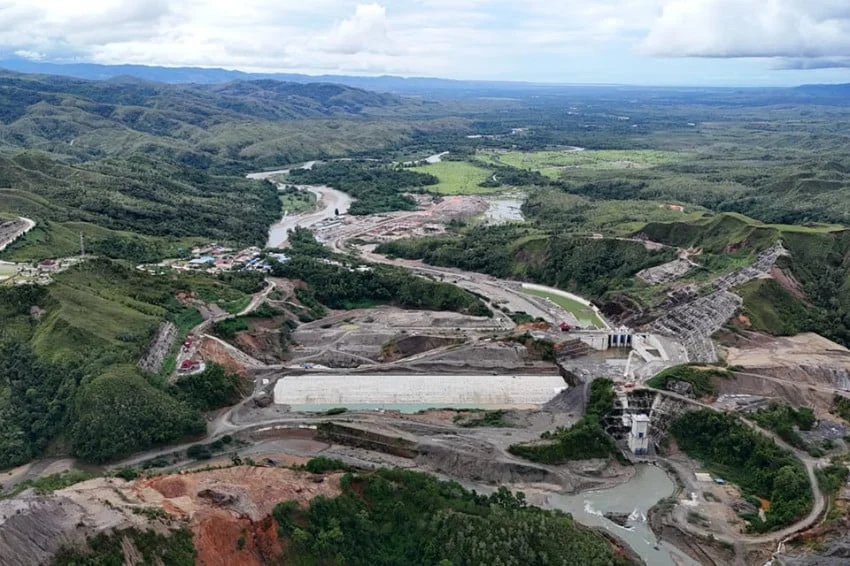
- Resilience Against Climate Change: The 2026 drought serves as a stress test for Indonesia’s climate adaptation policies. The transition toward technology-driven water management—such as water treatment plants and large-scale dam construction—indicates a shift from reactive crisis management to proactive, engineered climate resilience.
Future Outlook and Policy Recommendations
As Indonesia approaches the end of 2026, the progress made by the Ministry of Public Works provides a blueprint for future infrastructure projects. However, experts suggest that the sustainability of these systems will depend on three key factors: community-led maintenance programs, the integration of digital monitoring for water usage, and the protection of water catchment areas.
The collaboration between the central government, provincial authorities, and the private sector, as seen in the Mimika pipe donation, offers a sustainable model for resource mobilization. Looking ahead, the government’s stated goal of "Swasembada Air 2025" (Water Self-Sufficiency 2025) has effectively transitioned into a long-term developmental agenda that will continue well beyond its original target date.
While the immediate focus remains on addressing the 2026 dry season, the ongoing construction of dams and treatment facilities signals a fundamental shift in how the Indonesian state interacts with its natural resources. The successful completion of the current infrastructure projects in Papua and the surrounding islands will be a decisive factor in determining whether these regions can sustain their populations and contribute to national economic growth in the face of an increasingly unpredictable global climate.
The government’s commitment, as highlighted by Minister of Public Works directives and supported by regional leaders, remains clear: water is a non-negotiable strategic asset. With continued investment and inter-agency coordination, the infrastructure projects initiated in 2026 are poised to become the bedrock of a more resilient, self-sufficient Indonesia in the decades to come.