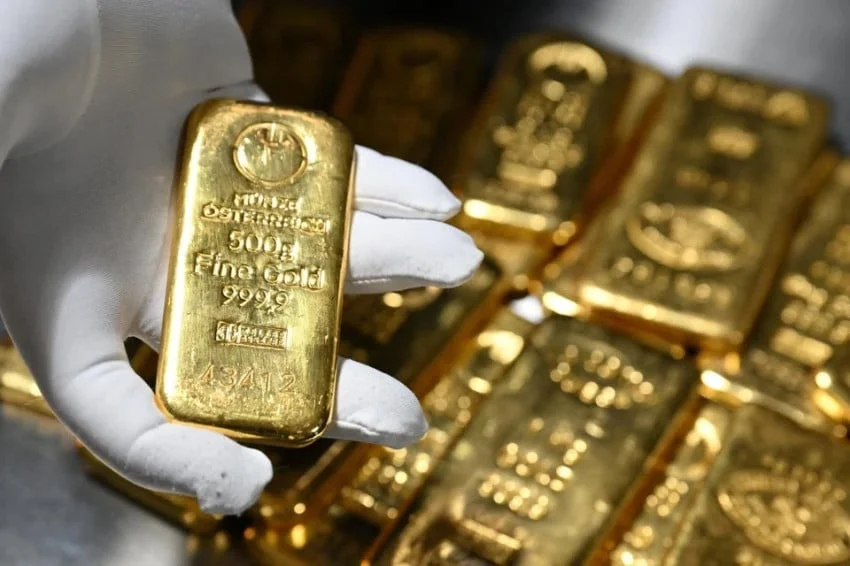
The Monetary Authority of Singapore (MAS) has officially inaugurated a specialized gold vaulting service designed exclusively for foreign central banks, international financial institutions, and sovereign entities. This strategic move marks a significant evolution in Singapore’s role within the global precious metals market. Located within the nation’s highly secure national currency vault, the facility boasts an initial capacity of 500 metric tons of gold, with architectural provisions already in place to expand this capacity should global demand necessitate further scaling.
This initiative comes at a time when global central banks are aggressively diversifying their foreign exchange reserves, shifting away from a heavy reliance on traditional fiat currencies toward the time-tested stability of physical gold. By providing a secure, neutral, and highly regulated environment for the storage of sovereign gold, Singapore is positioning itself as a premier custodian for nations looking to hedge against geopolitical volatility and inflationary pressures.
The Strategic Shift: Why Singapore Now?
The decision to launch these services was formally announced by Gan Kim Yong, Deputy Prime Minister, Minister for Trade and Industry, and Chairman of the Monetary Authority of Singapore. Speaking on the strategic necessity of the project, Gan emphasized that the development of the gold market is a natural progression for Singapore’s established identity as a global financial hub.
In recent years, the international financial landscape has undergone a profound transformation. Following the unprecedented economic interventions during the pandemic and the subsequent surge in global inflation, central banks have revisited their reserve management strategies. Data from the World Gold Council indicates that central bank gold buying reached record-breaking levels in the mid-2020s, with institutional investors seeking assets that are free from counterparty risk. Singapore, with its reputation for political stability, a robust legal system, and an AAA credit rating, is uniquely positioned to serve as the "safe harbor" for these institutional holdings.
Chronology of Gold Market Evolution in Singapore
Singapore’s journey toward becoming a global gold hub did not happen overnight. The following timeline outlines the methodical approach the city-state has taken to integrate precious metals into its financial ecosystem:
- 2012: The Singapore government removes the Goods and Services Tax (GST) on Investment Precious Metals (IPM), effectively positioning the nation as a regional gold trading hub.
- 2014: The Singapore Bullion Market Association (SBMA) is revitalized to better coordinate between stakeholders and the government, aiming to increase the volume of gold flowing through the country.
- 2020-2022: Global geopolitical tensions and the post-pandemic recovery drive central banks to increase gold holdings at the fastest pace in over two decades.
- 2023-2025: MAS conducts feasibility studies and upgrades national vaulting infrastructure to accommodate sovereign-grade security standards.
- November 2026: Official launch of the sovereign gold vaulting services, accompanied by the announcement of upcoming tax reforms for 2027.
Supporting Data: The Global Rush for Gold
The demand for this service is underpinned by hard data regarding central bank reserves. In recent reporting periods, central banks globally purchased over 321 tons of gold in a single quarter, marking the highest level of institutional accumulation in over two years. This trend is driven by three primary factors: the pursuit of de-dollarization in emerging markets, the need for liquidity in times of market stress, and the historic performance of gold as a store of value.
For sovereign wealth funds and central banks, the physical location of their gold reserves is as important as the quantity held. Jurisdictional risk has become a primary concern for many reserve managers. By hosting gold in a jurisdiction that is widely viewed as neutral and operationally efficient, Singapore offers an attractive alternative to traditional storage locations in London or New York.
Official Responses and Strategic Vision
During the press briefing, Gan Kim Yong confirmed that while the identities of the inaugural clients remain confidential, the response from the global financial community has been overwhelmingly positive. Several central banks have already expressed formal interest in utilizing the vaulting services.
"The development of the gold market is a natural expansion of Singapore’s position as an international financial center," Gan stated. He further noted that the vaulting service is not merely a logistical offering but a pillar of Singapore’s broader strategy to enhance its national resilience. By managing the flow and storage of gold, MAS gains deeper insights into global capital flows and strengthens its own position in the international monetary system.
Furthermore, to ensure the long-term competitiveness of this new service, the Ministry of Finance and MAS have announced a comprehensive overhaul of the tax framework related to precious metals, effective April 2027. This reform will expand the existing GST relief to encompass a wider array of wholesale institutional services, including refining, recasting, assaying, and brokering. This "ecosystem approach" ensures that Singapore is not just a place to store gold, but a comprehensive center for the entire precious metals value chain.
Economic Implications and Market Analysis
The establishment of this vaulting facility carries several significant implications for the global financial market:
1. Increased Liquidity in the Asian Gold Market
By centralizing large volumes of gold in Singapore, the city-state is likely to see an increase in gold-based financial products. Banks and financial institutions are expected to develop new lending, leasing, and derivative products backed by the gold stored in MAS vaults. This could lead to a more liquid and transparent Asian gold price discovery process, reducing the reliance on London’s LBMA prices during Asian trading hours.
2. Strengthening Singapore’s "Safe Haven" Status
The presence of foreign sovereign gold in Singapore acts as a form of "soft power." It binds the interests of foreign central banks to the stability and integrity of the Singaporean financial system. This creates a feedback loop: as more nations store their gold in Singapore, the incentive for global stakeholders to maintain the stability of the region increases.
3. Impact on Tax and Regulatory Standards
The upcoming 2027 tax reforms suggest that Singapore is aggressively competing with other global gold hubs like Switzerland and Dubai. By lowering the cost of doing business through GST exemptions on wholesale services, Singapore is making it prohibitively expensive for competitors to match its value proposition. This is expected to attract significant secondary market participants, such as international bullion banks and specialized refiners, to set up operations in the city-state.
4. Risk Mitigation for Reserve Managers
For the central banks utilizing the service, the primary benefit is security and diversification. In an era where financial sanctions and asset freezes have become tools of foreign policy, the ability to store physical assets in a neutral jurisdiction provides a critical safety net. The MAS vaulting service is built to the highest specifications of physical security, utilizing biometric access, multi-layered surveillance, and rigorous inventory management protocols that meet the standards of the most conservative central banks.
Future Outlook
As the world enters a period of heightened economic uncertainty, the role of gold as a tier-one asset will likely continue to grow. Singapore’s proactive investment in vaulting infrastructure demonstrates a clear-eyed assessment of where the global economy is heading.
While the initial capacity is set at 500 tons, the modular nature of the facility suggests that MAS is preparing for a multi-decade trend of rising gold ownership. The integration of tax incentives with physical infrastructure is a hallmark of Singapore’s economic policy—creating a friction-less environment for global capital.
Industry analysts expect that the next 18 to 24 months will see a surge in gold-related activity within Singapore. As central banks begin to shift their reserves to the new vault, other private sector entities are expected to follow, creating a robust "gold cluster" in the heart of Southeast Asia. This development is not merely a milestone for the Monetary Authority of Singapore; it is a significant reconfiguration of the global financial architecture, cementing Singapore’s role as the definitive custodian of value for the 21st century.
Moving forward, all eyes will be on the implementation of the April 2027 tax framework, which will likely serve as the catalyst for the next phase of growth in the Asian precious metals sector. With a secure foundation, a clear regulatory path, and a strategic location, Singapore is well-equipped to manage the increasing weight of the world’s gold reserves.