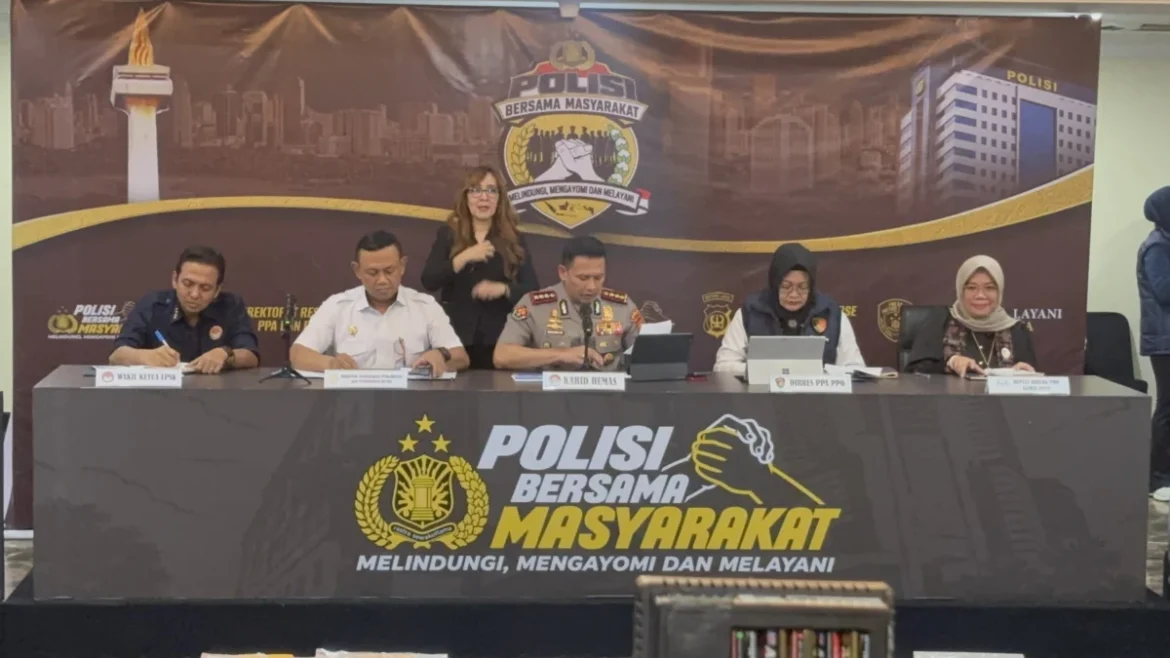
JAKARTA — The Jakarta Metro Police (Polda Metro Jaya) has successfully dismantled seven distinct human trafficking syndicates in a coordinated crackdown, revealing a disturbing array of exploitation tactics ranging from the recruitment of Indonesian citizens as foreign mercenaries in the Russia-Ukraine conflict to the long-standing issue of "mail-order brides." The operation marks a significant escalation in the authorities’ efforts to combat the multifaceted nature of human trafficking, which has evolved into highly sophisticated, transnational criminal enterprises.
The announcement was made by Kombes Rita Wulandari, Director of the Women and Children Protection and Human Trafficking Investigation Unit (Dirres PPA-PPO) of the Jakarta Metro Police, during a press briefing held on Wednesday, November 11, 2026. According to official reports, the seven cases were unearthed through a combination of independent police investigations and the expansion of prior findings originally initiated by the West Jakarta Metro Police.
A Diverse Range of Criminal Modus Operandi
The cases disclosed during the briefing highlight how traffickers are exploiting various vulnerabilities, including economic instability, lack of employment opportunities, and social pressures. The seven identified modus operandi include:
- Foreign Mercenary Recruitment: Perhaps the most alarming development is the recruitment of Indonesian nationals to serve as mercenaries in the ongoing conflict in Russia. This represents a dangerous intersection of human trafficking and international security threats, where vulnerable individuals are lured with promises of high salaries only to be placed in active combat zones.
- Illegal Migrant Labor Trafficking: Syndicates have been facilitating the illegal movement of workers to Malaysia and Slovakia. These operations often involve the falsification of documents and the promise of legal employment, only for the victims to find themselves in debt bondage or exploitative working conditions upon arrival.
- Sexual Exploitation of Minors: Several cases involved the organized sexual exploitation of children, a heinous crime that remains a top priority for law enforcement agencies across the region.
- Maritime Labor Exploitation: The investigation uncovered instances of human trafficking within the fishing industry, specifically targeting crew members on commercial vessels who are subjected to harsh labor conditions, withheld wages, and limited freedom of movement.
- Mail-Order Bride Schemes: The classic yet persistent practice of trafficking women through "mail-order bride" arrangements, where victims are transported to foreign countries under the guise of marriage, only to face domestic servitude or abuse.
Investigative Chronology and Coordination
The success of these operations is attributed to a multi-jurisdictional approach involving several key police units. While the Directorate of PPA-PPO took the lead in two of the major cases, the remaining five were uncovered through the diligent efforts of the North Jakarta Metro Police, East Jakarta Metro Police, the Tanjung Priok Port Police, and the Depok Metro Police.
The investigation began following a surge in reports regarding missing persons and suspicious recruitment advertisements circulating on social media platforms. By tracking digital footprints and analyzing financial transactions, investigators were able to map out the hierarchy of the trafficking networks. The transition from local cases in West Jakarta to a broader metropolitan-wide crackdown underscores the realization that these syndicates do not operate in isolation but are often linked through common handlers and illicit financial networks.
The Global Context of Trafficking Trends
Human trafficking remains a critical challenge for Indonesia, a nation that serves as both a significant source and a transit point for illegal labor migration. According to data from international organizations like the International Organization for Migration (IOM) and the United Nations Office on Drugs and Crime (UNODC), the socio-economic impact of the post-pandemic era has significantly increased the vulnerability of the workforce.
The recruitment of foreign mercenaries from Southeast Asia is a relatively new and concerning phenomenon. Analysts suggest that the global demand for manpower in high-risk zones, coupled with the desperation of unemployed youth in Indonesia, has created a "niche market" for traffickers who position themselves as intermediaries for international private military companies or irregular armed factions.
Furthermore, the trafficking of migrant workers to Eastern European countries like Slovakia signals a shift in destination trends. As traditional labor corridors to the Middle East and East Asia face increased scrutiny, traffickers are identifying new, less regulated pathways to move individuals across borders, often exploiting gaps in visa policy and international employment laws.
Official Responses and Legal Implications
Kombes Rita Wulandari emphasized that the police are committed to a "victim-centered" approach, ensuring that those rescued from these trafficking rings receive psychological support and social reintegration assistance. "Our goal is not only to arrest the perpetrators but to dismantle the entire infrastructure that allows these crimes to flourish," she stated.
The suspects involved in these cases are expected to be charged under Law No. 21 of 2007 regarding the Eradication of the Crime of Trafficking in Persons. If convicted, they could face lengthy prison sentences ranging from three to 15 years, along with substantial fines. Furthermore, authorities are coordinating with the Financial Transaction Reports and Analysis Center (PPATK) to track the illicit profits generated by these syndicates, with the intent of seizing assets under money laundering statutes.
Broader Implications and Socio-Economic Impact
The disclosure of these seven cases acts as a wake-up call regarding the sophistication of organized crime in the digital age. The use of social media and encrypted messaging applications to lure victims has made it increasingly difficult for traditional surveillance methods to track recruitment patterns.
Experts in the field of migration and human rights argue that law enforcement alone cannot solve the crisis. Addressing the "push factors"—such as the lack of economic alternatives and the systemic failures in the formal labor migration process—is essential. Without robust public awareness campaigns and improved oversight of private employment agencies, traffickers will continue to exploit the desperation of citizens seeking better futures abroad.
Moreover, the international community has taken note of the rising trend of mercenary recruitment in Southeast Asia. This development poses a diplomatic challenge for Indonesia, as it must navigate the legal complexities of citizens participating in foreign wars, which could potentially complicate bilateral relations with involved nations.
Moving Forward
As the investigation into these seven cases continues, the Jakarta Metro Police have urged the public to exercise extreme caution regarding job offers that promise rapid income, particularly those requiring travel to high-conflict areas or involving suspicious marriage arrangements.
The success of this operation serves as a testament to the effectiveness of inter-agency cooperation. However, the sheer variety of the cases—from child exploitation to international mercenary work—highlights the daunting task ahead for law enforcement. Moving forward, the focus will likely shift toward strengthening border controls, enhancing digital intelligence gathering, and fostering regional cooperation to track transnational trafficking routes that operate beyond the reach of local authorities.
In the coming weeks, the police are expected to reveal further details regarding the masterminds behind these operations. The legal proceedings will be closely watched, as they will set a precedent for how the Indonesian justice system addresses the modern, increasingly globalized nature of human trafficking. The commitment of the Polda Metro Jaya to transparency in this investigation is a significant step toward public accountability, though the road to eradicating these practices remains long and arduous.