The landscape of language education in Indonesia has long been associated with designated enclaves, most notably the famous Kampung Inggris in Pare, Kediri, East Java, where thousands of domestic and international learners flock to immerse themselves in intensive English programs. However, a groundbreaking community-driven initiative is shifting this paradigm to the heart of the capital city. In RT 11 RW 7, Gandaria Utara, located in the bustling Kebayoran Baru district of South Jakarta, local leadership has successfully localized this immersive educational concept. Known locally as the "Erte English" program, this community-based initiative ingeniously intertwines daily language acquisition with civic duties, environmental stewardship, and neighborhood security. Spearheaded by the local neighborhood unit (RT) head, Inspector Iptu Imam Basori—affectionately known by residents as Ibas—the project redefines how urban communities in Jakarta can foster intellectual growth, ecological awareness, and collective safety simultaneously.
Originating as a grassroots response to the dual challenges of urban modernization and community engagement, the program transforms the entirety of the residential neighborhood into an interactive, open-air classroom. Unlike the commercial, academy-dense environment of Pare, Gandaria Utara does not require students to enroll in formal, brick-and-mortar institutions. Instead, the streets, public facilities, and communal spaces of RT 11 become living textbooks. Children, teenagers, and even older residents are seamlessly introduced to English vocabulary and conversational phrases integrated directly into their everyday routines. From navigating waste management protocols to maintaining neighborhood security gates, the community functions as a living laboratory for practical bilingualism.
The Genesis of Erte English: From Pare Inspiration to South Jakarta Reality
The conceptualization of the RT Inggris program began as an ambitious vision to elevate human capital at the most micro-level of governance in Jakarta. Iptu Imam Basori recognized that while formal education institutions teach English grammar, the practical application of the language remains severely limited in typical urban neighborhoods due to a lack of immersive environments. Drawing inspiration from the structural success of Kampung Inggris in East Java—which has operated for decades as an educational tourism hub—Basori sought to adapt the immersion model for a densely populated urban setting without displacing residents or requiring heavy tuition fees.
The initiative officially took root through a phased community rollout. Initially, local leaders introduced basic English greetings and instructional signage throughout the neighborhood. Public areas, waste sorting stations, and security checkpoints were labeled with dual-language signage. This passive learning environment ensured that residents of all ages were constantly exposed to English text in their daily paths of movement. Over time, informal conversational sessions were introduced during community gatherings, youth club meetings, and neighborhood association events, effectively lowering the psychological barrier to speaking a foreign language.
Environmental Stewardship: Learning English While Sorting Waste
One of the core pillars of the RT Inggris program is its direct integration with local environmental policies, specifically waste management and recycling initiatives. Jakarta, as a megacity generating thousands of tons of waste daily, faces acute municipal challenges regarding garbage disposal and landfill capacities. RT 11 RW 7 Gandaria Utara has turned this urban crisis into an educational opportunity.
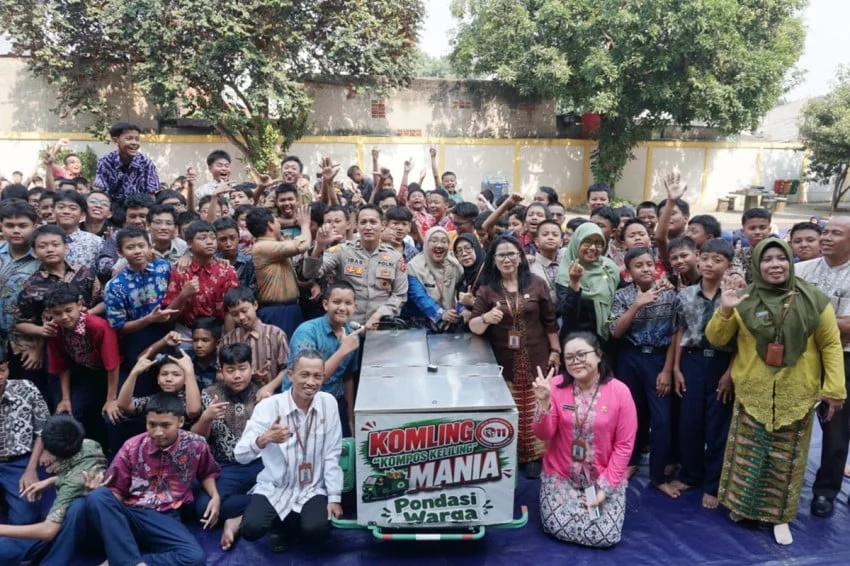
Under the bilingual neighborhood framework, waste sorting activities are conducted using English terminology. Community members, particularly children and youth participants, are taught to categorize refuse into designated categories—such as organic, inorganic, recyclable, and hazardous waste—using bilingual instructions. Bins and collection points feature clear English labels, accompanied by interactive mini-lessons where facilitators explain the environmental impact of recycling using simple English phrases.
This dual approach yields profound behavioral modifications. Residents not only become more environmentally conscious and compliant with municipal waste reduction mandates, but they also internalize specialized vocabulary related to ecology, sustainability, and conservation. By embedding environmental literacy within language acquisition, the neighborhood fosters a generation of ecologically responsible citizens equipped with global communication skills.
Bolstering Neighborhood Security through Smart Infrastructure and Bilingualism
Beyond education and environmentalism, the Gandaria Utara initiative places a heavy emphasis on community safety and technological modernization. Urban security remains a paramount concern in South Jakarta, where residential areas frequently grapple with opportunistic crimes such as motorcycle theft. To address this, RT 11 RW 7 has implemented advanced security measures, most notably the installation of sophisticated smart gates equipped with modern surveillance and access control systems.

The integration of the Erte English program with neighborhood security creates a unique operational dynamic. Security checkpoints and guard posts function as active bilingual communication zones. Neighborhood watch teams (Siskamling) and security personnel are encouraged to utilize basic English security protocols, greetings, and directional phrases when interacting with visitors and delivery personnel. Furthermore, informational notices regarding security procedures, emergency contact numbers, and curfew guidelines are displayed in both Indonesian and English.
This layered approach to security does more than deter crime; it cultivates a heightened sense of vigilance and collective responsibility. Residents view safety not merely as the absence of threat, but as an active, communicative community effort where everyone—from the neighborhood watch volunteers to young learners—plays a participatory role.
Community Reception and Societal Implications
The reception of the Erte English program among residents of Gandaria Utara has been overwhelmingly positive. Sociological observations indicate that the initiative has successfully bridged generational divides. Grandparents, parents, and children now share a common learning journey, discussing English vocabulary related to household chores, waste disposal, and neighborhood security during family meals and community assemblies.
Local educational experts note that informal, community-based language programs hold immense potential for national human development. In an increasingly interconnected global economy, English proficiency is a critical skill for upward socioeconomic mobility. However, structural disparities often limit access to quality language courses for lower- and middle-income urban communities. By decentralizing language learning and embedding it into municipal governance at the RT level, Gandaria Utara provides a scalable, low-cost model that democratizes access to bilingual education.
Furthermore, the program addresses the psychological intimidation often associated with foreign language acquisition. In a traditional classroom setting, learners frequently fear making mistakes in front of peers and teachers. In contrast, the relaxed, communal environment of RT 11 normalizes trial and error. Speaking English becomes a shared community joke, experiment, and achievement rather than an academic burden.
Broader Economic and Urban Planning Impacts
The success of the RT Inggris program in Kebayoran Baru offers valuable lessons for urban planners and municipal policymakers across Indonesia. As cities grow more complex, governance models that rely purely on top-down administrative enforcement often struggle to achieve deep behavioral change. The Gandaria Utara model demonstrates that bottom-up, multifaceted community programs can simultaneously achieve multiple public policy objectives—educational enhancement, environmental cleanliness, and public safety.
Economically, initiatives like Erte English enhance the intrinsic value of residential neighborhoods. Communities that demonstrate high levels of civic organization, cleanliness, and security naturally attract positive attention, potentially increasing local property values and fostering a stronger sense of civic pride. Moreover, equipping urban youth with practical English skills enhances their long-term employability in Jakarta’s burgeoning tourism, hospitality, and service sectors.
Future Outlook and Scalability
As the program continues to gain traction, local leaders in Gandaria Utara are exploring avenues for expansion. Plans are underway to digitalize parts of the learning experience, utilizing mobile applications and social media platforms to allow residents to practice English outside physical neighborhood bounds. Additionally, discussions are ongoing with regional educational authorities to evaluate the program’s framework for potential replication in other administrative units across Jakarta.
The transformation of RT 11 RW 7 Gandaria Utara from a conventional residential alleyway into a vibrant, bilingual eco-village stands as a testament to the power of innovative local leadership. By dissolving the boundaries between formal education and daily civic life, the community has created a holistic model of urban development. As cities worldwide grapple with the complexities of modernization, sustainability, and social cohesion, the humble experiment of "Erte English" in South Jakarta offers a shining blueprint for how grassroots initiatives can cultivate global competencies while preserving local community solidarity.