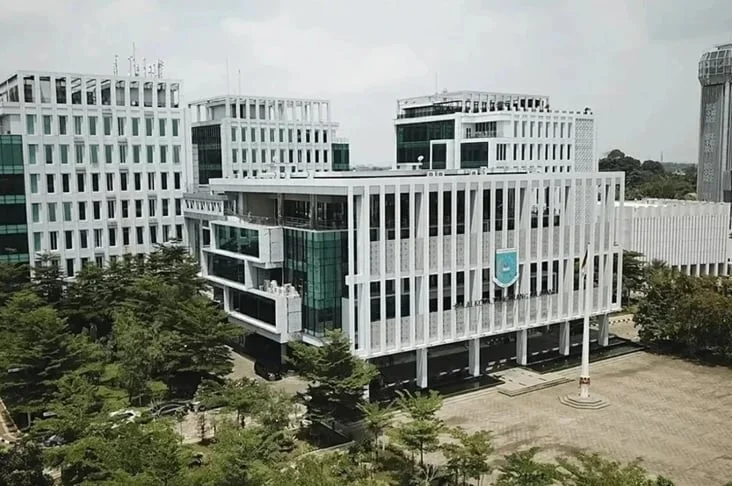
The Government of Tangerang Selatan (Tangsel) has firmly rejected negative digital narratives labeling the municipality as an autopilot city, asserting instead that local authorities maintain strict control over urban development, social equality, and regulatory frameworks. Amid intense public discourse across digital platforms regarding the velocity of urban growth and private sector expansion, municipal officials and public policy experts have stepped forward to clarify the active role played by the city administration in governing one of Jakarta’s most dynamic satellite cities.
The controversy gained momentum following a surge of social media commentary and online discussions that questioned the degree of municipal oversight in areas heavily influenced by private real estate developers. Critics on various digital platforms suggested that the rapid proliferation of gated communities and commercial hubs was outpacing public administration, leading to the colloquial and critical designation of Tangsel as an "autopilot city"—implying a municipality growing organically without centralized planning or governmental steering.
In response, the Tangsel City Government, supported by independent public policy experts, has pushed back against this characterization. Officials emphasize that municipal governance is anchored in strict statutory frameworks, active infrastructural intervention, and proactive social policies designed to bridge the gap between affluent private developments and traditional residential neighborhoods.
Public Policy Analysis: Debunking the Autopilot Narrative
Weighing in on the municipal debate, public policy observer Yanuar Winarko delivered a comprehensive assessment of Tangsel’s current developmental trajectory. According to Winarko, the label of an autopilot city lacks empirical grounding and misrepresents the complex regulatory mechanisms currently at play within the municipality.
Winarko highlighted that Tangerang Selatan, characterized by massive private sector expansion and investments from major real estate developers, requires a robust regulatory hand rather than a passive administration. Far from relinquishing control to market forces, the city government has actively utilized its regulatory authority to ensure that regional economic growth does not compromise social justice or widen socioeconomic disparities.
"The designation of an autopilot city is entirely unfounded," Winarko stated in an official release. "On the contrary, amid the rapid development of the city, the Tangsel City Government has demonstrated its capacity to oversee, organize, and guarantee that this development proceeds fairly for all members of the community without exception."
Winarko further elaborated on the concept of the local government acting as a "social glue." In rapidly urbanizing peripheries of the capital region, the juxtaposition of high-end, exclusive gated communities alongside legacy villages and traditional settlements creates distinct social friction points. According to policy experts, the Tangsel administration has functioned proactively to balance these dynamics through targeted infrastructural investments, public transport evaluations, and the systematic acquisition of public facilities (fasum) and public social facilities (fasos) from developers.
Administrative Response and the Framework of Local Governance
Addressing the digital criticism directly, the Head of the Communication and Information Office (Diskominfo) of Tangsel City, TB Asep Nurdin, underscored that the regional administration operates under a rigorous statutory mandate. Nurdin emphasized that municipal governance is steered by established legislative frameworks, administrative accountability, and structured bureaucratic procedures rather than being contingent upon individual discretion or arbitrary decision-making.
"The wheels of regional government are driven by a solid system of statutory regulations, not merely resting on individuals," Nurdin asserted, responding to the online narratives. He noted that the administration remains permanently open to constructive criticism, public evaluation, and social control from all segments of society, viewing digital discourse as a valuable component of modern participatory democracy.
The Diskominfo head reiterated that municipal authorities are continuously refining their communication channels to ensure transparency, accountability, and direct responsiveness to citizen grievances. By maintaining an open-door policy toward social control, the administration aims to demystify complex urban planning processes and reaffirm its operational presence across all districts within the city.
Background Context: Urbanization and the Satellite City Dilemma
To understand the emergence of the autopilot narrative, one must examine the unique socio-spatial makeup of Tangerang Selatan. Established as an autonomous municipality in late 2008 following its separation from Tangerang Regency, Tangsel evolved at an unprecedented pace. Spanning approximately 147 square kilometers across seven districts—Ciputat, Ciputat Timur, Pamulang, Pondok Aren, Serpong, Serpong Utara, and Setu—the city quickly transformed from a semi-rural buffer zone into a premier residential and commercial hub for Jakarta’s expanding workforce.
The city’s economic model has historically relied heavily on private sector participation, particularly mega-scale real estate projects such as Bumi Serpong Damai (BSD), Bintaro Jaya, and Alam Sutera. While these developments have generated substantial local tax revenues, elevated regional GDP figures, and introduced world-class commercial infrastructure, they have also introduced distinct urban planning challenges.
Among these challenges are the spatial fragmentation between affluent clusters and surrounding indigenous kampungs, traffic congestion along major arterial corridors, and the complex handover process of developer-built infrastructure to the local government. When infrastructural bottlenecks occur, public frustration occasionally manifests in digital critiques, sometimes culminating in generalized labels regarding the efficacy of local governance.
Chronology of Recent Municipal Initiatives
In response to ongoing urban challenges and public scrutiny, the Tangsel City Government has rolled out a series of targeted administrative and developmental milestones over recent budgeting cycles. These initiatives illustrate a proactive approach to contemporary municipal management:
- Early 2024: The administration intensified its audit of developer-managed infrastructure, prioritizing the forced or voluntary handover of social and public facilities (fasos-fasum) to secure long-term public asset management.
- Mid-2025: Local transport authorities initiated comprehensive evaluations of feeder bus routes and integrated public transit networks to improve connectivity between high-density residential zones and commuter rail stations.
- Late 2025 to Early 2026: The city introduced localized environmental and agricultural innovations, such as the experimental floating rice cultivation project (padi apung) launched at the Ciater Retention Basin (Tandon Ciater). This project serves a dual purpose: testing climate-resilient agricultural methods in urban retention zones and optimizing flood mitigation infrastructure.
- November 2026: Amid persistent social media discourse regarding administrative oversight, public policy specialists and city officials formally issued coordinated statements clarifying the regulatory mechanisms governing private-public dynamics in the municipality.
Implications for Future Urban Development
The public debate surrounding Tangsel’s governance model highlights broader systemic challenges facing satellite cities in developing metropolitan regions. As urbanization accelerates across Southeast Asia, municipal governments must constantly negotiate the fine line between facilitating economic growth driven by private capital and safeguarding public welfare and environmental sustainability.
The rejection of the autopilot narrative by policy experts and municipal officials signals a deliberate shift toward narrative reclamation and administrative transparency. For Tangsel, the implications of this discourse are clear: future governance must not only be effective in technical terms—such as budget absorption, infrastructure delivery, and regulatory enforcement—but must also be demonstrably inclusive to bridge perceptual divides among citizens.
By encouraging social control and maintaining active regulatory oversight over large-scale developers, the Tangsel administration seeks to prove that rapid urban growth and social equity can coexist. As the city continues to mature into a self-sustaining urban center, the effectiveness of its regulatory framework will remain under the close scrutiny of both policy analysts and its residents.