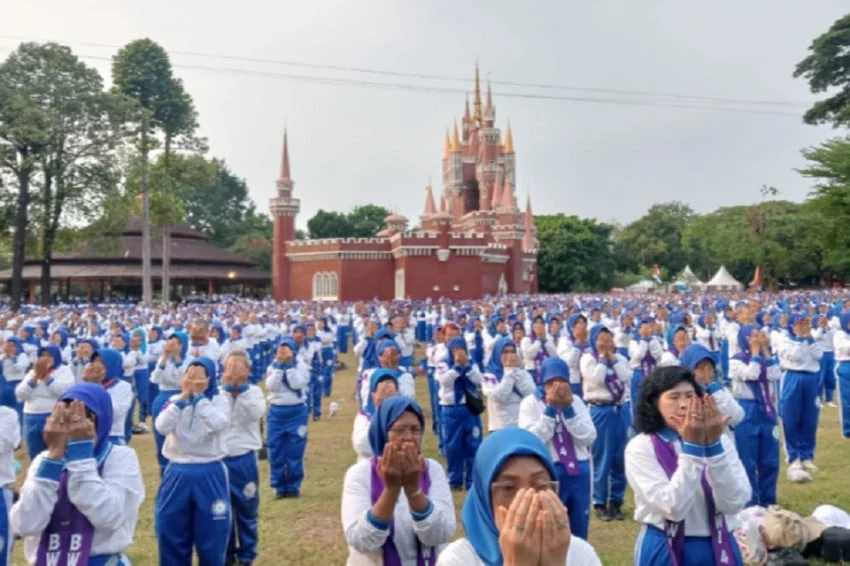
The vibrant cultural grounds of Taman Mini Indonesia Indah (TMII) in East Jakarta recently played host to one of the largest wellness gatherings of the year, as an estimated 11,300 members of the Ling Tien Kung community converged from all corners of the Indonesian archipelago. Marking its 21st anniversary, the organization transformed the iconic national venue into a sea of disciplined movement, camaraderie, and shared purpose. Beyond the celebratory atmosphere of the milestone anniversary, the massive weekend event served as a critical governance milestone, incorporating the movement’s fourth National Coordination Meeting (Rakornas). This high-level assembly successfully yielded strategic resolutions aimed at cementing organizational cohesion, streamlining instructional methodologies, and formally introducing the long-awaited standardization of basic-level movements for practitioners nationwide.
The staggering turnout of over 11,000 participants underscores the rapid and extensive grassroots expansion of Ling Tien Kung across Indonesia over the past two decades. What began as a localized therapeutic practice has steadily evolved into a nationwide movement with active chapters spanning major metropolitan areas, regional capitals, and rural enclaves alike. As health and wellness consciousness continues to permeate modern Indonesian society, structured disciplines like Ling Tien Kung—which emphasizes physical rehabilitation, longevity, and natural healing—have captured the attention of a demographic increasingly focused on proactive healthcare and active aging.
A Legacy of Resilience and Organizational Evolution
Addressing the massive crowd of practitioners dressed in the movement’s signature attire, General Chairperson of the Indonesian Ling Tien Kung Association, retired Brigadier General Edy Prawoto, delivered a reflective and forward-looking address. He articulated that the remarkable 21st-anniversary milestone was not merely a celebration of time passed, but a testament to decades of unwavering dedication, collective struggles, and shared triumphs that have successfully shaped the organization’s institutional identity.
Edy emphasized that anniversary observances within the community serve a dual purpose: honoring the grassroots labor that built the movement while simultaneously providing a structured platform for critical self-evaluation. By examining past operational hurdles and structural triumphs, leadership can chart a resilient, sustainable trajectory for the decades ahead. The integration of the 4th Rakornas into the anniversary itinerary provided the ideal legislative mechanism to align regional chapters with centralized administrative and instructional directives.
Central to the structural advancements agreed upon during the Rakornas was the official ratification of standard operating procedures for basic-level movements. As the organization expands into new territories, maintaining the integrity and authenticity of the discipline’s physical techniques has emerged as a top priority for the national directorate. The newly established standardization protocols are designed to ensure that novice practitioners across all regional branches receive identical foundational instruction, thereby safeguarding the therapeutic efficacy and philosophical core of the practice.
Honoring the Visionary Founder: The Philosophy of Awiek Widjaja
No gathering of the Ling Tien Kung community is complete without paying profound homage to the movement’s visionary founder and creator, Awiek Widjaja, affectionately revered by practitioners as Lao Shi Awiek Widjaja. Throughout the anniversary proceedings, speakers repeatedly invoked his enduring legacy, reminding attendees of the philosophical and health-restorative principles upon which the discipline was founded.
In his commemorative remarks, Edy Prawoto formally called upon the entire membership to continually reflect upon and honor the foundational sacrifices made by the late founder. The collective ethos of Ling Tien Kung remains deeply anchored in the humanitarian vision of improving public health through accessible, drug-free physical therapies. Leadership stressed that maintaining institutional unity and adhering to the moral values bequeathed by Awiek Widjaja are paramount if the organization is to successfully navigate future socio-cultural shifts in Indonesia’s wellness landscape.
Reinforcing this sentiment, Shane Feldo Widjaja, serving as the Advisor to the Indonesian Ling Tien Kung Association, extended heartfelt gratitude to the thousands of members who braved logistical hurdles to travel to the capital. In his official address to the assembly, Shane underscored the vital importance of solidarity within the community.
"We express our deepest gratitude to all the members who have journeyed to be here today. Let us continuously strengthen our bonds of brotherhood, remaining united and working together precisely as envisioned by our late Lao Shi, Awiek Widjaja," Shane stated, drawing widespread applause from the sea of attendees gathered across the TMII courtyards. His remarks resonated strongly with a membership base that prides itself on egalitarianism, mutual support, and cross-regional fellowship.
Background and Therapeutic Context of Ling Tien Kung
To understand the immense scale and fervent loyalty displayed at the TMII gathering, one must examine the unique nature of Ling Tien Kung itself. Often colloquially referred to as "foot therapy" or dynamic breathing and stretching gymnastics, the discipline is rooted in specific kinetic movements designed to reactivate bodily functions, improve blood circulation, and stimulate self-healing mechanisms within the human body. Practitioners attribute significant health recoveries—ranging from chronic joint ailments to mobility impairments—to the diligent, routine execution of the discipline’s core exercises.
Over the past twenty-one years, the practice has grown organically primarily through word-of-mouth testimonies shared among seniors, retirees, and individuals seeking holistic alternatives to conventional medicine. Because the exercises require minimal equipment and can be performed in open public spaces such as parks, neighborhood squares, and community halls, local chapters have flourished with remarkable ease. The movement operates largely through volunteer instructors and decentralized local groups, making the enforcement of nationwide standardization—such as that recently agreed upon at TMII—an increasingly vital administrative necessity.
The choice of Taman Mini Indonesia Indah as the venue for this landmark anniversary carried deep symbolic weight. As a national cultural park representing the rich diversity of Indonesia’s provinces, TMII provided a fitting backdrop for a movement that prides itself on bridging demographic, ethnic, and regional divides under the banner of health and shared humanity. The logistics involved in coordinating over 11,000 participants demanded meticulous planning from the organizing committee, reflecting the growing institutional maturity of the association.
Broader Socio-Economic Implications and Public Health Impact
The successful execution of the 21st anniversary and the 4th Rakornas highlights several broader trends regarding the evolution of civil society organizations and public health initiatives in contemporary Indonesia. As the nation experiences demographic shifts, including a steadily aging population, community-driven wellness initiatives like Ling Tien Kung assume an increasingly important role in supporting public well-being outside formal clinical settings.
From a public health perspective, organizations that promote active lifestyles, regular physical mobility, and social engagement among older adults contribute tangibly to the reduction of sedentary-related health burdens. By providing millions of citizens with a structured, low-impact daily routine and a built-in social support network, Ling Tien Kung indirectly alleviates pressures on the national healthcare system. The socialization of health through community groups fosters mental resilience, combats social isolation among the elderly, and cultivates a proactive approach to personal wellness.
Furthermore, the institutionalization demonstrated during the Jakarta Rakornas signals a maturation in how grassroots non-governmental organizations manage scale. By implementing uniform movement standards, improving inter-regional coordination, and strengthening central governance under figures like Edy Prawoto and the leadership council, the association is positioning itself for sustained institutional longevity. These administrative refinements ensure that as the founder’s direct guidance recedes into history, the organizational structures can robustly protect the discipline’s core integrity for decades to come.
As the thousands of members packed their belongings and returned to their respective hometowns across the archipelago following the conclusion of the TMII event, they carried back not only fond memories of a grand jubilee, but also clear, actionable mandates from the national leadership. Armed with standardized foundational techniques and renewed institutional solidarity, the Ling Tien Kung community stands poised to enter its third decade with greater clarity, administrative resilience, and an unwavering commitment to the health-restorative vision first charted by Awiek Widjaja twenty-one years ago.