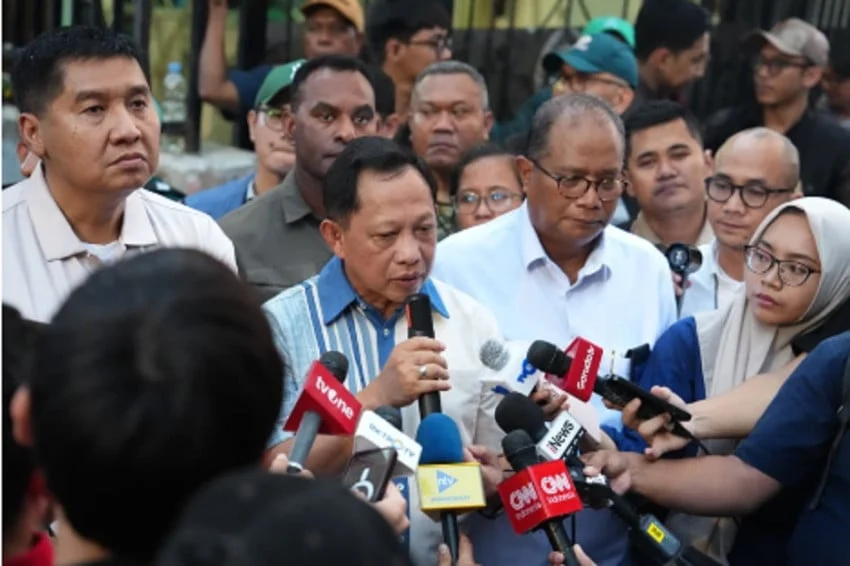
The Ministry of Home Affairs (Kemendagri) has officially reinforced its unwavering commitment to supporting the ambitious "3 Million Homes" program, a cornerstone national housing initiative championed by President Prabowo Subianto. Speaking during a public service event in West Jakarta, Minister of Home Affairs Muhammad Tito Karnavian underscored that the government’s primary focus is to dismantle regulatory bottlenecks, streamline administrative hurdles, and provide sweeping facilitation for low-income communities—locally known as Masyarakat Berpenghasilan Rendah (MBR)—to successfully secure decent, affordable, and sustainable housing.
This strategic policy alignment aims to bridge a staggering national housing backlog that has persisted as a structural socio-economic challenge for decades. By leveraging the authority of local governments and optimizing regional legal frameworks, the Ministry of Home Affairs seeks to act as an enabler, ensuring that bureaucratic red tape no longer hinders the swift execution of pro-people infrastructure policies.
Context and Background of the National Housing Crisis
The housing deficit in Indonesia has long been identified as one of the most pressing developmental challenges facing the archipelago. According to various socioeconomic assessments and national demographic surveys, approximately 30 million families across the country either remain completely unhoused or currently reside in substandard, inadequate, or unsafe dwellings. These living conditions frequently lack proper sanitation, clean water access, and structural integrity, directly impacting public health, educational outcomes, and overall productivity.
Recognizing the gravity of this issue, the administration of President Prabowo Subianto elevated the provision of housing from a secondary sectoral concern to a paramount national priority. A structural manifestation of this high-level political will was the reorganization of governmental bodies handling public infrastructure. The historical Ministry of Public Works and Public Housing (PUPR) was strategically restructured, splitting housing portfolios into a dedicated, standalone entity: the Ministry of Housing and Settlement Areas (Kementerian Perumahan dan Kawasan Permukiman – PKP).
This institutional bifurcation was intentionally designed to hyper-focus administrative resources, budget allocation, and policy formulation squarely on closing the housing gap. However, national-level ministries cannot achieve these targets in isolation. Land acquisition, spatial planning, regional building permits (PBG), and local tax incentives heavily intersect with regional autonomy. This is precisely where the Ministry of Home Affairs steps in, serving as the crucial administrative bridge between central government mandates and regional implementation.
Chronology and Official Statements from Kampung Ambon
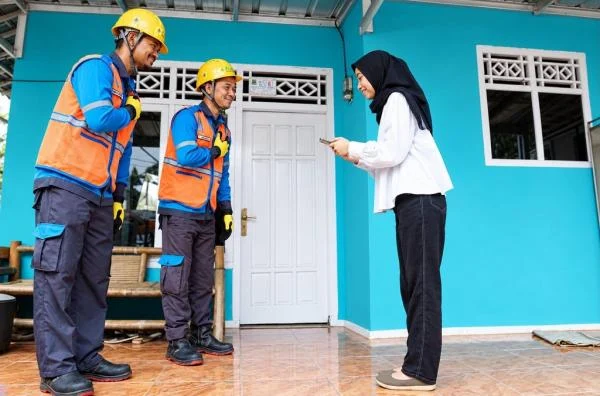
The reaffirmation of this policy framework was articulated by Minister Tito Karnavian on Saturday, October 24, 2026. The announcement was not made from an isolated bureaucratic boardroom, but rather on the ground during a joint community outreach initiative—specifically a "House Renovation" (Bedah Rumah) program and a Police Health Service (Bakti Kesehatan) event held in Kampung Ambon, Cengkareng, West Jakarta.
Surrounded by local residents, regional officials, and law enforcement partners, the Minister emphasized that housing is an indispensable fundamental human right. He reiterated that the overarching philosophy guiding the current administration’s governance is unashamedly pro-poor, focusing intensely on elevating the living standards of ordinary citizens who form the backbone of the nation’s economy.
"Housing is undeniably one of the most fundamental basic needs of any community. And under Mr. President, all of his policies and government programs are decisively pro-people, heavily favoring the ordinary, lower-income citizens," Minister Tito Karnavian stated during the event.
The selection of Kampung Ambon for this declaration carried symbolic and practical weight. Historically known as a challenging urban pocket, interventions combining law enforcement community-policing initiatives with structural housing renovations signal a holistic approach to urban renewal—tackling physical infrastructure rehabilitation alongside social welfare improvement.

The Mechanics of Regulatory Simplification for MBR
A primary obstacle for low-income earners attempting to acquire subsidized housing has historically involved localized administrative barriers. Real estate developers focusing on subsidized MBR housing frequently encounter protracted spatial planning approvals, complex environmental assessments, and prolonged building approval processes at the regency and municipal levels. These delays inevitably inflate capital costs, which are subsequently passed on or render projects financially unviable.
To counteract this, the Ministry of Home Affairs is actively deploying regional policy instruments to compel local governments (provinces, regencies, and cities) to harmonize their local regulations (Peraturan Daerah or Perda) with the national target of the 3 Million Homes program.
Key regulatory facilitations coordinated through Kemendagri include:
- Streamlining Building Approvals: Encouraging local governments to expedite the issuance of Building Approval Buildings (Persetujuan Bangunan Gedung – PBG) for subsidized MBR housing developments.
- Fiscal Incentives: Urging regional heads to grant localized tax reductions or exemptions—such as waivers on Land and Building Acquisition Duty (BPHTB)—specifically for first-time low-income homebuyers.
- Spatial Planning Integration: Mandating that regional spatial plans (RTRW and RDTR) allocate sufficient, legally secure tracts of land for social and affordable housing developments, preventing urban sprawl into disaster-prone or legally ambiguous zones.
- Operational Efficiency: Eliminating redundant bureaucratic layers between municipal licensing offices and provincial oversight boards to shorten project initiation timelines.
By compelling regional authorities to view public housing not merely as a local administrative task, but as a critical national strategic obligation, the central government aims to create a frictionless ecosystem for developers and financial institutions involved in mortgage facilitation.
Broader Socio-Economic Implications and Expert Analysis
Economic analysts and urban planning experts have responded with cautious optimism regarding the aggressive scaling of the 3 Million Homes program, noting that its success hinges entirely on seamless inter-agency coordination.
From a macroeconomic perspective, the construction sector possesses one of the highest multiplier effects within the Indonesian economy. Building three million housing units stimulates dozens of downstream and upstream industries, ranging from cement, steel, and ceramics manufacturing to localized micro-enterprises, electrical suppliers, and residential furniture markets. Furthermore, the labor-intensive nature of residential construction provides a massive boost to employment generation, absorbing hundreds of thousands of skilled and semi-skilled construction workers.
Socially, the transition from informal, high-density, and unsanitary settlements to formal, regulated housing estates fundamentally transforms generational outcomes. Secure land tenure and permanent housing drastically improve public health metrics—notably by reducing waterborne illnesses and respiratory ailments associated with substandard building materials. Additionally, children raised in stable housing environments demonstrate higher educational retention and improved psychological well-being.
However, experts also point out several critical challenges that require vigilant oversight:
- Infrastructure Connectivity: Affordable housing developments must not be pushed into remote peri-urban peripheries devoid of public transportation, schools, and healthcare facilities. Ensuring integrated connectivity with job centers is paramount to prevent abandonment or secondary resale of subsidized units.
- Target Accuracy: Strict verification mechanisms must be enforced to ensure that subsidized mortgages (such as FLPP – Fasilitas Likuiditas Pembiayaan Perumahan) genuinely reach the intended MBR demographic, preventing leakage to higher-income speculators.
- Environmental Sustainability: Given Indonesia’s high vulnerability to climate change, new housing complexes must adhere to strict environmental standards, incorporating adequate drainage, waste management, and green open spaces.
Conclusion and Future Outlook
The explicit backing of the 3 Million Homes initiative by the Ministry of Home Affairs marks a vital structural shift in how Indonesia tackles its housing deficit. By moving beyond traditional central-regional silos and enforcing regulatory ease for low-income communities, the government is laying the groundwork for a more inclusive urban future.
As Minister Tito Karnavian and the Kemendagri apparatus continue to monitor and evaluate regional compliance, the success of this program will ultimately be measured on the ground—transforming millions of housing blueprints into concrete foundations, safe roofs, and dignified lives for Indonesia’s working-class families.