The Indonesian government has embarked on a strategic mission to transform the nation into a global hub for electric vehicle (EV) manufacturing. By mandating a phased increase in the Local Content Requirement, commonly known as TKDN (Tingkat Komponen Dalam Negeri), the Ministry of Industry aims to ensure that the burgeoning EV sector moves beyond simple assembly lines. The ambitious goal is to reach an 80 percent local component threshold by 2030, a move designed to deepen the industrial supply chain and foster a sustainable ecosystem for green technology within the archipelago.
Minister of Industry Agus Gumiwang Kartasasmita, speaking at the inauguration of a new BYD manufacturing facility in Subang, West Java, emphasized that this policy is an "affirmative strategy." The intent is to prevent the local industry from becoming merely a destination for imported semi-knocked-down (SKD) or completely-knocked-down (CKD) vehicle kits. Instead, the government is incentivizing manufacturers to integrate local raw materials—such as Indonesia’s abundant nickel reserves—and local component manufacturing into the production process.
The Chronology of Industrial Localization
The roadmap toward the 80 percent target is structured in three distinct, measurable phases. The government has carefully calibrated these intervals to allow manufacturers time to adjust their supply chains while maintaining momentum in production capacity.
The first phase, covering the period up to the end of 2026, requires a minimum TKDN value of 40 percent. This initial threshold is designed to encourage manufacturers to source basic components, such as tires, chassis, and glass, from local suppliers.
The second phase, spanning from 2027 to 2029, will see the requirement increase to 60 percent. This stage represents a significant leap, requiring the localization of more complex components, such as electric motors, power electronics, and battery management systems.
Finally, the third phase begins in 2030, where the requirement hits 80 percent. At this level, the Indonesian government expects a mature domestic industry capable of producing almost all vital components of an electric vehicle, including the battery cells themselves, which are the most expensive and technologically demanding parts of an EV.
Investment Trends and Market Expansion
The implementation of these regulations has already begun to yield tangible results in the investment landscape. As of the current fiscal year, 14 major manufacturing companies have committed significant capital to the Indonesian four-wheeled electric vehicle sector. The cumulative investment in this sector has reached IDR 24.131 trillion, with a combined annual production capacity of approximately 409,860 units.
This growth is not occurring in a vacuum. It is part of a broader, deliberate push to revitalize the national manufacturing sector, which serves as the backbone of Indonesia’s economic growth. By tying investment incentives to local manufacturing quotas, the government has successfully attracted global players who are eager to gain a foothold in the Southeast Asian market.
Economic Impact and Manufacturing Resilience
The contribution of the manufacturing sector to the national economy remains robust. During the second quarter of 2026, the non-oil and gas processing industry grew by 5.32 percent year-on-year, successfully outpacing the national economic growth rate of 5.29 percent for the same period. This performance underscores the resilience of the sector, even amidst global economic volatility and shifting trade patterns.
The data reveals that the manufacturing sector is the primary engine of the Indonesian economy, contributing 0.97 percentage points to the national growth rate. Furthermore, its contribution to the national Gross Domestic Product (GDP) has reached 16.83 percent, representing a total value of IDR 1,102.88 trillion.
Investment figures for the second quarter of 2026 indicate that the manufacturing sector remains the most attractive destination for capital, with realizations reaching IDR 199.48 trillion. This figure accounts for 38.98 percent of the total national investment, reflecting deep-seated investor confidence in the Indonesian government’s long-term industrial policies.
Export Dominance and Labor Market Contributions
Beyond domestic consumption, Indonesia is positioning itself as a key exporter of manufactured goods. From January to June 2026, the export value of non-oil and gas commodities reached 115.50 billion USD, accounting for 82.03 percent of the country’s total export value. This export dominance highlights the competitiveness of Indonesian-made products on the global stage.
The social impact of this industrial shift is equally significant. As of early 2026, the non-oil and gas processing industry has successfully absorbed 19.99 million workers nationwide. This labor-intensive growth is a critical component of the government’s strategy to improve the standard of living and reduce unemployment through high-value industrial employment.
Global Competitive Standing: The MVA Index
The success of these industrial policies is further corroborated by global metrics. According to World Bank data, Indonesia’s Manufacturing Value Added (MVA) reached 275.61 billion USD in 2025. This achievement pushed Indonesia to 12th place in the global manufacturing rankings, an improvement from its 13th-place position the previous year.
This elevation confirms Indonesia’s status as the premier manufacturing powerhouse in Southeast Asia. To put this in perspective, Indonesia’s MVA is more than double that of Thailand, which currently ranks second in the ASEAN region. On the continental scale, Indonesia now occupies the fifth position in Asia, trailing only industrial giants China, Japan, India, and South Korea.
Analytical Perspectives on Future Challenges
While the trajectory is positive, analysts suggest that reaching the 80 percent TKDN target by 2030 will require significant collaboration between the public and private sectors. The primary challenge lies in the technological transition required for local small and medium enterprises (SMEs) to meet the rigorous quality and safety standards required by global EV manufacturers.
The shift towards electric mobility requires a specialized workforce. Consequently, the government’s commitment to vocational training and technical education will be as vital as the financial incentives provided to manufacturers. If the industry can successfully bridge the gap between low-tech component production and high-tech battery and motor manufacturing, Indonesia will not only secure its own domestic market but also become a critical node in the global EV supply chain.
Furthermore, the integration of the nickel processing industry—which Indonesia dominates—with the EV manufacturing sector provides a unique competitive advantage. By controlling the raw material supply chain and mandating high levels of local processing, Indonesia is effectively moving up the value chain, capturing more of the economic benefits of the EV revolution than if it were simply exporting raw ores.
The Road Ahead
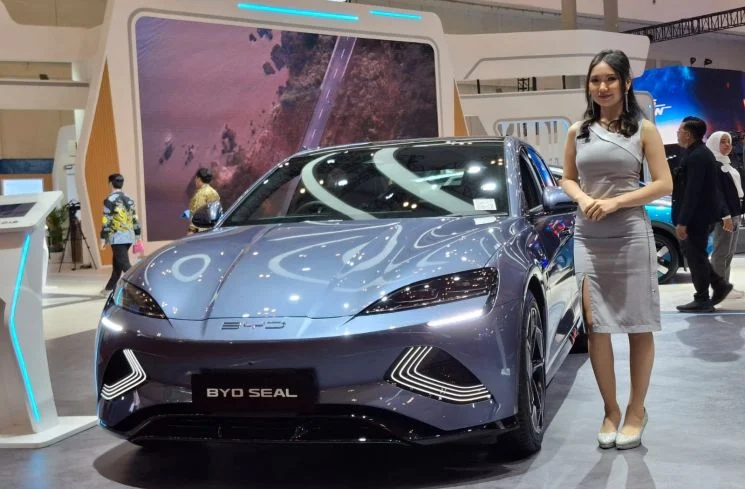
The inauguration of the BYD facility in Subang is a symbolic milestone in this broader narrative. It represents the realization of the government’s vision: a factory that is not just an assembly point, but a facility deeply integrated into the Indonesian industrial fabric.
As the calendar approaches 2030, the government’s adherence to the phased TKDN roadmap will be closely monitored by both domestic and international stakeholders. If the current momentum is maintained, Indonesia is well-positioned to evolve from a resource-dependent economy into a high-tech manufacturing leader, setting a benchmark for other emerging markets to follow in the transition to sustainable, electrified transport. The success of this policy will ultimately define Indonesia’s economic identity for the next quarter-century, cementing its role as a vital player in the global energy transition.