The rapid advancement of telematics technology has transitioned from a luxury enhancement to a fundamental operational necessity for companies managing large-scale commercial vehicle fleets. As the global logistics and transport sectors face mounting pressures to reduce operational expenditures while simultaneously elevating safety standards, integrated telematics systems—combining hardware sensors, real-time software analytics, and high-definition visual monitoring—have emerged as the definitive solution for modern fleet management.
This paradigm shift was a central theme at the recently concluded SMA Fleet Tech Update 2026 seminar. The event, which gathered industry stakeholders, technology experts, and logistics managers, highlighted the strategic partnership between PT Sumber Mas Autorindo (SMA) and Geotab, a global leader in connected transportation solutions based in the United States. The discourse emphasized that while cost-cutting remains a priority, the ethical and economic imperative of driver safety is now the driving force behind the rapid adoption of telematics.
The Technological Architecture of Modern Fleet Management
Telematics works by capturing a granular stream of data from a vehicle’s onboard diagnostics (OBD) port, GPS modules, and external cameras. In the context of the solutions presented at the SMA Fleet Tech Update 2026, the technology does not merely track a vehicle’s location. Instead, it provides a comprehensive 360-degree view of the vehicle’s health, the driver’s performance, and the environmental factors affecting the route.
By integrating AI-powered dashcams with central fleet software, companies can now detect "risky behaviors" before they result in incidents. These behaviors include harsh braking, rapid acceleration, distracted driving—such as mobile phone usage or signs of fatigue—and failure to maintain safe following distances. When the system identifies a violation of pre-set safety protocols, it provides an immediate, real-time alert to the driver, allowing for instant self-correction. Simultaneously, the data is logged in a cloud-based dashboard for fleet managers, providing a basis for driver training programs rather than purely punitive measures.
Addressing the Economic and Operational Challenges
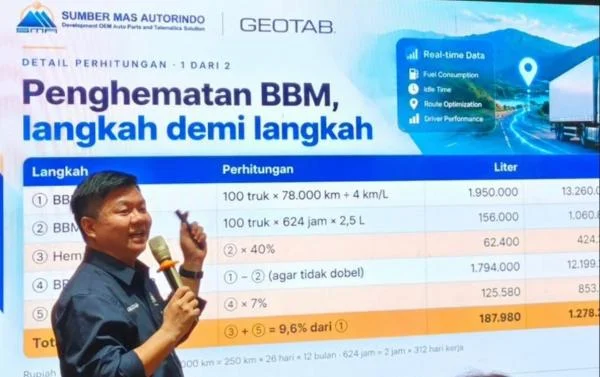
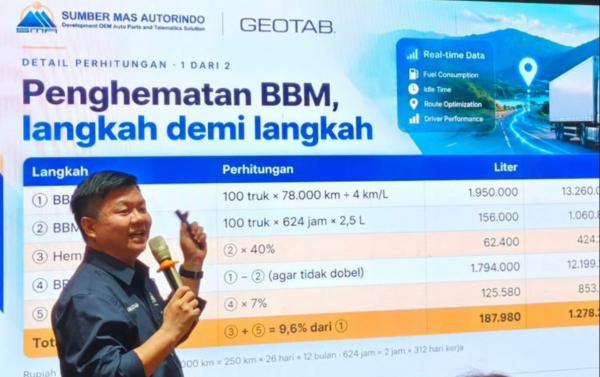
The primary catalyst for the surge in telematics adoption is the volatility of fuel prices and the rising costs of vehicle maintenance. According to data shared during the seminar, companies utilizing integrated telematics can realize a reduction in fuel consumption by up to 15% within the first year of implementation. This efficiency is achieved through route optimization, idle-time reduction, and improved driving habits that naturally lower fuel usage.
Furthermore, the longevity of the vehicle assets is significantly improved. By utilizing predictive maintenance alerts—which inform managers of engine health issues before a breakdown occurs—firms can avoid the exorbitant costs associated with emergency repairs and vehicle downtime. In a supply chain environment where "on-time delivery" is the primary competitive metric, the ability to ensure that 100% of the fleet remains operational is a significant business advantage.
Insights from Industry Leadership
Merisca Indriany, Director of PT Sumber Mas Autorindo, underscored that the objective of telematics extends far beyond the bottom line. "Technology telematics is not just about cost efficiency; it is about protecting our most valuable assets: our drivers and the public," Indriany stated. "When we invest in these systems, we are investing in the reputation of the business. A single road incident involving a commercial vehicle can lead to legal complications, increased insurance premiums, and irreparable brand damage. Our collaboration with Geotab allows us to provide local businesses with the same caliber of safety tools used by the world’s largest logistics networks."
The partnership between SMA and Geotab serves as a case study for international knowledge transfer. By bringing global standards of vehicle safety and data analytics to the local market, SMA is bridging the gap between traditional fleet management and the Industry 4.0 standard of connectivity.
The Broader Safety Implications
The necessity for such technology is underscored by the current climate of road safety. Frequent traffic incidents involving commercial vehicles, often exacerbated by human error or poor vehicle condition, have pushed governments and insurers to demand higher accountability from fleet owners.

For instance, recent reports of severe traffic accidents in urban centers, such as the incident involving a high-profile vehicle collision in the Blok M area of Jakarta, highlight the urgent need for better driver monitoring. While many of these incidents involve passenger vehicles, the public expectation for safety in commercial logistics is significantly higher. Data-driven telematics provides a clear audit trail. In the event of an investigation, companies can provide objective evidence regarding the vehicle’s speed, mechanical status, and the driver’s actions, protecting the firm from liability if the driver followed all protocols, or identifying the root cause if they did not.
Chronology of Adoption and Future Outlook
The trajectory of telematics adoption has been marked by three distinct phases over the last decade:
- Phase One (2016–2019): Primarily limited to basic GPS tracking and rudimentary fuel monitoring.
- Phase Two (2020–2023): The integration of OBD-II sensors and driver behavior scoring became standard. Companies began using gamification to encourage safer driving among employees.
- Phase Three (2024–Present): The current era, characterized by AI-integrated video telematics, cloud-based predictive analytics, and deep integration with ERP (Enterprise Resource Planning) systems.
As we look toward 2027 and beyond, the industry expects a move toward fully autonomous safety systems. The integration of "Vehicle-to-Everything" (V2X) communication, where vehicles interact with traffic infrastructure, will likely be the next frontier. Telematics will be the backbone of this ecosystem, providing the data layer necessary for machines to communicate safety information in milliseconds.
The Business Case for Ethical Fleet Management
Critics sometimes argue that constant monitoring creates an environment of distrust between drivers and management. However, industry leaders argue the opposite. By providing drivers with clear, objective data on their performance, managers can provide constructive feedback. A driver who is flagged for frequent harsh braking can be given targeted coaching on defensive driving, which not only improves safety but also reduces stress and fatigue.
The business case for telematics is bolstered by the reaction of the insurance industry. Many insurers are now offering significant discounts on premiums for fleets that can prove the installation of active safety telematics. This shift effectively turns a capital expense—the purchase of the hardware—into an investment that pays for itself through reduced premiums and operational savings.

Conclusion: A Mandatory Future
The transition toward telematics is no longer an optional upgrade; it is becoming a standard requirement for corporate compliance and operational excellence. As the technology continues to mature, companies that fail to adopt these systems risk being left behind, both in terms of operational cost and the ability to manage modern risk profiles.
The SMA Fleet Tech Update 2026 served as a poignant reminder that the future of logistics is digital, transparent, and, above all, safety-conscious. Through the deployment of sophisticated telematics, the industry is not only optimizing its own performance but contributing to a broader culture of road safety that benefits society as a whole. As the technology continues to evolve, the integration of data, human behavior, and machine intelligence will remain the cornerstone of the transport and logistics sector for the foreseeable future.