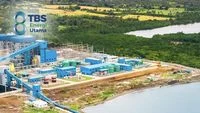
PT TBS Energi Utama Tbk (TOBA), an Indonesian energy firm undergoing a significant strategic pivot toward sustainability, has successfully secured a massive capital injection of SGD 555 million (approximately IDR 7.77 trillion) from HPS Investment Partners, an affiliate of the global financial giant BlackRock. This substantial funding round, finalized in October 2026, marks a pivotal shift in the company’s corporate trajectory as it moves away from traditional fossil fuel interests to establish a dominant foothold in the regional waste management industry across Asia.
The investment is being executed through a structured financial arrangement involving the issuance of new preferred shares to SBTH Asia Holdings Pte. Ltd., a key subsidiary of TBS, alongside other sophisticated financial instruments. This capital infusion is earmarked specifically to fuel the company’s inorganic growth strategy—primarily through mergers and acquisitions—and to enhance its operational capabilities across the entire waste management value chain.
Redefining the Waste Management Value Chain
For years, the industry narrative surrounding waste-to-energy has been dominated by Pengolahan Sampah menjadi Energi Listrik (PSEL) projects, which focus primarily on burning municipal solid waste to generate electricity. However, TOBA has consciously distanced itself from this narrow scope. By opting out of the PSEL projects championed by the Danantara group in Indonesia, TBS is pursuing a more holistic, vertically integrated business model.
In the modern circular economy, waste management is a complex ecosystem. It begins at the point of collection and progresses through sophisticated sorting, material recovery, recycling, medical waste sterilization, industrial hazardous waste treatment, and finally, the conversion of non-recyclable remnants into thermal energy or steam. By controlling these nodes, TOBA is positioning itself as a comprehensive environmental services provider rather than a mere power utility.
The Strategic Blueprint: Cora and AMES
The cornerstone of TBS’s regional strategy lies in its acquisition and development of high-performing environmental assets in Singapore. Through its subsidiary, Cora Environment (formerly Sembcorp Environment and SembWaste), the company manages an expansive portfolio that serves both the public and private sectors.
Cora’s operations are a testament to the scale of the company’s ambitions. The firm currently operates a massive Material Recovery Facility (MRF) that handles the sorting of recyclables, significantly reducing the volume of waste sent to landfills. Furthermore, Cora operates an advanced Energy-from-Waste (EfW) facility in Singapore, which processes approximately 360,000 tons of waste annually. Unlike traditional PSEL plants that focus on electricity, Cora’s facility specializes in the production of high-pressure industrial steam. This steam is supplied directly to industrial tenants on Jurong Island, the heart of Singapore’s chemical and energy sector, providing a stable, recurring revenue stream that is decoupled from the volatile electricity grid tariffs.
Complementing this is Asia Medical Enviro Services (AMES), another TOBA subsidiary that specializes in the highly regulated and high-margin field of medical waste management. In Indonesia, the company operates via PT Arah Environmental Indonesia, which provides critical waste management services—including medical and hazardous industrial waste disposal—across 15 provinces.
Chronology of Strategic Shift
The transition of TOBA from a coal-centric entity to a sustainability-focused conglomerate did not happen overnight. The following timeline illustrates the company’s deliberate path toward its current position:
- 2023-2024: TBS begins divesting from select coal assets and signaling its intent to enter the electric vehicle (EV) ecosystem and renewable energy sector.
- October 2025: Management officially issues a statement clarifying that large-scale PSEL projects, such as those proposed by Danantara, do not align with the company’s long-term risk-adjusted return profiles.
- Early 2026: TBS consolidates its environmental assets, strengthening the Cora Environment brand and integrating AMES into its reporting structure.
- First Half 2026: The company reports a significant milestone, with its combined environmental units processing 760,000 tons of waste across Singapore and Indonesia, serving a client base that exceeds 470,000 households and businesses.
- October 27, 2026: Formal announcement of the SGD 555 million investment from HPS Investment Partners, providing the liquidity needed for regional scaling.
Analyst Perspectives: Why Integration Matters
Financial analysts have lauded the move as a sophisticated play on regional urbanization. Leonardo Lijuwardi, an analyst at NH Korindo Sekuritas Indonesia, emphasizes that the "total value chain" approach offers a protective moat against market fluctuations.
"The business of waste management is remarkably resilient," Lijuwardi noted. "Unlike infrastructure projects that depend on government power purchase agreements (PPAs), an integrated waste management company earns revenue at every touchpoint. They charge for collection, they charge for processing, they earn from the sale of recovered materials, and they earn from the steam provided to industry. By diversifying these revenue streams, TOBA is building a business that is inherently more stable than a single-asset power plant."
Furthermore, Lijuwardi points out that the regional nature of this expansion allows TOBA to leverage the "Singapore Model"—a high-standard, high-efficiency system—and replicate those processes in developing markets across Southeast Asia. As urban centers in the region continue to grow, the demand for sophisticated waste handling will outpace the capacity of local municipalities, creating a prime opening for a private sector player with the technical and financial backing of a firm like BlackRock.
Implications for the Energy Transition
The investment by HPS, a key part of the BlackRock alternative investment platform, signifies a broader trend in global institutional capital: a pivot toward "real-asset" sustainability. Institutional investors are increasingly looking for companies that have a clear path to profitability without relying on subsidies.
By focusing on industrial steam rather than electricity, TOBA avoids the regulatory and grid-integration complexities often associated with PSEL projects. Instead, they operate as a vital utility for industrial parks, where energy efficiency and sustainable waste disposal are increasingly mandatory for international companies looking to lower their Scope 3 carbon emissions.
For the Indonesian market, this development serves as a case study in how domestic firms can leverage regional expertise to drive growth. By maintaining a presence in Singapore through Cora and AMES, TOBA is effectively importing best practices into the Indonesian market, where waste management infrastructure remains a significant developmental challenge.
Future Outlook and Operational Efficiency
The SGD 555 million capital injection will likely be directed toward two main pillars: technological upgrades to existing MRFs and strategic acquisitions in emerging Southeast Asian markets such as Vietnam, Thailand, or Malaysia.
As the company scales, the focus will shift toward "economies of scale." Waste management is a logistics-heavy industry. By optimizing collection routes, increasing the purity of sorted recyclables, and maximizing the energy recovery efficiency of its EfW facilities, TOBA aims to improve its operating margins significantly over the next five years.
The integration of its Indonesian and Singaporean operations provides a unique competitive advantage. TBS can now offer multinational clients a unified waste management solution, which is particularly attractive for companies operating across multiple borders in the ASEAN region. This creates a "sticky" customer relationship that is difficult for competitors to displace.
In conclusion, the entry of HPS Investment Partners into the capital structure of PT TBS Energi Utama Tbk is more than just a financial transaction; it is a validation of the company’s pivot toward a circular economy model. By eschewing the traditional and often problematic path of waste-to-energy electricity generation, TOBA has charted a course that prioritizes operational depth, recurring revenue, and regional scalability. As the company prepares for its next phase of expansion, the eyes of regional investors will remain fixed on whether this integrated model can truly deliver the long-term profitability that the current valuation suggests.