Access to quality eye care remains a critical public health challenge in numerous developing regions, where preventative screenings and early detection services are often out of reach for marginalized populations. Addressing this pressing healthcare gap, JEC Eye Hospitals and Clinics partnered with the Parent Teacher Association (PTA) Secondary Syafana Islamic School to organize a large-scale, free eye examination social program. Conducted on Saturday, October 24, 2026, the philanthropic initiative took place at the Syafana Islamic School Secondary Campus situated in Lengkong Kulon, Pagedangan, within the regency of Tangerang, Banten.
Carried out under the overarching theme of Seeing More Clearly, Sharing More Broadly, the initiative served as a localized extension of World Sight Day 2026 global observances, which officially fell on October 8 under the banner of Love Your Eyes. By mobilizing professional ophthalmological equipment and medical personnel, the organizers successfully brought specialized health services directly to hundreds of beneficiaries who otherwise might not have had access to comprehensive visual diagnostics.
Target Demographics and Comprehensive Healthcare Delivery
The collaborative social initiative was meticulously planned to target a demographic spectrum ranging from 250 to 300 participants. Rather than focusing solely on students, the scope of the program was intentionally broadened to encompass educators, administrative school staff from the Syafana Islamic Boarding School ecosystem, underprivileged community members classified within the dhuafa socioeconomic bracket, and students hailing from the nearby Atta’awun Educare Kampus Lengkong.
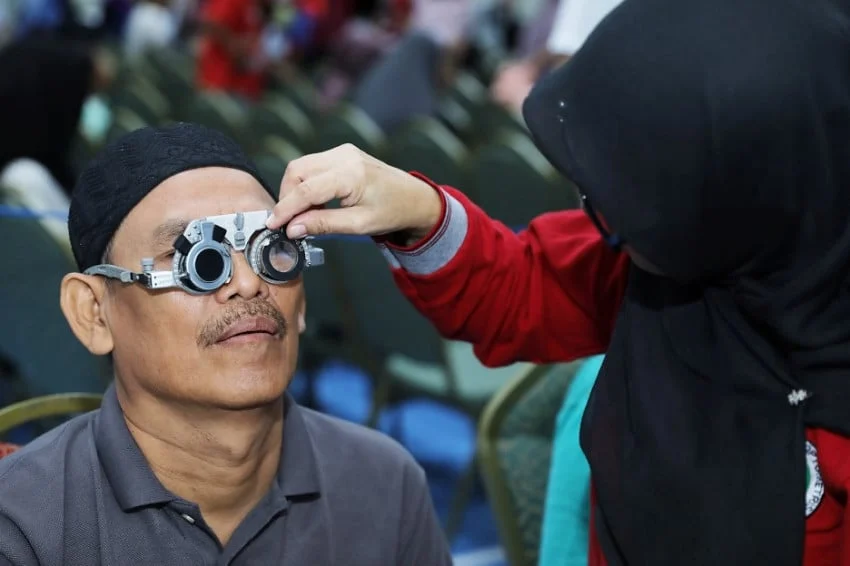
Organized primarily by the Social Section of the PTA Secondary Syafana Islamic School, the event was designed to deliver multi-layered eye care interventions. Every registered participant underwent a systematic medical pathway beginning with primary screenings through the advanced EyeCheck diagnostic system. Following the initial assessments, individuals diagnosed with visual impairments—particularly refractive errors such as myopia (nearsightedness), hyperopia (farsightedness), and astigmatism—were provided with complimentary corrective eyewear on the spot.
Beyond clinical diagnostics and corrective distribution, the program placed a heavy emphasis on preventative health education. Medical professionals and volunteers led interactive educational sessions aimed at raising awareness about sustainable visual hygiene. Key topics covered during these workshops included the prudent use of digital screens and mobile devices, the physiological necessity of scheduled eye rests, optimal viewing distances for studying and working, and the vital importance of recognizing early subtle shifts in visual acuity.
Clinical Perspectives on the Importance of Early Detection
Addressing the media during the event, Prof. Tjahjono D. Gondhowiarjo, Senior Director of Development and Education at JEC Eye Hospitals and Clinics, emphasized that public awareness regarding early detection must be backed by tangible, wide-reaching access to eye examinations. He pointed out that uncorrected refractive errors are among the most pervasive yet easily manageable vision problems globally, affecting individuals across all age brackets, from young school children to productive working adults.
According to Prof. Tjahjono, these conditions frequently develop insidiously and go unnoticed by the affected individuals, particularly children who may not possess a baseline comparison for clear vision. Left unaddressed, mild refractive errors can severely undermine a student’s learning comfort, hinder academic performance, diminish adult professional productivity, and ultimately degrade overall quality of life.
"Because of these far-reaching implications, routine eye examinations are fundamentally important to identify visual disturbances at the earliest possible stage so that appropriate clinical management can be administered," Prof. Tjahjono stated. He further recommended that routine screenings be scheduled systematically every six months to one year, depending on an individual’s specific ocular health condition and the professional advice of an attending ophthalmologist.
Institutional Commitment and Sustainable Public Health Impacts
As a recognized leader in specialized eye care that has served communities across Indonesia for over four decades, JEC Eye Hospitals and Clinics view such social initiatives as an extension of their core mission. The institution actively seeks out strategic partnerships with educational bodies and community organizations to bridge the healthcare divide. The collaboration with Syafana Islamic School reflects a shared vision to foster a culture of preventative health and social empathy.
School administrators and PTA representatives expressed profound enthusiasm for the partnership, noting that the initiative not only alleviated immediate medical burdens for lower-income families but also instilled a lifelong appreciation for physical health among the student body. The organizers intend to use this event as a springboard for ongoing community outreach programs, ensuring that the message of visual health stewardship resonates far beyond the boundaries of a single day.
In closing the event, representatives from both JEC Eye Hospitals and Clinics and Syafana Islamic School expressed optimism that the initiative would serve as a catalyst for sustainable behavioral change. By equipping teachers, students, and vulnerable community members with the tools and knowledge necessary to protect their vision, the collaborative program laid a solid foundation for long-term regional wellness, demonstrating the profound impact that institutional cooperation can achieve in public health advocacy.