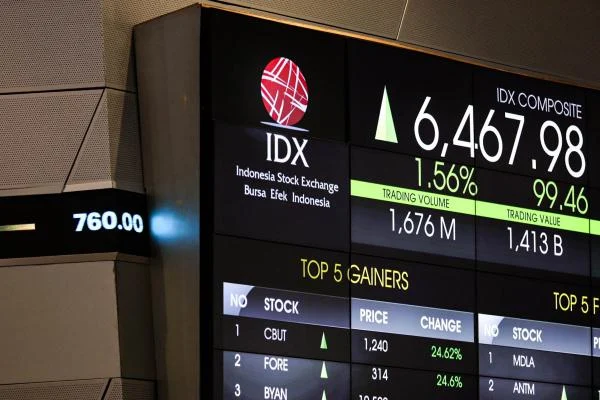
The Jakarta Composite Index (Indeks Harga Saham Gabungan or IHSG) managed to stage a modest recovery during the trading session on Wednesday, October 28, 2026, closing the day in positive territory despite underlying market pressures. The benchmark index ticked upward by 16.18 points, or 0.31 percent, to finish at the 5,282.31 mark. This positive movement offered a brief respite following a period of heightened volatility and consecutive downward pressures experienced by domestic equities in the preceding trading sessions.
Market Activity and Liquidity Metrics
Trading activity on the Indonesia Stock Exchange (IDX) remained robust throughout the Wednesday session. Total transaction value reached a significant Rp15.81 trillion, backed by a massive trading volume of 31.50 billion shares changing hands. Investors actively engaged the market, driving the transaction frequency to 1.539 million times by the closing bell. Meanwhile, the overall market capitalization stood firmly at Rp9.252 trillion, reflecting the enduring scale and depth of the Indonesian capital market despite the day’s mixed sentiment.
A Closer Look at Market Breadth and Divergence
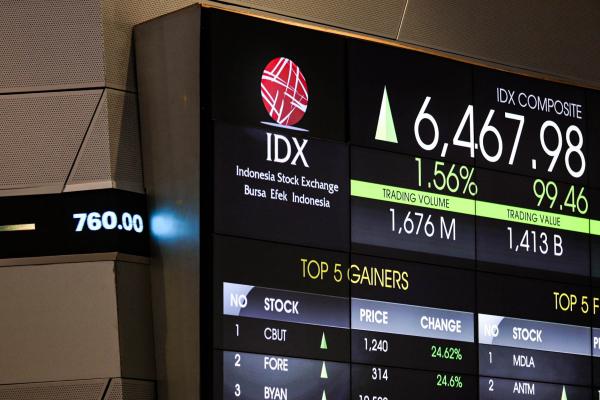
Despite the headline index closing in the green, a closer examination of market breadth revealed that selling pressure remained heavily prevalent across the broader market. The day’s statistics highlighted a stark divergence between the headline index performance and individual stock movements. A total of 429 equities were forced into negative territory as sellers dominated the floor, while only 281 stocks managed to secure gains. Meanwhile, 253 issues remained stagnant, registering no price changes from the previous session.
This dichotomy suggests that the upward movement of the IHSG was largely supported by heavyweight constituents within specific resilient sectors, which offset the widespread losses experienced by the majority of listed companies. Market analysts frequently note that capitalization-weighted indices like the IHSG can sometimes present a picture of stability driven by a handful of large-cap stocks, masking broader corrections in second- and third-liner shares.
Sectoral Performance: Healthcare Leads the Charge
An analysis of sectoral indices on the IDX provides deeper insight into the forces driving Wednesday’s recovery. The healthcare sector emerged as the standout performer of the day, surging by an impressive 1.71 percent. The defensive nature of healthcare stocks often attracts cautious investors during times of market uncertainty, providing a reliable cushion against broader economic headwinds.
Following closely behind was the financial sector, which recorded a solid gain of 0.80 percent. As a heavy-weighted sector within the IHSG, the positive performance of major banking and financial institutions played a critical role in pulling the benchmark index into positive territory. Additionally, the transportation sector registered a modest increase of 0.31 percent, contributing further to the day’s green finish.

Contextualizing the Market Turnaround: Recent Volatility
Wednesday’s session followed a turbulent period for the Indonesian bourse. Just a day prior, on Tuesday, October 27, 2026, the IHSG experienced a severe downturn, plunging 106 points to close at 5,266. That brutal session was characterized by widespread liquidation, with the vast majority of stocks suffering heavy losses as investors fled risk assets.
The early momentum on Wednesday morning also initially pointed toward continued weakness. The market opened in the red zone, triggering early concerns of a prolonged sell-off. During the morning trade, transaction values quickly surpassed Rp743 billion, signaling aggressive early positioning by market participants as they navigated the volatile landscape. However, selective bargain hunting in heavyweight sectors later in the day successfully reversed the intraday losses, allowing the index to claw its way back above the 5,280 threshold by the closing bell.
Broader Economic Implications and Analyst Perspectives
The recent fluctuations in the IHSG reflect a delicate balancing act between domestic economic resilience and external macroeconomic pressures. Investors continue to monitor global monetary policy trajectories, commodity price movements, and currency fluctuations, all of which heavily influence foreign capital flows into the Indonesian market.

Financial market observers emphasize that while the domestic economy maintains steady underlying fundamentals, stock market volatility is likely to persist in the near term. Investors are advised to maintain a diversified portfolio and focus on fundamentally sound companies with strong balance sheets to weather potential market storms. Defensive sectors, such as healthcare and select consumer goods, are anticipated to remain favored destinations for capital preservation amidst unpredictable trading patterns.
As the Indonesian capital market moves forward into the final stretch of the fourth quarter of 2026, market participants will closely watch incoming economic data releases, corporate earnings reports, and central bank policy updates for clearer directional cues. The ability of the IHSG to maintain key support levels will largely depend on a restoration of broader market confidence and a more balanced distribution of buying and selling pressure across all market sectors.