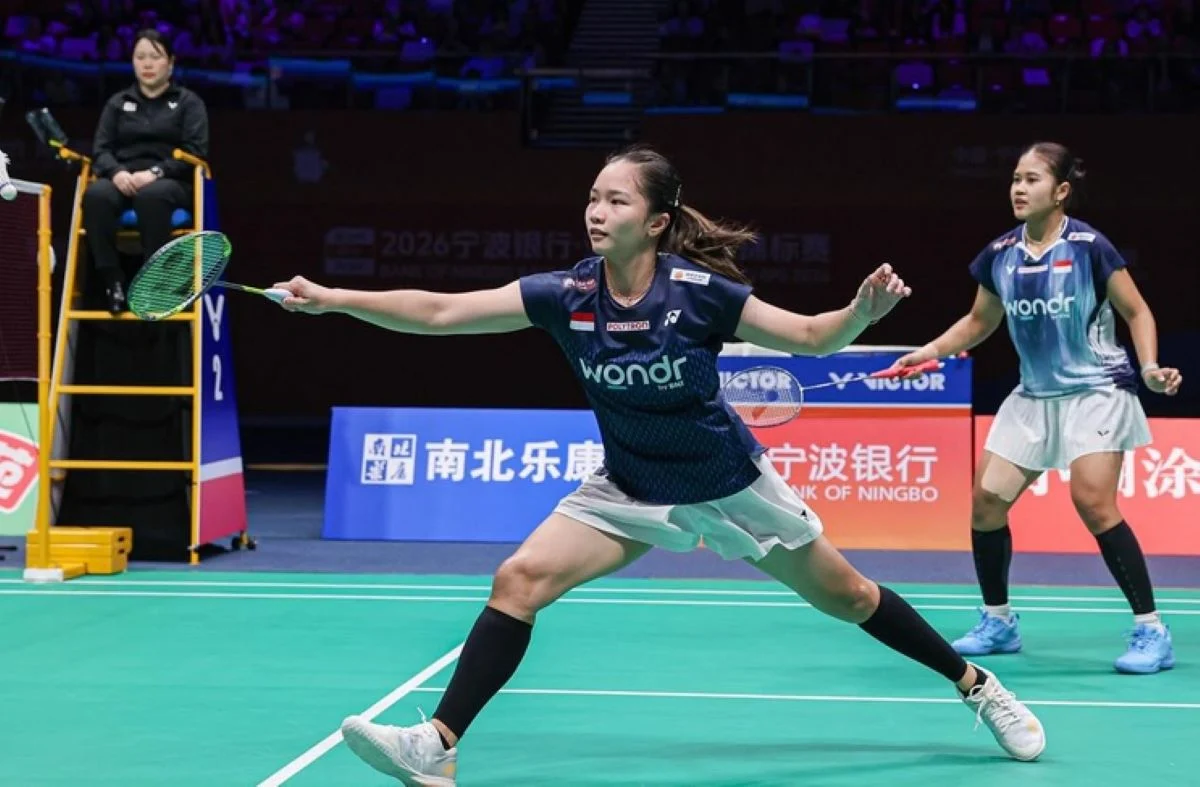
The Indonesian national badminton team’s preparations for the upcoming quadrennial multi-sport event received a substantial boost this week as the national contingent landed in Japan for a high-intensity training camp. Among the standout participants, the Indonesian women’s doubles pair of Rachel Allessya Rose and Febi Setianingrum expressed immense satisfaction with their specialized sparring sessions against formidable Japanese club pairings. Conducted on the second day of the national team’s specialized overseas training camp ahead of the Asian Games Aichi-Nagoya 2026, these collaborative drills are designed to inject tactical variety, physical endurance, and psychological resilience into the squad’s preparations.
As the continental championship draws closer, the Badminton Association of Indonesia (PBSI) has intensified its strategic roadmap, emphasizing overseas sparring partnerships to expose athletes to contrasting playing styles, regional nuances, and high-pressure competitive environments. For Rachel Allessya Rose and Febi Setianingrum, the opportunity to train shoulder-to-shoulder with athletes from the prestigious Nippon Telegraph and Telephone (NTT) East Badminton Club has provided a refreshing departure from their routine domestic regimens, unlocking invaluable insights into modern doubles strategies perfected in East Asia.
Strategic Preparations for the Asian Games Aichi-Nagoya 2026
The Asian Games Aichi-Nagoya 2026 stands as one of the most anticipated milestones in the international sports calendar, bringing together elite athletes from across the continent to compete for ultimate supremacy. For badminton, a sport deeply rooted in the cultural and athletic fabric of Asia, the competition level at the Asian Games often mirrors, and occasionally surpasses, that of the World Championships. Nations such as China, Japan, South Korea, and Indonesia consistently field world-class rosters, making every preparatory phase vital for medal contention.
Recognizing the immense challenges posed by regional powerhouses, the Indonesian badminton coaching staff engineered a comprehensive training camp in Japan to acclimatize the athletes to local conditions, time zones, and atmospheric variables. Sparring against domestic Japanese pairs offers a distinct tactical advantage, as Japanese badminton is globally renowned for its defensive tenacity, relentless retrieving capabilities, high-speed tactical transitions, and extraordinary physical conditioning. By immersing themselves in this demanding environment, the Indonesian representatives are systematically exposed to the rigorous standards required to secure podium finishes on the international stage.
Inside the NTT East Badminton Club Training Sessions
The collaborative training sessions on day two of the overseas camp featured intensive match simulations, multi-shuttle drills, and tactical point-construction exercises. Traditionally, pairs like Rachel and Febi only encounter Japanese opponents across the net during high-stakes BWF World Tour quarterfinals or semifinals, where tension runs high and strategic adjustments must be made instantaneously. Transforming these fierce rivals into temporary training partners has fostered a unique environment of mutual learning and professional exchange.
Speaking on the dynamics of the joint sessions, Rachel Allessya Rose highlighted the psychological and atmospheric benefits of the sparring setup. Breaking away from the monotonous repetition of internal team matches allows players to test novel tactical variations against unfamiliar execution patterns.

"It was really exciting to be able to spar with the Japanese pairs today," Rachel remarked in an official PBSI media release. "Usually, we face them as opponents on the court, but today we had the opportunity to train alongside them. The overall atmosphere was exceptionally positive, and it brought a refreshing new dynamic to our training routine."
This cross-border collaboration allows both coaching teams to evaluate technical deficiencies, refine service-return strategies, and test defensive configurations under simulated match pressure. For Rachel and Febi, adapting quickly to the distinct tactical choices favored by Japanese athletes is a crucial stepping stone toward international maturity.
Deconstructing the Japanese Playing Style: Insights from Febi Setianingrum
Complementing her partner’s assessment, Febi Setianingrum emphasized that the physical and tactical demands of facing Japanese doubles pairs serve as an invaluable diagnostic tool for their Asian Games campaign. Japanese women’s doubles has long been celebrated for its extraordinary court coverage, airtight defense, and unwavering stamina—qualities that frequently force opponents into unforced errors through extended rallies.
Febi pointed out that the sparring sessions featured high-caliber competitors, including established international campaigners such as Hinata Suzuki and Nao Yamakita, both of whom have accumulated extensive experience on the prestigious BWF World Tour circuit. Testing their skills against competitors who regularly battle the world’s top ten pairs provides the Indonesian duo with a realistic benchmark of their current standing and areas requiring immediate refinement.
"Japanese doubles pairs are widely recognized for their tenacity and tremendous physical power," Febi observed. "Today, we faced pairs like Hinata Suzuki and Nao Yamakita, who regularly compete in the World Tour Series. This experience acts as an essential supplementary asset for us as we head toward the Asian Games."
The ability to sustain high-speed rallies, absorb fierce smashes, and counter-attack with precision are hallmarks of elite women’s doubles. By enduring the heavy physical workload imposed by the NTT East players, Rachel and Febi are actively building the cardiovascular and muscular endurance necessary to outlast protracted battles against top-tier continental rivals.
The Broader Landscape of Indonesian Women’s Doubles
The development of Rachel Allessya Rose and Febi Setianingrum reflects PBSI’s broader strategic vision of nurturing the next generation of world-class doubles contenders. Over recent years, the global women’s doubles landscape has witnessed a generational shift, characterized by dynamic pairings capable of blending traditional Asian technical finesse with modern, power-based offensive schemes.

Indonesian women’s doubles has historically been a pillar of national pride, producing legendary figures who have conquered Olympic, World Championship, and Asian Games podiums. However, maintaining this legacy requires rigorous talent identification, scientific training methodologies, and strategic international exposure. By dispatching young yet proven pairs like Rachel and Febi to high-performance hubs in badminton powerhouses like Japan, the national federation is proactively bridging the competitive gap that often separates promising talents from established global champions.
These preparatory camps are not merely about physical conditioning; they are psychological crucibles designed to forge competitive maturity. Athletes learn to manage fatigue, adapt to foreign training cultures, and maintain tactical discipline when executing game plans under duress. The insights gathered by the coaching staff during these sessions will directly inform the personalized training regimens implemented upon the team’s return to the national training center in Cipayung, Jakarta.
Implications for the Asian Games Aichi-Nagoya 2026
As the countdown to the Asian Games Aichi-Nagoya 2026 continues, the performance of the badminton contingent will be closely scrutinized by millions of sports enthusiasts across the archipelago. Badminton remains one of Indonesia’s most reliable sources of international glory, and expectations for the upcoming multi-sport extravaganza are exceptionally high.
The integration of overseas training camps and specialized sparring against regional rivals forms the backbone of a data-driven, highly targeted preparation strategy. By neutralizing the tactical surprises that opponents like Japan, China, and South Korea typically bring to major championships, Indonesian pairs increase their statistical probability of deep tournament runs.
The immediate takeaways from the Tokyo training camp—focusing on defensive resilience against heavy smashes, tactical discipline during long rallies, and mental composure under high-intensity pressure—will serve as foundational pillars for Rachel and Febi. As they reintegrate these lessons into their competitive repertoire, the Indonesian women’s doubles division edges closer to realizing its full potential on the grandest stages of Asian sport.
Ultimately, the collaborative exchange between the Indonesian national team and the NTT East Badminton Club underscores the universal language of high-performance sport: mutual respect, relentless pursuit of excellence, and the constant evolution of athletic mastery. With valuable lessons secured and physical boundaries tested, Rachel Allessya Rose and Febi Setianingrum stand better equipped to shoulder the nation’s aspirations when the individual and team battles commence at the Asian Games Aichi-Nagoya 2026.