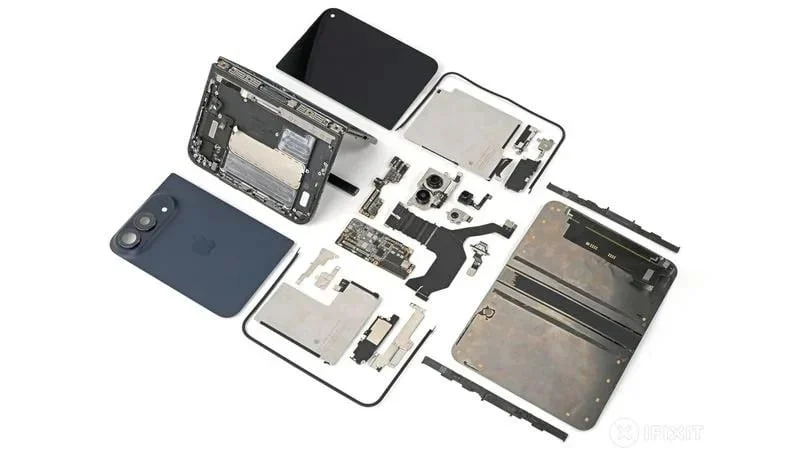
The debut of the iPhone Duo, Apple’s highly anticipated entry into the foldable smartphone market, has prompted an immediate and thorough teardown analysis by iFixit, the industry-leading authority on device repairability. As Apple pivots to compete in the burgeoning foldable segment—a category previously dominated by Samsung and Google—the mechanical integrity and serviceability of the iPhone Duo have become focal points for both tech enthusiasts and industry analysts. The recent teardown provides a granular look at the engineering decisions Apple made to address the inherent weaknesses of foldable technology, specifically regarding hinge mechanics, dust ingress, and internal component accessibility.
The Evolution of Apple’s Foldable Strategy
Apple’s entry into the foldable space was not a sudden pivot but rather a long-term research and development endeavor. For years, Cupertino maintained a conservative approach, observing the market maturity of the Samsung Galaxy Z Fold series and the Google Pixel Fold line. While competitors faced significant criticism regarding display creases and hinge reliability, Apple’s strategy appeared to prioritize material science and modular design before bringing a product to market.
The iPhone Duo represents the culmination of this wait-and-see strategy. By the time the device reached the hands of teardown experts, the industry had already established a baseline for what consumers expect: a device that survives the rigors of daily life, including exposure to particulate matter and the inevitable wear and tear of a folding mechanism.
Durability Testing: The IP68 Benchmark
One of the most critical aspects of the iFixit teardown involved assessing the iPhone Duo’s IP68 rating, which signifies high resistance to dust and water ingress. To test the efficacy of the device’s seals, iFixit subjected the phone to a controlled environment filled with fine, fluorescent dust.
Under these conditions, the iPhone Duo performed remarkably well. While minimal dust was observed in the USB-C port, speaker grilles, and bezel crevices, the internal components remained largely untouched by the abrasive particles. This is a significant milestone, as dust accumulation within the hinge mechanism is the primary cause of failure in most foldable smartphones, often leading to restricted movement or catastrophic screen damage.
When compared to its direct competitors—the Galaxy Z Fold8 and the Pixel 11 Pro Fold—the iPhone Duo’s hinge design demonstrated superior dust mitigation. The internal seals appear to be more tightly calibrated, preventing the "crunching" sound often reported in earlier generations of foldable devices. However, iFixit cautioned that despite these high ratings, the device is not entirely "beach-proof." The mechanical nature of the hinge remains a vulnerability; while it performs well in testing, persistent exposure to sand and fine grit remains a potential long-term risk for the moving parts, suggesting that Apple’s engineering is robust but not invincible.
The Conflict of Findings: External Verification
The durability discourse surrounding the iPhone Duo was further complicated by independent testing from popular tech analyst JerryRigEverything. During his stress tests, which included more aggressive exposure to debris, he observed that dust particles could indeed penetrate the hinge assembly. Crucially, these particles interfered with the high-strength magnets responsible for keeping the phone in a secure, closed position. This conflict in findings—between iFixit’s controlled lab environment and real-world, high-intensity testing—highlights the ongoing struggle between creating a seamless user experience and maintaining the mechanical integrity of a complex folding hinge.
Modular Engineering and Repairability
A standout revelation from the iFixit teardown is the device’s commitment to repairability, a departure from the "glued-shut" reputation of older iPhone models. Apple has integrated a new, user-friendly approach to the device’s protective outer layer. The nano-structured protective film is designed to be easily removed and replaced.
This design choice serves two purposes: it allows for the mitigation of the "crease fatigue" common in foldables, and it reduces the financial burden on the consumer. With AppleCare+, the cost of replacing this layer is set at a modest $19, while standard out-of-warranty costs are capped at $49. This pricing strategy suggests that Apple acknowledges the screen protector as a consumable component rather than a permanent part of the display assembly.
Furthermore, the iPhone Duo utilizes the same advanced battery adhesive technology first introduced in the iPhone 16 series. By applying a low-voltage electrical current to the adhesive, technicians can easily release the battery from the chassis. iFixit explicitly characterized this as the "best battery removal experience" to date in the foldable smartphone market. This is a major improvement over the labor-intensive, heat-heavy methods required for previous devices, which often risked damaging the delicate internal circuitry.
Component Accessibility: A Shift in Philosophy
The ease of access to the iPhone Duo’s internal components is largely facilitated by the construction of the external display. The outer screen is designed to be easily removable and possesses a robust structural integrity that allows it to serve as a gateway to the phone’s internals without requiring the removal of the primary folding display.
This is a significant architectural achievement. In many existing foldable phones, accessing the battery or the motherboard necessitates dismantling the most fragile part of the device: the flexible OLED screen. By allowing technicians to access the device from the outer screen side, Apple has effectively minimized the risk of total device failure during standard repair procedures. This modular approach is expected to lower insurance premiums and repair costs, potentially increasing the device’s resale value over time.
Broader Implications for the Smartphone Industry
The introduction of the iPhone Duo, combined with its high repairability score, signals a shift in how major manufacturers perceive the lifecycle of premium electronics. For years, the smartphone industry trended toward increasingly thin, unrepairable designs. However, as consumers demand more sustainable products and right-to-repair legislation gains traction in the European Union and the United States, Apple’s move to make the iPhone Duo modular and repairable is both a tactical and a regulatory response.
The success of the iPhone Duo’s internal layout could set a new industry standard. If competitors cannot match the ease of battery replacement and the accessibility of internal components found in the Duo, they risk losing market share among power users and enterprise clients who prioritize longevity and serviceability.
Looking Ahead: The Future of the Foldable Segment
The iFixit teardown is only the first chapter in the long-term assessment of the iPhone Duo. While the initial findings are promising, the long-term performance of the folding hinge remains the ultimate test. Mechanical hinges are subject to "metal fatigue," and the consistency of the internal lubricants and dust seals over thousands of fold cycles will determine if the iPhone Duo truly holds the crown in the foldable category.
For Apple, the iPhone Duo is a statement of intent. It proves that the company can enter a high-risk, high-complexity hardware category and immediately apply its proprietary standards for quality, repairability, and durability. As the market for foldable devices continues to expand, the iPhone Duo’s design philosophy will likely serve as the blueprint for future iterations of Apple’s folding hardware, potentially including tablets and laptop hybrids.
Chronology of Apple’s Foldable Journey
- 2019-2021: Apple files multiple patents related to flexible display technology and hinge-locking mechanisms, focusing heavily on reducing the visibility of the screen crease.
- 2022: Rumors intensify as supply chain partners in Asia begin prototyping foldable display panels for Apple.
- 2023: Apple reportedly pivots its focus toward perfecting the hinge mechanism to ensure it can survive a minimum of 200,000 folds.
- Early 2024: Final testing phases occur, with Apple’s engineering team focusing on the IP68 dust and water resistance ratings.
- Q3 2024: The official launch of the iPhone Duo.
- Post-Launch: iFixit performs the comprehensive teardown, confirming the implementation of modular battery adhesives and a replaceable nano-film screen protector.
Conclusion: A Measured Triumph
The teardown of the iPhone Duo reveals a device that is as much a victory for mechanical engineering as it is for the repair community. By successfully balancing the demands of a high-end foldable device with the necessity of accessible, replaceable parts, Apple has addressed the two most common criticisms of its products: fragility and difficulty of repair.
While the device is not entirely impervious to the harsh realities of dust and grit, its internal design suggests that it is built to last significantly longer than its predecessors. As Apple continues to iterate on this platform, the focus will likely remain on refining these mechanical seals and further simplifying the modular architecture. For now, the iPhone Duo stands as a sophisticated piece of hardware that balances the cutting-edge appeal of a foldable with the pragmatic design language that has defined Apple’s recent hardware evolution. The industry will be watching closely to see if the iPhone Duo maintains this durability over months and years of consistent use, but the early data points toward a highly refined, repair-friendly product that may well shift the trajectory of the foldable smartphone market.