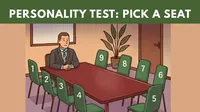
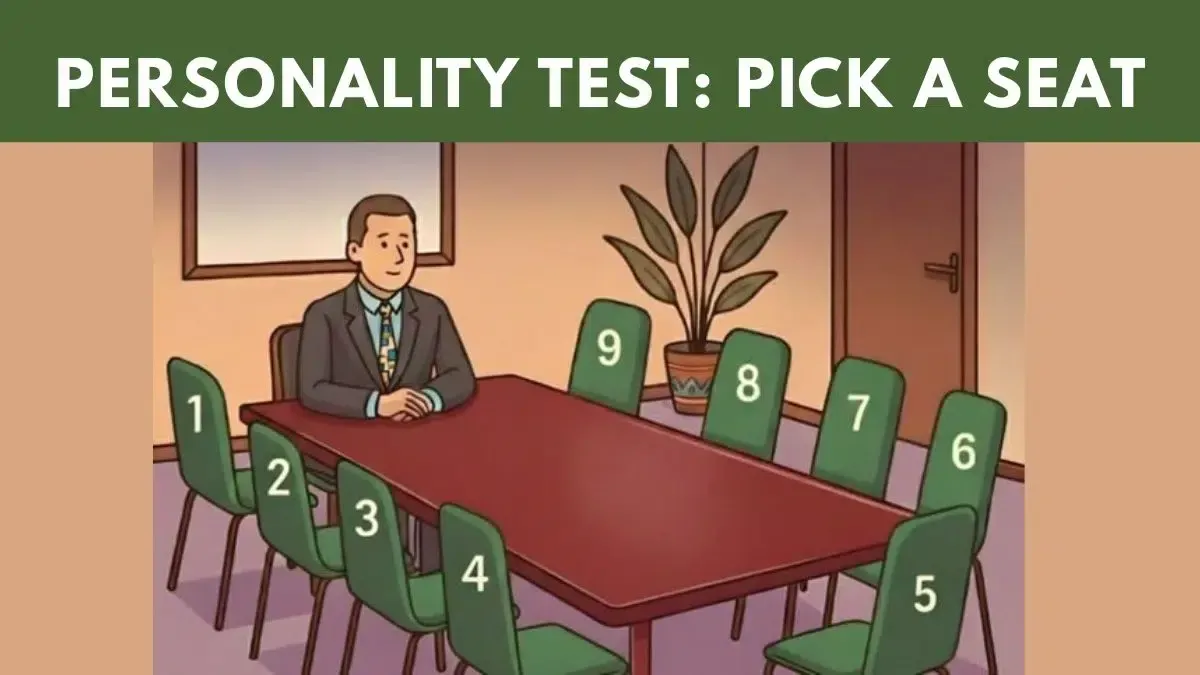
In the modern professional landscape, the quest for self-awareness has moved beyond formal performance reviews and into the realm of psychological self-assessment. On Friday, July 17, 2026, a personality test originally popularized by The Minds Journal and disseminated through lifestyle platforms like Beautynesia gained significant traction among professionals seeking to understand their subconscious social behaviors. The test, which utilizes a visual scenario involving a boardroom setting, asks participants to choose one of nine empty chairs in a room where senior management is already seated. While seemingly a simple exercise in preference, psychologists and behavioral experts suggest that such choices are deeply rooted in "proxemics"—the study of human use of space and the effects that population density has on behavior, communication, and social interaction.
The scenario presented is designed to evoke a specific emotional response: a formal, serious, and high-pressure environment. By placing the participant in a room with senior management at a rectangular table, the test taps into the individual’s relationship with authority, their comfort level with visibility, and their instinctive approach to conflict or collaboration. As digital engagement with psychological tools continues to rise, this specific test highlights a broader trend of "pop-psychology" being used as a gateway for deeper introspection regarding workplace identity and interpersonal communication styles.
The Psychological Foundation of Situational Choice
Visual personality tests are often categorized as "projective tests" in the field of psychology. Much like the famous Rorschach inkblot test, these assessments present an ambiguous situation or image, allowing the individual to project their own internal values, fears, and personality traits onto the scene. In the case of the "nine chairs" test, the variable is the distance and angle relative to the "senior management" figures seated at the center of the table.
According to Dr. Edward T. Hall, who coined the term proxemics in 1963, the distance we maintain from others is a non-verbal communication tool that signals our level of comfort and the nature of the relationship. In a professional boardroom, seating is rarely accidental. Historical data from corporate behavioral studies suggests that those who sit closest to the center of power (often the "head" or the middle of the long side of the table) are typically perceived as more dominant or eager to influence, while those at the periphery may be seen as observers or cautious participants.
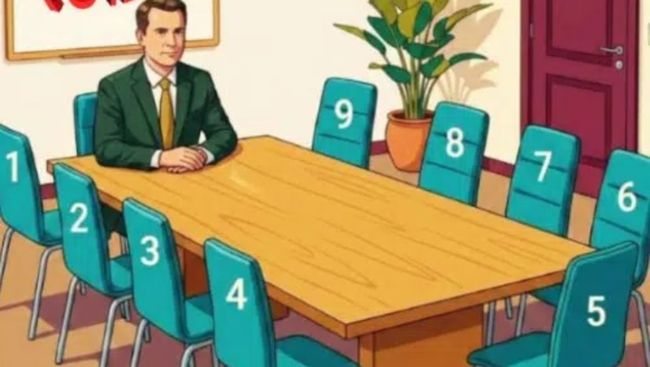
A Comprehensive Breakdown of the Nine Chairs
The test offers nine distinct positions, each corresponding to a specific psychological profile. Below is an expanded analysis of what each choice signifies regarding an individual’s professional persona and social interaction style.
Seat No. 1: The Proactive Guardian
Choosing the first chair indicates a personality characterized by bravery and unyielding loyalty. In a corporate environment, this individual is the "first responder." When a project fails or a crisis emerges, they do not retreat into the shadows; instead, they move toward the problem to investigate and resolve it. This person values transparency and efficiency, often stepping up to assist without the need for public recognition or "drama." Their presence acts as a stabilizing force in high-tension environments.
Seat No. 2: The Stoic Mediator
The second chair is favored by those who value equilibrium and emotional regulation. Rather than rushing into the fray, this individual maintains a strategic distance that allows them to observe the room’s temperature. They are often the "calm in the storm," and colleagues frequently turn to them for objective advice. Their primary goal is to maintain personal peace and collective balance, making them excellent in roles that require negotiation or conflict resolution.
Seat No. 3: The Deliberative Thinker
Those who select the third chair are defined by their cautious and reflective nature. This individual views impulsive action as a risk to be managed. Before contributing to a discussion or making a decision, they engage in deep internal analysis. They are the ones who will take extensive notes and follow up with a well-reasoned email the following day. Their communication is precise, ensuring that when they do speak, their message is clear, impactful, and thoroughly vetted.
Seat No. 4: The Analytical Critic
Seat number four attracts the "Devil’s Advocate." This individual is not content with surface-level agreements. They possess a critical mind that instinctively searches for gaps in logic or potential pitfalls in a plan. Choosing this seat suggests a person who values truth over harmony. They are likely to ask the difficult questions that others might avoid, ensuring that the team’s strategy is robust and realistic.
Seat No. 5: The Radical Truth-Teller
The fifth chair represents the most direct and unfiltered personality type. This individual is characterized by a lack of intimidation toward authority figures. They do not adjust their opinions to suit the hierarchy of the room. This "bluntness" is not intended to be offensive but stems from a deep-seated value for authenticity. In a workplace, they are the ones who provide the most honest feedback, serving as a vital reality check for leadership.
Seat No. 6: The Silent Strategist
Positioned at the edge, the choice of the sixth chair signals a preference for observation over participation. This individual is often underestimated because of their silence. However, their silence is active, not passive. They absorb every detail, nuance, and unspoken tension in the room. When they finally choose to speak, their insights are often the most profound because they are informed by a total overview of the conversation.
Seat No. 7: The Selective Contributor
The seventh chair is the choice of the energy-conscious professional. This individual is not cold or detached, but they are highly selective about where they invest their effort. They believe in the "Pareto Principle"—that 80% of results come from 20% of effort—and they save their voice for the most critical moments. They are often highly efficient workers who avoid unnecessary meetings and corporate "noise."
Seat No. 8: The Empathic Harmonizer
Choosing the eighth chair indicates a high degree of Emotional Intelligence (EQ). This person is more concerned with the atmosphere and the well-being of the participants than the technicalities of the agenda. They are the first to notice if a colleague is feeling stressed or marginalized and will work subtly to ease the tension. They do not seek to lead the meeting, but they are essential for maintaining the team’s morale and psychological safety.
Seat No. 9: The Trusted Confidant
The final chair represents a personality that thrives on trust and close-knit alliances. This individual prefers to sit near those they trust, using that proximity to gain a sense of security and clarity. They are the "right-hand" people of the corporate world, excelling in one-on-one dynamics and small-group collaborations where they can build deep, meaningful professional relationships.

Corporate Implications and the "Barnum Effect"
While these tests provide a fun and engaging way to reflect on one’s character, behavioral scientists often point to the "Barnum Effect" (or Forer Effect) as a reason for their high resonance. This psychological phenomenon occurs when individuals believe that generic personality descriptions apply specifically to them, despite the descriptions being vague enough to apply to a wide range of people.
However, the utility of these tests in 2026 goes beyond simple entertainment. Many Human Resources departments and organizational psychologists use similar situational assessments to help teams understand their "cognitive diversity." By identifying who in a room is a "Critic" (Seat 4) versus who is a "Harmonizer" (Seat 8), a team can better navigate the friction that naturally occurs during high-stakes decision-making.
Industry data suggests that teams with a balanced mix of these nine archetypes are more resilient and innovative. For instance, a team comprised entirely of "Proactive Guardians" (Seat 1) might act too quickly without enough analysis, while a team of "Deliberative Thinkers" (Seat 3) might suffer from "analysis paralysis."
The Evolution of Personality Testing in Digital Media
The viral nature of the "nine chairs" test on platforms like Beautynesia reflects a shift in how the public consumes psychological content. Traditionally, personality assessment was the domain of clinical psychologists or specialized career counselors. Today, digital media has democratized access to these tools, packaging complex psychological theories into digestible, visual formats.
This trend is also driven by the increasing importance of "soft skills" in the global economy. As artificial intelligence takes over technical and administrative tasks, the ability to navigate human dynamics—self-awareness, empathy, and strategic communication—has become the primary currency of the modern professional. Tests that offer even a glimmer of insight into these traits are highly valued by a workforce that is increasingly focused on personal branding and emotional growth.

Conclusion: The Value of Introspection
As the 2026 report on this personality test suggests, the specific chair one chooses is less about a fixed destiny and more about a snapshot of one’s current psychological state and professional priorities. Whether one is the "Silent Strategist" at the end of the table or the "Proactive Guardian" at the front, the exercise serves as a reminder that every individual brings a unique perspective to the table—literally and figuratively.
While no single test can capture the full complexity of the human psyche, the "nine chairs" scenario provides a valuable framework for self-reflection. It encourages professionals to ask themselves: Why do I feel the need to be close to power? Why do I prefer to observe from the sidelines? Am I speaking my truth, or am I prioritizing harmony? In the fast-paced, often impersonal world of modern business, these moments of introspection are not just "fun"—they are essential for developing the self-awareness required to lead, follow, and collaborate effectively.
The Buzznesia and Beautynesia communities continue to foster these discussions, bridging the gap between casual digital content and meaningful personal development. By engaging with these tests, individuals are not just "picking a chair"; they are participating in a larger cultural conversation about what it means to be a conscious, engaged member of a modern professional community.