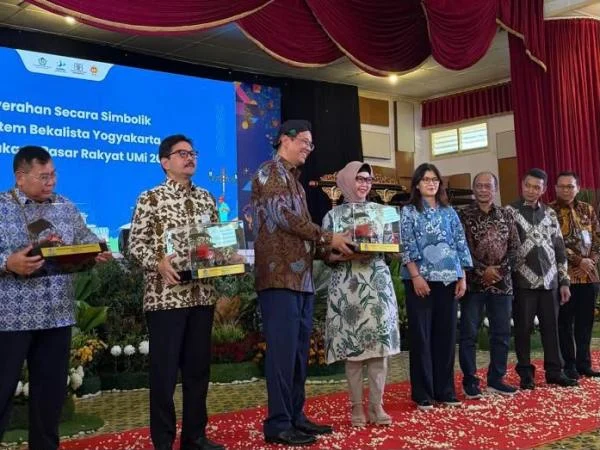
YOGYAKARTA – PT Pegadaian (Persero), a state-owned financial institution, in a strategic collaboration with the Government Investment Center (Pusat Investasi Pemerintah, PIP), has significantly advanced economic empowerment and environmental sustainability initiatives in Yogyakarta by distributing 50 units of Electric Tourist Pedicabs (Becak Kayuh Listrik Wisata, known as Bekalista). This substantial investment, valued at Rp1.4 billion, was directed towards the Bekalista ecosystem in Yogyakarta, marking a pivotal step in strengthening the local micro-economy and promoting eco-friendly tourism. The initiative earned Pegadaian a notable commendation from the Minister of Finance of the Republic of Indonesia, Purbaya Yudhi Sadewa, who presented a miniature electric pedicab award to Tribuana Tunggadewi, Director of Human Capital at PT Pegadaian (Persero), at the historic Sasana Hinggil Kraton Yogyakarta on Thursday, June 16. This recognition underscores the strategic importance of public-private partnerships in driving sustainable development and fostering economic resilience at the grassroots level.
Background: Yogyakarta’s Commitment to Heritage and Sustainability
Yogyakarta, a Special Region renowned for its rich cultural heritage and vibrant tourism, has been at the forefront of implementing progressive urban development strategies that balance preservation with progress. The region’s commitment to sustainable practices gained significant momentum following the designation of its cultural axis, encompassing areas like Jalan Malioboro and Jalan Margo Mulya, as a UNESCO World Heritage site. This prestigious recognition comes with a profound responsibility to protect and manage these historical landscapes, necessitating a re-evaluation of urban infrastructure and transportation systems to align with international heritage conservation standards.
In response to this mandate, the Provincial Government of DI Yogyakarta has aggressively pursued programs aimed at establishing low-emission zones and expanding pedestrian areas, particularly within the iconic Malioboro and Margo Mulya corridors. These initiatives are designed to enhance the visitor experience, reduce environmental impact, and preserve the unique ambiance of these historical thoroughfares. A crucial component of this transformation involves addressing the prevalent use of motor-powered pedicabs (bentor), which, despite their historical presence, contribute to air and noise pollution, undermining the objectives of the low-emission zones. The government’s strategic solution has been to encourage a transition towards traditional pedal-powered becaks and, more innovatively, electric-assisted pedicabs like Bekalista, offering a modern yet environmentally conscious alternative that respects the area’s cultural essence.
The Genesis of Bekalista: A Solution for Sustainable Mobility
The becak, a quintessential mode of transport and cultural icon in Yogyakarta, faces a complex future. While traditional pedal becaks embody heritage, their operational limitations in a rapidly modernizing urban landscape have led many drivers to adopt motor-powered versions. However, these motorized alternatives often pose environmental challenges due to their reliance on fossil fuels and their contribution to traffic congestion and noise pollution. The Bekalista program emerges as an ingenious solution, bridging the gap between tradition and modernity. By integrating electric assistance into the classic becak design, Bekalista offers an eco-friendly, efficient, and economically viable mode of transport that aligns perfectly with Yogyakarta’s vision for sustainable tourism and urban development.
Each Bekalista unit represents a significant upgrade, providing drivers with an easier, less physically demanding way to operate, thereby extending their working lives and improving their income potential. The electric motor assistance reduces the physical strain associated with pedaling, especially when carrying passengers or navigating inclines, making the profession more accessible and sustainable for a wider demographic of drivers. Furthermore, the zero-emission operation of Bekalista vehicles directly contributes to cleaner air quality in the bustling tourist areas, enhancing the overall experience for both residents and visitors.

Strategic Collaboration for Broader Impact
The partnership between PT Pegadaian (Persero) and PIP is a testament to the power of synergy in addressing complex socio-economic and environmental challenges. PT Pegadaian, known for its extensive network and commitment to community development through various Corporate Social Responsibility (CSR) and Environmental, Social, and Governance (ESG) initiatives, brings its financial strength and strategic outreach to the table. The company’s vision extends beyond traditional pawning services to encompass broader societal contributions, particularly in supporting micro, small, and medium-sized enterprises (MSMEs) and fostering sustainable livelihoods.
PIP, as the Government Investment Center, plays a crucial role in channeling state investments towards projects that have a significant social and economic impact. Its involvement ensures that the Bekalista program is aligned with national development goals, particularly those focused on empowering local economies, reducing poverty, and promoting green technologies. By co-funding the Bekalista initiative, PIP reinforces its mandate to support sustainable development projects that yield both economic returns and positive societal outcomes. The Rp1.4 billion investment not only covers the cost of the 50 Bekalista units but also potentially includes associated training, maintenance support, and infrastructure development, ensuring the long-term viability and success of the program.
Official Recognition and Endorsement
The formal appreciation from the Minister of Finance, Purbaya Yudhi Sadewa, underscores the national significance of the Bekalista program. In his remarks, Minister Sadewa highlighted the critical role of state-owned enterprises like Pegadaian in complementing government efforts to stimulate economic growth at the grassroots level while simultaneously addressing environmental concerns. He emphasized that such collaborative initiatives serve as a model for how the public and private sectors can work together to achieve sustainable development goals. The Minister’s commendation of Pegadaian’s strategic collaboration in mobilizing the micro-sector in DI Yogyakarta signifies a broader governmental endorsement of innovative solutions that integrate economic empowerment with ecological stewardship.
Tribuana Tunggadewi, Director of Human Capital at PT Pegadaian (Persero), expressed gratitude for the recognition, reaffirming Pegadaian’s unwavering commitment to fostering a sustainable economy and preserving cultural heritage. She articulated that the Bekalista program is more than just a donation; it is an investment in the future of Yogyakarta’s tourism, its environment, and the livelihoods of its becak drivers. Tunggadewi emphasized Pegadaian’s dedication to supporting MSMEs, which form the backbone of Indonesia’s economy, and to contributing to a greener, more prosperous nation. The award, presented in the symbolic setting of Sasana Hinggil Kraton Yogyakarta, further solidified the cultural and historical resonance of the initiative.
Impact on Local Economy and Livelihoods
The direct beneficiaries of the Bekalista program are the becak drivers, who represent a vital part of Yogyakarta’s cultural landscape and tourism industry. The transition to electric-assisted pedicabs offers several tangible benefits:

- Increased Income Potential: Reduced physical exertion allows drivers to work longer hours and complete more trips, potentially leading to higher daily earnings.
- Reduced Operational Costs: Unlike motor-powered bentors that require fuel, Bekalista units incur significantly lower running costs, primarily for electricity, thus increasing the drivers’ net income.
- Enhanced Comfort and Dignity: The electric assist makes the job less strenuous, improving the quality of life for drivers and potentially attracting new individuals to the profession.
- Modernization without Losing Tradition: Bekalista maintains the iconic aesthetic of the traditional becak while incorporating modern, sustainable technology, ensuring the profession remains relevant and attractive to tourists.
- Improved Safety: Electric assistance can contribute to more controlled and safer operation, particularly in crowded tourist areas.
Beyond the individual drivers, the program has a ripple effect on the local economy. A more vibrant and sustainable becak service enhances the overall tourist experience, potentially increasing visitor numbers and spending in Malioboro and surrounding areas. This, in turn, benefits other micro-enterprises such as souvenir shops, food stalls, and local guides, creating a positive feedback loop for the entire tourism ecosystem.
Environmental Benefits and Urban Transformation
The introduction of 50 Bekalista units represents a significant stride towards achieving Yogyakarta’s environmental goals. Each electric pedicab replaces a potentially polluting internal combustion engine, contributing to:
- Reduced Air Pollution: Eliminating exhaust emissions (carbon monoxide, nitrogen oxides, particulate matter) from bentors directly improves air quality in dense urban and tourist areas. This is crucial for public health and for maintaining the pristine environment of a UNESCO World Heritage site.
- Lower Noise Pollution: Electric motors operate silently compared to gasoline engines, significantly reducing noise levels in Malioboro, creating a more tranquil and enjoyable atmosphere for pedestrians and residents.
- Contribution to Climate Goals: By promoting zero-emission transport, the program aligns with Indonesia’s broader commitments to reduce greenhouse gas emissions and combat climate change.
- Sustainable Tourism Image: Yogyakarta further solidifies its reputation as a sustainable tourism destination, appealing to environmentally conscious travelers and setting a precedent for other heritage cities.
The Bekalista program is an integral part of the broader urban transformation underway in Malioboro. By promoting non-motorized and electric modes of transport, the city is reclaiming its public spaces for pedestrians, fostering a more intimate and culturally immersive experience. This holistic approach ensures that economic development goes hand-in-hand with environmental protection and cultural preservation.
Broader Implications and Future Outlook
The success of the Bekalista initiative in Yogyakarta carries broader implications for urban planning, sustainable tourism, and MSME empowerment across Indonesia. It demonstrates that:
- Public-private partnerships are crucial: Effective collaboration between state-owned enterprises, government bodies, and local communities can deliver impactful solutions.
- Green technology can preserve heritage: Modern sustainable technologies can be integrated into traditional contexts without compromising cultural integrity.
- MSME empowerment is multifaceted: Supporting micro-enterprises extends beyond financial aid to include modern tools, training, and a conducive operating environment.
- Replication potential: The Bekalista model could be replicated in other Indonesian cities facing similar challenges of balancing tourism development, heritage preservation, and environmental sustainability.
PT Pegadaian and PIP are likely to continue exploring similar initiatives, reinforcing their commitment to ESG principles and national development priorities. As Indonesia strives to achieve its sustainable development goals and foster a green economy, programs like Bekalista serve as beacons of innovation and collaboration, proving that economic prosperity and environmental stewardship can indeed progress hand-in-hand. The transformation of Yogyakarta’s iconic becaks into eco-friendly electric vehicles is not just a local success story but a powerful narrative of how thoughtful intervention can create a sustainable future for communities and their cherished cultural heritage.