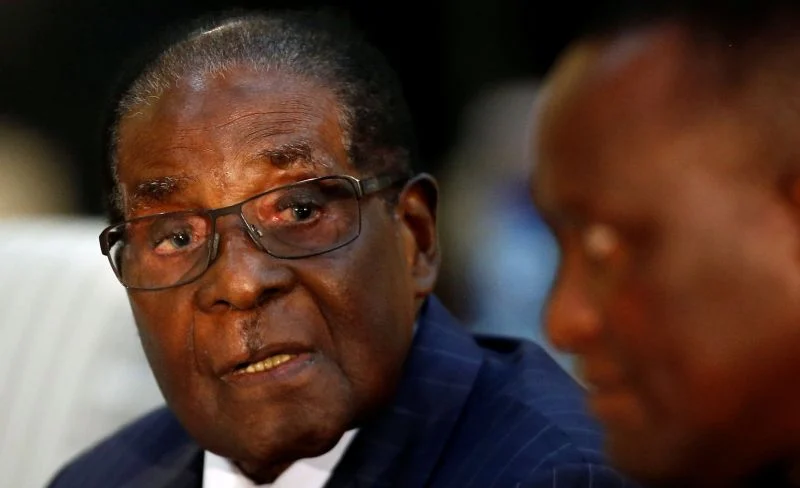
Robert Gabriel Mugabe officially relinquished his position as President of Zimbabwe on Wednesday, November 22, 2017, marking the end of an era that spanned nearly four decades. The departure of the 93-year-old leader, who was the world’s oldest head of state, came after a period of intense political pressure and military intervention, culminating in his resignation. The announcement was met with widespread jubilation across the southern African nation, as citizens poured into the streets to celebrate the end of Mugabe’s long and often controversial rule.
For 37 years, Mugabe was the dominant figure in Zimbabwean politics, first as Prime Minister and then as President. His tenure began in 1980, following Zimbabwe’s declaration of independence from white minority rule. While initially lauded as a liberator and a symbol of African nationalism, his leadership became increasingly characterized by authoritarianism, alleged human rights abuses, economic mismanagement, and electoral manipulation. The events leading to his resignation were a dramatic culmination of growing discontent, internal party power struggles, and a decisive move by the country’s military, which effectively placed Mugabe under house arrest.
The jubilation on the streets of Harare and other Zimbabwean cities was palpable. Citizens danced, chanted, and expressed their relief and optimism for a new political chapter. Members of Parliament also shared in the widespread elation, signaling a significant shift in the political landscape. This outpouring of emotion underscored the deep-seated desire for change that had been building for years, fueled by economic hardship and a lack of political freedoms.
The Rise of a Revolutionary: Mugabe’s Early Life and Struggle for Independence
Robert Gabriel Mugabe was born on February 21, 1924, in Kutama, then part of the British colony of Southern Rhodesia, later renamed Zimbabwe. His early life was shaped by the harsh realities of colonial rule and racial segregation. A highly educated individual, Mugabe earned multiple university degrees, including seven in total, and began his career as a teacher. This academic background, combined with his experiences under colonial oppression, forged his path towards activism and armed struggle.
His political awakening intensified in the 1960s. In 1964, Mugabe was imprisoned for 10 years for making "subversive speeches" against the white minority government. During his incarceration, he continued his studies, earning law degrees through correspondence. Upon his release in 1974, Mugabe emerged as a pivotal figure in the liberation movement, spearheading the Zimbabwe African National Union (ZANU) and its armed wing, the Zimbabwe African National Liberation Army (ZANLA). He galvanized nationalist sentiment, inspiring a protracted and bloody guerrilla war against the Rhodesian government, advocating for majority rule and an end to racial discrimination.
The protracted liberation struggle, fought from neighboring Mozambique, eventually forced the white minority government to the negotiating table. In 1979, the Lancaster House Agreement was signed, paving the way for Zimbabwe’s independence. In 1980, Robert Mugabe became the first Prime Minister of the newly independent Zimbabwe, a position he held until 1987 when he transitioned to the presidency under a new constitution.
A Legacy of Contradictions: Economic Decline and Political Repression
Mugabe’s early years in power were marked by efforts to foster national reconciliation and develop social services, including education and healthcare. However, this period also saw the emergence of darker aspects of his leadership. The Gukurahundi massacres in the early 1980s, a brutal crackdown on perceived political opposition in the Matabeleland region, resulted in the deaths of thousands of civilians, primarily Ndebele. This event cast a long shadow over his legacy, highlighting a willingness to use extreme violence to consolidate power.
Economically, Zimbabwe experienced initial growth in the 1980s. However, the late 1990s and the new millennium witnessed a dramatic decline. The controversial land reform program, initiated in 2000, involved the often violent seizure of white-owned commercial farms and their redistribution to black Zimbabweans. While intended to address historical land imbalances, the program was largely characterized by corruption and incompetence, leading to a collapse of the agricultural sector, which was the backbone of the economy. This resulted in hyperinflation, widespread shortages of basic goods, and mass unemployment, forcing millions of Zimbabweans to emigrate.
International sanctions, imposed by Western countries in response to alleged human rights abuses and electoral fraud, further exacerbated Zimbabwe’s economic woes. Despite these challenges, Mugabe consistently maintained that the country’s economic problems were a result of Western interference and neocolonialism.
The Final Chapter: Succession Battles and Military Intervention
In the years leading up to his resignation, the issue of Mugabe’s successor became increasingly contentious. His wife, Grace Mugabe, emerged as a powerful figure within the ruling ZANU-PF party, positioning herself as a potential successor. This ambition led to a series of purges within the party, targeting senior officials perceived as rivals to Grace’s ascent.
The decisive moment came on November 14, 2017, when the Zimbabwe Defence Forces (ZDF) placed President Mugabe under house arrest. Citing the need to address "criminal elements" around the president who were allegedly causing social and economic suffering, the military’s intervention was widely interpreted as a soft coup. This move effectively ended Mugabe’s grip on power, which had been maintained through a combination of political maneuvering, suppression of dissent, and the loyalty of key institutions, including the military.
The ZDF commander, General Constantino Chiwenga, stated that the military’s actions were not a coup and aimed to restore normalcy and constitutional order. Following the military intervention, ZANU-PF parliamentarians initiated impeachment proceedings against Mugabe. Faced with overwhelming pressure from within his party, the military, and the public, Robert Mugabe submitted his resignation on November 21, 2017, bringing his 37-year rule to an end.
International Reactions and the Path Forward
The international community largely welcomed Mugabe’s resignation, viewing it as an opportunity for Zimbabwe to embark on a new path towards democracy and economic recovery. United Nations Secretary-General António Guterres expressed hope for a peaceful transition and a brighter future for the Zimbabwean people. Leaders from neighboring African countries also issued statements, acknowledging the significance of the transition and emphasizing the importance of stability and democratic principles.
The resignation of Robert Mugabe marked a pivotal moment for Zimbabwe. The country now faces the daunting task of rebuilding its economy, addressing deep-seated social inequalities, and fostering democratic institutions. The legacy of Robert Mugabe remains a complex and deeply debated subject, encompassing both his role as a liberator and the authoritarian and economic mismanagement that characterized his later years. The coming months and years will be crucial in determining whether Zimbabwe can truly turn the page and forge a more prosperous and democratic future for its citizens. The challenges ahead are immense, but the widespread optimism following Mugabe’s departure suggests a collective desire for profound change.