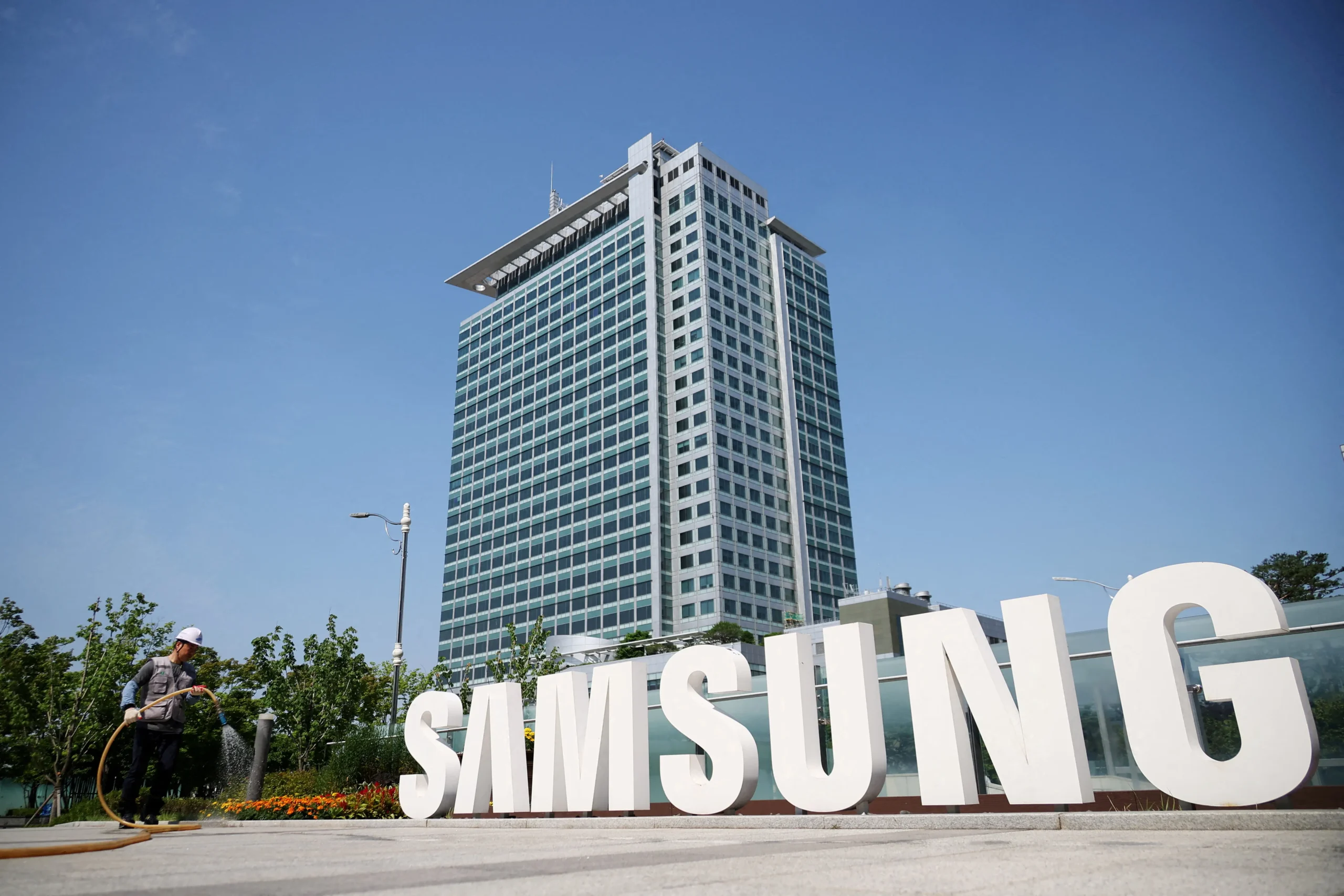
Samsung Electronics has officially redefined the upper limits of financial performance within the global technology sector, posting an unprecedented financial report for the third quarter of 2026. Bolstered by an insatiable global demand for advanced artificial intelligence infrastructure, the South Korean multinational conglomerate reported a staggering operating profit of 107.4 trillion won, equivalent to approximately USD 80.47 billion. This monumental figure marks a watershed moment not only for Samsung’s corporate history but also for the broader semiconductor industry, highlighting the profound economic shifts brought about by the generative AI revolution.
Alongside its record-shattering operating profit, Samsung’s quarterly revenue surged to 195.3 trillion won, representing a phenomenal 126% year-over-year increase compared to the corresponding period in 2025. Financial analysts and market observers note that this performance outpaces even the most optimistic consensus forecasts, signaling that the structural demand for high-performance computing components has firmly entered an exponential growth phase.
Semiconductor Dominance as the Ultimate Revenue Engine
At the heart of Samsung’s historic quarter is its Device Solutions division, which encompasses the company’s semiconductor and memory operations. This segment functioned as an unmitigated money machine, single-handedly carrying the corporate balance sheet to new heights. According to the financial breakdown, the semiconductor division alone pulled in a massive 147.1 trillion won in revenue, translating into an operating profit of 106.5 trillion won.
The primary catalysts behind this financial triumph are soaring global orders for cutting-edge memory technologies, specifically High Bandwidth Memory—most notably the advanced HBM4 iterations—and ultra-high-capacity Solid-State Drives (SSDs) designed explicitly for data centers powering large-scale artificial intelligence models. Hyperscale cloud providers, enterprise AI developers, and sovereign computing initiatives have engaged in an aggressive race to secure high-speed memory supply, positioning Samsung at the center of the global technology supply chain.
Beyond memory, Samsung’s foundry business—its custom chip manufacturing arm—is laying the groundwork for sustained future growth. Company executives have outlined aggressive targets, aiming for double-digit revenue growth in the upcoming fourth quarter of 2026. Furthermore, Samsung is pressing forward with its geographical diversification strategy, slated to commence commercial production at its highly anticipated semiconductor manufacturing facility in Taylor, Texas, by 2027. Meanwhile, the System LSI division also contributed positively to the ledger, buoyed by healthy market uptake of proprietary Exynos processors and high-resolution 200-megapixel camera sensors utilized by various smartphone manufacturers worldwide.
A Historical Trajectory: The Path to Q3 2026
To fully understand the gravity of Samsung’s Q3 2026 performance, it is vital to examine the trajectory that led to this milestone. The semiconductor industry historically operates on cyclical supply-and-demand fluctuations, often referred to as the "memory cycle." Following a severe downturn in 2023 characterized by oversupply and depressed memory chip prices, Samsung, alongside its primary competitors, implemented strategic production cuts to stabilize the market.
By late 2024 and throughout 2025, the proliferation of generative AI applications transformed the technology landscape, pivoting the market from a state of general consumer electronics saturation to specialized high-performance hardware scarcity. Samsung navigated this transition by aggressively pivoting its research, development, and manufacturing capacities toward next-generation HBM architectures. While competitors briefly gained early ground in specific AI memory sectors, Samsung’s aggressive yield optimization and mass-production scaling throughout 2025 culminated in the massive revenue realization witnessed in the third quarter of 2026.
Contrasting Fortunes: The Mobile Division Faces Headwinds
Despite the celebratory atmosphere surrounding the semiconductor division, Samsung’s Mobile Experience (MX) and networks division presented a starkly contrasting narrative. The MX division recorded an operating loss of 600 billion won, roughly USD 450 million, for the third quarter.

The primary driver behind this deficit was not a lack of consumer interest, but rather severe margin compression. The very same boom in memory chip demand that enriched the semiconductor division simultaneously inflated component costs for downstream device manufacturing. As memory prices climbed sharply to reflect supply constraints, the cost of producing high-end smartphones escalated correspondingly.
Although flagship device demand—including foldable smartphones and high-end Galaxy series models—remained relatively resilient, the elevated retail price points forced many mainstream consumers to delay hardware upgrades, opting to retain existing devices longer. Consequently, the MX division absorbed the financial brunt of rising input costs while navigating a more cautious consumer electronics market.
Market Implications and Industry-Wide Repercussions
Samsung’s Q3 2026 financial disclosure carries profound implications for the global technology ecosystem. First and foremost, it underscores the degree to which the semiconductor sector has decoupled from traditional consumer device dependencies. While PC and smartphone shipments have experienced fluctuating demand curves over recent years, the insular and perpetually scaling demands of artificial intelligence infrastructure have provided a robust financial floor and ceiling for silicon manufacturers.
Furthermore, the profitability gap between Samsung’s semiconductor and mobile divisions illustrates the complex operational dynamics of vertically integrated conglomerates. While component shortages and rising material costs penalize finished-goods divisions, they simultaneously supercharge upstream manufacturing arms.
Looking ahead, industry analysts project that Samsung’s dominance in high-performance memory will likely persist through the remainder of the decade, provided the capital expenditure of major cloud providers and AI enterprises remains unabated. As Samsung prepares for the commercial activation of its Texas foundry in 2027 and continues to refine its HBM4 product roadmap, the company has cemented its status not merely as a consumer electronics giant, but as an indispensable pillar of the global digital and artificial intelligence economy.