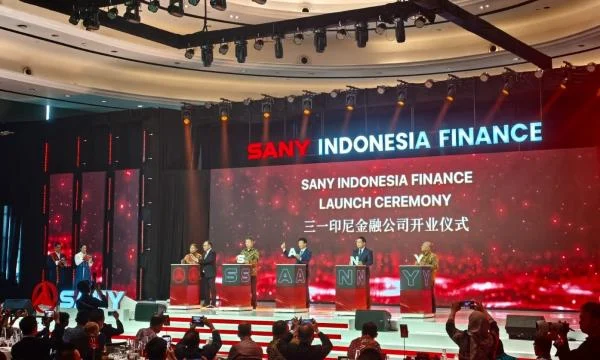
The strategic expansion of Sany Group into the Indonesian financial services sector marks a significant evolution for the global heavy equipment giant. By officially establishing PT Sany Indonesia Finance, the company is transitioning from a traditional manufacturer and distributor of construction machinery into a comprehensive service provider capable of facilitating its own supply chain through captive financing. This development, confirmed following the attainment of an operating license from the Financial Services Authority of Indonesia (OJK), reflects a calculated move to capitalize on the country’s ongoing infrastructure boom and the robust performance of Sany’s equipment sales.
The Strategic Entry into Financial Services
The launch of PT Sany Indonesia Finance, announced during a press conference at the Royal Glasshouse in Park Hyatt Jakarta on Thursday, October 29, 2026, serves as a pivotal cornerstone in Sany’s long-term strategy for the Southeast Asian market. For years, Sany Group has maintained a dominant presence in Indonesia’s construction, mining, and energy sectors. However, the decision to internalize the financing aspect of its business indicates a desire to streamline the customer experience, mitigate credit risks associated with third-party lenders, and ensure that prospective buyers—ranging from small-scale contractors to massive mining conglomerates—have immediate access to capital.
CEO of PT Sany Indonesia Finance, Bryan Kasenda, underscored that the OJK license is not merely a regulatory milestone but a functional necessity. "The acquisition of an operating license from the OJK represents a critical step for Sany Indonesia Finance to solidify our presence in the Indonesian market. We are committed to providing bespoke financing solutions that cater directly to the operational requirements of our clients and business partners, particularly those navigating the capital-intensive nature of the heavy equipment and construction industries," Kasenda stated.
Financial Targets and Growth Projections
The ambitious target of reaching Rp1.5 trillion in net booking by 2027 is rooted in the accelerated demand for Sany’s machinery throughout 2026. This target is designed to be met through a phased implementation of credit products, including equipment leasing, hire-purchase agreements, and structured financing tailored to the life cycle of heavy machinery.
Industry analysts observe that captive finance companies—subsidiaries created by manufacturers to provide financing for the parent company’s products—often achieve higher penetration rates than independent financial institutions. Because Sany Indonesia Finance operates within the same ecosystem as the manufacturer, it can leverage internal data to assess creditworthiness more accurately, potentially offering more competitive interest rates and flexible repayment schedules that align with the productivity of the equipment itself.
The Economic Context: Indonesia’s Infrastructure Trajectory
The timing of Sany’s expansion is closely linked to Indonesia’s broader macroeconomic environment. The country has consistently prioritized large-scale infrastructure projects, including the development of new industrial estates, the construction of toll roads, and the ongoing expansion of mining operations to support the global shift toward electric vehicle (EV) battery production.
Sany’s equipment, which includes excavators, cranes, piling machines, and concrete machinery, has become a fixture on Indonesian job sites. The surge in sales throughout 2026 suggests that the market for construction equipment is not only recovering but thriving. By controlling the financing of these assets, Sany is effectively insulating its sales pipeline from the volatility of external credit markets, which can sometimes tighten during periods of economic uncertainty.
Chronology of Expansion
- Initial Market Entry: Sany Group establishes a strong physical presence in Indonesia, importing heavy machinery to support the nation’s infrastructure push.
- Growth Phase (2020–2025): The brand gains significant market share, establishing an extensive service network and parts supply chain across the archipelago.
- Internalization Strategy (Early 2026): Sany Group begins the formal application process for a non-bank financial institution (multifinance) license with the OJK.
- License Approval (Q4 2026): OJK grants the official operating license to PT Sany Indonesia Finance.
- Launch (October 29, 2026): The official announcement of the company’s launch and the public disclosure of the Rp1.5 trillion net booking target for 2027.
Synergy and Ecosystem Integration
A key differentiator for the new financial arm is its deep integration with the Sany Group ecosystem. Unlike traditional commercial banks that may lack the specialized knowledge required to value or repossess heavy equipment, Sany Indonesia Finance possesses an innate understanding of its own machinery’s residual value and operational performance.
"We have observed a rapid increase in the performance of Sany Group’s sales over the past few years, particularly throughout this year," Kasenda explained. "We can identify the potential early, and we believe this is an opportunity that other financial institutions might not be able to capitalize on as effectively."

This integration offers several advantages:
- Faster Approval Times: By streamlining the underwriting process using proprietary sales data, the company can provide faster credit decisions to contractors.
- Asset Lifecycle Management: Sany can integrate maintenance and service contracts directly into the financing agreement, ensuring the equipment is well-maintained and retains its value, which protects the lender’s collateral.
- Risk Mitigation: Access to real-time machine telematics allows the finance company to monitor the usage of the equipment, helping to predict potential payment defaults based on actual machine activity levels.
Broader Implications for the Construction Sector
The establishment of PT Sany Indonesia Finance is likely to alter the competitive landscape for heavy equipment financing in Indonesia. Existing multifinance companies that have historically provided loans for Sany products may face increased competition from the manufacturer’s captive entity. However, some industry experts suggest that this expansion could actually stimulate the market by bringing more buyers into the fold.
For contractors and mining firms, the entry of a manufacturer-backed financier could lower the barriers to entry. By providing specialized financing, Sany may enable smaller contractors to acquire newer, more efficient machinery, thereby increasing their operational capacity and ability to bid on larger government projects.
Regulatory Oversight and Compliance
The operation of PT Sany Indonesia Finance is subject to the stringent oversight of the OJK. This ensures that the company adheres to national standards regarding capital adequacy, risk management, and consumer protection. The transition into the financial services sector requires a high degree of transparency and adherence to Indonesian financial regulations, which serves as a safeguard for the market.
As the company moves toward its 2027 targets, it will likely focus on building a robust portfolio of high-performing assets. This will involve balancing aggressive growth with prudent risk management, particularly in a global economic climate where interest rates and commodity prices remain variable.
Future Outlook: Looking Toward 2027
The year 2027 will be a defining period for Sany Indonesia Finance. Reaching the Rp1.5 trillion milestone would validate the company’s business model and likely trigger further investment into digital lending platforms and expanded customer support services. As the Indonesian government continues its push for downstreaming—specifically in the nickel and mineral processing industries—the demand for heavy-duty machinery is expected to remain high.
Sany is positioning itself not just as a hardware provider, but as a financial partner. This comprehensive approach ensures that they remain central to Indonesia’s development trajectory. As the company continues to integrate its supply chain with its financial services, it is setting a new benchmark for how global industrial firms can effectively localize their operations to meet the specific needs of the Indonesian market.
By leveraging its massive market share, technical expertise, and now, a dedicated financing arm, Sany Group is demonstrating a long-term commitment to the Indonesian economy. The success of this venture will depend on its ability to navigate the local regulatory landscape while maintaining the trust of a growing client base, but the initial signals indicate a well-orchestrated expansion aimed at sustained, long-term influence in the heavy equipment sector.