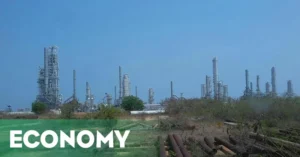
President Joko Widodo conducted a high-profile working visit to the PT Trans Pacific Petrochemical Indotama (TPPI) refinery facility located in Tuban, East Java, marking a crucial step in the government’s ongoing efforts to revitalize strategic domestic energy infrastructure. The presidential inspection, which took place on Wednesday, November 11, 2015, was designed to evaluate the operational readiness and strategic capacity of the long-dormant petrochemical complex. The facility holds immense importance for Indonesia’s national energy security, domestic fuel production self-sufficiency, and the reduction of heavy reliance on imported refined petroleum products.
The head of state was accompanied by a high-ranking delegation of key government officials and corporate leaders. Among those in the official party were Minister of State-Owned Enterprises (SOEs) Rini Soemarno, President Director of state-owned energy giant PT Pertamina (Persero) Dwi Soetijpto, Pertamina Vice President of Corporate Communication Wianda Pusponegoro, and Director General of Oil and Gas at the Ministry of Energy and Mineral Resources IGN Wiratmaja Puja. The presence of these key stakeholders underscored the collaborative approach required between the central government and the state oil conglomerate to successfully restart and manage the complex facility.
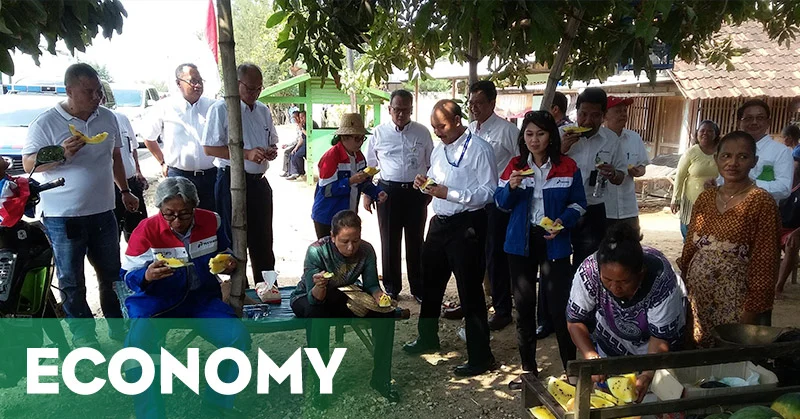
Prior to the formal inspection of the industrial complex, the presidential entourage experienced an impromptu and culturally warm interaction with the local community. The delegation took a walking tour through the neighborhood surrounding the plant. The unexpected presence of the President and top corporate executives drew significant attention from local residents, many of whom gathered to catch a glimpse of the national leaders and eagerly requested photographs with the ministers and Pertamina executives. This lighthearted moment highlighted the strong public interest and local goodwill surrounding the revival of an industrial asset that plays a vital role in the regional economy of Tuban.
Adding a uniquely Indonesian touch to the proceedings, the entourage paused during their neighborhood walk at a small local roadside stall operated by a resident who sold freshly harvested fruit. The delegation took a brief respite to sample locally grown watermarks harvested from agricultural fields situated in close proximity to the TPPI refinery complex. Minister Rini Soemarno enthusiastically invited the accompanying officials and media members to partake in the local produce, praising its quality. "Come on, try the watermelon first. This watermelon is delicious," Minister Rini remarked to the gathering during the stopover. After enjoying several slices of the fresh fruit, the delegation resumed their journey on foot toward the main gates of the TPPI industrial site.
Background Context and Historical Significance of the TPPI Refinery
The PT Trans Pacific Petrochemical Indotama refinery in Tuban has a long and complex history marked by financial restructuring challenges, operational interruptions, and changes in ownership structure. Established as a vital strategic asset for petrochemical and fuel production in Indonesia, the facility was designed to process condensate into high-value products such as premium gasoline, automotive diesel oil, kerosene, and aromatic petrochemicals including paraxylene, benzene, orthoxylene, and heavy aromatics.
For years prior to the 2015 presidential inspection, the refinery suffered from severe financial difficulties and governance issues that led to prolonged operational halts. These stoppages forced Indonesia to rely heavily on expensive imported refined petroleum products to meet domestic market demands, placing a substantial burden on the state budget and the national trade balance. Recognizing the critical need to secure domestic energy supply chains, the administration of President Joko Widodo prioritized the reactivation of idle strategic industrial assets, placing special emphasis on the TPPI complex as a cornerstone of national energy independence.
The Chronology of the 2015 Revitalization Phase
The revitalization of the TPPI refinery did not happen overnight; it was the culmination of intensive inter-ministerial coordination and strategic corporate maneuvering led by the Ministry of SOEs and Pertamina. The chronology of the operational restart leading up to the November 2015 presidential visit involved several decisive milestones:
Initial Takeover and Government Intervention: Recognizing the strategic imperative of the facility, the government utilized state-owned instruments to restructure TPPI’s mounting debts and integrate its operations under the broader umbrella of Pertamina. Through a series of court-supervised debt restructurings and ministerial directives, Pertamina gradually assumed operational control of the plant.
Resumption of Feedstock Processing: Months prior to the official presidential visit, engineering teams successfully initiated the processing of condensate feedstock. This crucial technical phase proved that the long-idle machinery, distillation columns, and chemical processing units could be safely and efficiently brought back online after years of dormancy.
Stabilization of Production Output: By late 2015, the plant began achieving steady output levels of Mogas (motor gasoline) and aromatics. This output immediately contributed to reducing Indonesia’s dependence on imported fuel, injecting much-needed stability into domestic fuel distribution networks managed by Pertamina.

Official Presidential Inspection: The visit by President Joko Widodo on November 11, 2015, served as both a formal validation of the successful restart and a strong political signal regarding the government’s commitment to optimizing state-owned enterprises for public welfare and national economic resilience.
Data and Economic Implications of the TPPI Facility
The economic implications of bringing the TPPI refinery back to full operational capacity are profound. Industry data from the Ministry of Energy and Mineral Resources and Pertamina highlighted the massive scale of the facility and its direct impact on the national economy.
Before its integration into the Pertamina portfolio, the idleness of the Tuban plant contributed to a massive outflow of foreign exchange as Indonesia imported millions of barrels of refined fuel annually. With the refinery operational, Pertamina estimated a significant reduction in daily fuel import costs. At the time of the November 2015 visit, the facility was capable of producing thousands of barrels of fuel per day, directly supplementing the supply capacity of other major domestic refineries such as Cilacap, Balongan, and Balikpapan.
Furthermore, the production of petrochemical products such as paraxylene provided vital raw materials for Indonesia’s domestic textile and plastic manufacturing industries. By securing a local supply of petrochemical inputs, downstream manufacturing sectors were shielded from global commodity price volatility and foreign exchange fluctuations. This created a positive multiplier effect across the entire national industrial ecosystem, supporting thousands of jobs both directly within the plant and indirectly through supply chain logistics, maintenance services, and local commerce in Tuban.
Official Statements and Institutional Perspectives
Corporate and governmental leaders present during the inspection emphasized the collaborative spirit required to overcome the historical hurdles faced by the facility. Pertamina President Director Dwi Soetijpto noted that the integration of TPPI into Pertamina’s downstream supply chain represented a monumental leap forward for national energy sovereignty. He stressed that managing such a complex facility required rigorous adherence to safety standards, technical precision, and sound financial management.
Minister Rini Soemarno consistently underscored the broader mandate of state-owned enterprises during her tenure: to act as agents of development that directly serve the public interest while maintaining commercial viability. The successful restart of the Tuban complex was frequently cited by the Ministry of SOEs as a prime example of how inter-agency cooperation can rescue distressed strategic assets and transform them into profitable, high-utility national assets.
Energy analysts and market observers at the time generally viewed the presidential inspection as a positive and necessary step toward regulatory clarity and operational accountability. By demonstrating high-level political backing, the administration signaled to international and domestic market participants that Indonesia was serious about reforming its energy sector and stamping out inefficiencies that had plagued state infrastructure for decades.
Broader Impact on Indonesia’s Energy Landscape
The events at the Tuban refinery in November 2015 resonated far beyond the borders of East Java. They symbolized a broader structural shift in Indonesian economic policy under President Joko Widodo, moving away from a reliance on raw commodity exports and foreign-dependent import models toward domestic processing, value addition, and infrastructural self-reliance.
The successful reintegration of TPPI set a precedent for subsequent mega-projects in the Indonesian energy sector, including the ongoing Refinery Development Master Plan (RDMP) and Grass Root Refinery (GRR) initiatives undertaken by Pertamina in subsequent years. The lessons learned in restructuring TPPI’s legacy debts, negotiating with creditors, and mobilizing technical engineering talent provided an invaluable playbook for handling other troubled state projects.
As the presidential entourage concluded their informal fruit-tasting break with local residents and proceeded into the industrial core of the refinery, the contrast between the simple, warm local interactions and the immense, complex machinery of the plant captured the dual nature of Indonesia’s development challenge: bridging grassroots community realities with high-stakes national economic strategy. The visit to the TPPI refinery remains a memorable milestone in the ongoing chronicle of Indonesia’s pursuit of energy independence, industrial resilience, and sustainable economic growth.