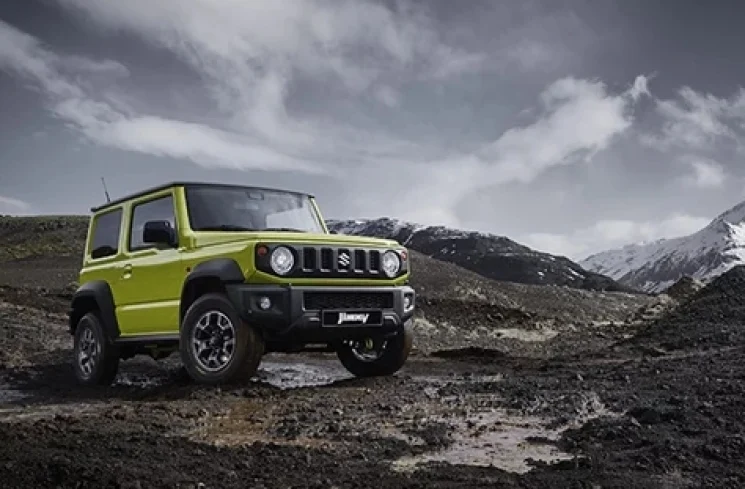
The global automotive landscape is currently undergoing its most significant paradigm shift since the invention of the internal combustion engine. As major manufacturers rush to electrify their lineups in response to tightening emissions regulations and environmental concerns, Suzuki Motor Corporation has taken a decidedly contrarian stance regarding one of its most cherished assets: the Jimny. In a series of definitive statements, the Japanese automaker has clarified that it has no intention of developing an all-electric version of the iconic SUV, prioritizing the preservation of the vehicle’s mechanical character over the rapid adoption of battery-electric vehicle (BEV) technology.
A Commitment to Mechanical Purity
At the heart of Suzuki’s decision lies a profound respect for the Jimny’s heritage. Since its inception, the Jimny has been defined by its simplicity, ruggedness, and mechanical intimacy—qualities that the company believes are inherently threatened by the weight and complexity of battery-electric architectures. Toshihiro Suzuki, the President of Suzuki Motor Corporation, articulated this sentiment clearly during a recent industry discourse. He noted that integrating a battery-electric powertrain into the Jimny would, in his view, destroy the "best part" of the vehicle.
This perspective is not merely a nostalgic attachment to the past; it is a strategic decision based on the vehicle’s identity. The Jimny is widely regarded as a niche, highly capable off-roader designed for enthusiasts who value tactile feedback, lightweight agility, and the ability to repair their vehicles in remote environments—tasks that become significantly more complex with sophisticated high-voltage electrical systems.
Chronology and Evolution of the Jimny
The Suzuki Jimny’s lineage dates back to the 1970s, establishing it as one of the few true global off-road icons. The current fourth-generation model, introduced in 2018, was a masterclass in modernizing a classic design without losing its soul. It maintained the ladder-frame chassis, rigid axles, and low-range transfer case that have defined the series for decades.
Since its 2018 launch, the Jimny has seen few mechanical changes, relying consistently on the 1.5-liter K15B naturally aspirated four-cylinder engine. This powertrain, while modest by contemporary performance standards, produces approximately 75 kW (101 hp) and 130 Nm of torque. When paired with either a five-speed manual or a four-speed automatic transmission, it provides a linear power delivery that is highly valued by off-roaders who prioritize control over raw acceleration.
Despite the industry’s push toward hybrid and electric systems, the Jimny remains a mechanical outlier in Suzuki’s portfolio. It stands as the only vehicle in the brand’s global lineup that has avoided the integration of electrified powertrains, serving as a bastion of traditional automotive engineering in an era of software-defined vehicles.
The Regulatory Challenge: Navigating NVES and Global Emissions
The decision to keep the Jimny gasoline-powered is particularly bold given the stringent regulatory environment. In Australia, for example, the implementation of the New Vehicle Efficiency Standard (NVES) 2027 mandates a significant reduction in fleet-wide emissions. Similar regulations are being enforced across the European Union and parts of Asia, creating a difficult environment for small-displacement, high-emissions-per-kilometer vehicles like the Jimny.
Michael Pachota, General Manager of Suzuki Australia, has echoed the sentiments of the corporate headquarters, confirming that Suzuki remains committed to the Jimny’s traditional platform despite the regulatory pressures. The challenge for Suzuki is to reconcile the Jimny’s existence with these corporate-wide emissions targets. The strategy, according to industry analysts, involves a "portfolio balancing act." By offsetting the emissions of the gasoline-powered Jimny with the sale of high-efficiency hybrid and electric vehicles elsewhere in their lineup—such as the Swift Hybrid or future EV projects—Suzuki can meet regulatory thresholds while keeping the Jimny on the market.
Economic and Market Implications
The market demand for the Jimny has defied conventional wisdom. Even eight years into the current generation’s lifecycle, the vehicle continues to see robust sales and significant waiting lists globally. This enduring popularity suggests that there is a distinct, loyal segment of the market that actively seeks out internal combustion vehicles with traditional 4×4 capabilities.
From an economic standpoint, the refusal to electrify the Jimny is a calculated risk. Developing a bespoke EV platform for a niche vehicle like the Jimny would be exorbitantly expensive, potentially necessitating a price point that would alienate the model’s core customer base. By maintaining the current platform, Suzuki avoids the massive research and development (R&D) costs associated with electrifying a ladder-frame vehicle while simultaneously capitalizing on the high profit margins and brand equity the Jimny generates.
Fact-Based Analysis of the "Jimny EV" Dilemma
To understand why Suzuki is so resistant to a Jimny EV, one must look at the technical constraints. An electric off-roader requires massive battery capacity to maintain off-road capability in remote areas, as energy consumption off-road is significantly higher than on pavement. A battery pack large enough to ensure a reliable range would add significant weight, which would necessitate a complete redesign of the Jimny’s suspension, chassis, and drivetrain components.
This "weight spiral" would fundamentally alter the vehicle’s dynamics. The Jimny’s agility on tight, technical trails is a result of its low curb weight. Replacing the lightweight engine with heavy lithium-ion batteries would increase the vehicle’s center of gravity and alter its ground pressure, effectively turning the "mountain goat" of the automotive world into a heavy, cumbersome machine. Suzuki’s refusal to build a Jimny EV is, therefore, a logical engineering conclusion rather than an ideological stubbornness.
The Future of the Suzuki Brand
While the Jimny may remain a combustion-powered holdout, Suzuki as a whole is not retreating from the transition to sustainable mobility. The company has announced plans to introduce a range of battery-electric vehicles by 2030, targeting urban markets where the efficiency and low emissions of EVs are most beneficial.
This bifurcated strategy—using electric powertrains for urban commuters and retaining combustion engines for specialized off-road tools—positions Suzuki as a brand that understands the nuanced needs of its global customer base. The Jimny, in this context, serves as a halo product that reminds consumers of the brand’s rugged, adventurous roots, even as the rest of the company pivots toward a greener future.
Conclusion: A Legacy Preserved
The decision to keep the Suzuki Jimny free from electrification is a rare instance of a modern corporation prioritizing brand identity and user experience over the path of least resistance. It acknowledges that not every vehicle needs to serve every purpose. For the enthusiasts, the professionals who rely on the Jimny for utility, and the global fan base that has elevated the SUV to cult status, this news comes as a relief.
As the automotive world races toward 2030, the Jimny stands as a testament to the idea that technological progress does not always equate to the abandonment of successful, time-tested formulas. By maintaining the Jimny’s mechanical purity, Suzuki is not merely protecting a product; it is protecting a piece of automotive history, ensuring that the spirit of adventure that the Jimny represents remains accessible to future generations, unburdened by the requirements of the electric age. For now, the Jimny remains a defiant symbol of the internal combustion engine’s enduring appeal in the world of off-roading.