
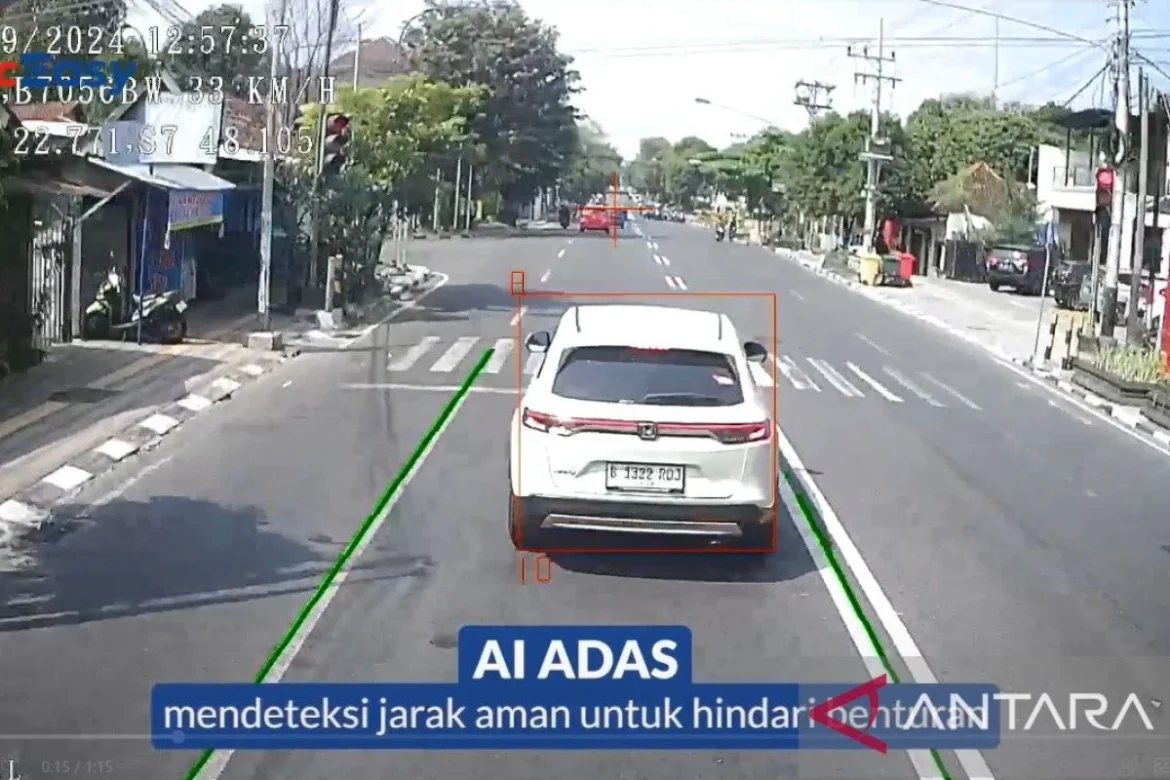
The modern automotive landscape has experienced a profound paradigm shift, moving far beyond traditional metrics of performance, fuel efficiency, and interior luxury. Today, the conversation surrounding new vehicle development is increasingly dominated by active safety innovations, spearheaded by Advanced Driver Assistance Systems (ADAS). Once relegated to the realm of high-end luxury flagships, technologies such as autonomous emergency braking, lane-keep assist, blind-spot monitoring, and adaptive cruise control are rapidly becoming standard equipment across mainstream vehicle segments globally.
This acceleration in safety technology adoption is not merely a marketing strategy for automakers; it is a fundamental response to evolving regulatory landscapes, tightening international crash-test protocols, and a growing consumer demand for accident-mitigation capabilities. As regulatory bodies like the European New Car Assessment Programme (Euro NCAP) and the National Highway Traffic Safety Administration (NHTSA) continuously update their evaluation criteria to heavily penalize vehicles lacking advanced preventive technologies, the global automotive industry is undergoing its most significant safety transformation in decades.
The Core Mechanics and Functional Taxonomy of ADAS
To understand the proliferation of ADAS, one must examine its core architecture. At its foundation, ADAS encompasses an integrated network of high-resolution cameras, ultrasonic sensors, long- and short-range radars, and, increasingly, LiDAR systems. These hardware components continuously scan the vehicle’s 360-degree environment, gathering real-time telemetry data that is processed by advanced onboard computing units. When the system detects potential hazards—such as an abrupt deceleration of a preceding vehicle, an unintended drift across lane markings, or an obscured pedestrian—it issues immediate visual, audible, or haptic warnings, or directly intervenes through braking, steering, or throttle modulation.
The National Highway Traffic Safety Administration classifies these driving automation technologies into distinct tiers, ranging from Level 0 (no automation) to Level 5 (full automation). The vast majority of consumer vehicles equipped with modern ADAS operate within Level 1 (driver support systems that manage either steering or acceleration/braking) and Level 2 (partial driving automation where the system can control both steering and speed simultaneously). Despite the sophistication of Level 2 systems, regulatory agencies globally emphasize that these technologies remain support mechanisms rather than autonomous pilots. The human driver retains ultimate legal and operational responsibility for the vehicle at all times.
Global Safety Protocols and the 2026 Regulatory Pivot
A major catalyst for the rapid integration of advanced safety tech is the aggressive tightening of international vehicle assessment standards. A prime example is the implementation of Euro NCAP’s updated 2026 testing protocols. Under these newly enforced guidelines, safety ratings are no longer solely determined by a vehicle’s ability to protect occupants during a collision—passive safety—but place an unprecedented emphasis on active safety: the vehicle’s capability to detect, react to, and entirely prevent accidents before they occur.
The 2026 protocols subject systems like Autonomous Emergency Braking (AEB) and Lane Support Systems to complex, real-world crash scenarios, including intricate interactions with vulnerable road users such as cyclists, pedestrians, and motorcyclists. Furthermore, testing methodologies now incorporate advanced sensor combinations—merging cameras, radar, and LiDAR—to evaluate how accurately vehicles manage speed assistance in dynamic traffic environments.
This regulatory tightening has created a profound ripple effect across international manufacturing hubs. Recent testing cycles underscore this trend; for instance, evaluation results released under the stringent 2026 frameworks highlight how global manufacturers, including emerging brands from China (such as models from AION, Geely, and Leapmotor), successfully engineered their fleets to achieve top-tier five-star safety ratings. This milestone demonstrates that advanced safety technology is democratizing rapidly, shifting from exclusive luxury add-ons to baseline requirements for global market competitiveness.
Mitigating Human Error: The Multi-Layered Benefits of Driver Assistance
The primary objective behind the deployment of ADAS is the systematic reduction of human error, which statistical traffic data consistently identifies as the primary cause of the vast majority of global collisions. By introducing electronic safety nets, modern vehicles can compensate for momentary lapses in human attention, delayed reaction times, and cognitive fatigue during extended journeys.
-
Collision Avoidance and Mitigation
Systems such as Forward Collision Warning (FCW) and Automatic Emergency Braking (AEB) serve as critical intervention layers. When a driver fails to react to a sudden traffic stoppage, AEB computes collision trajectories and autonomously initiates maximum braking force to either prevent the impact or substantially lower the collision velocity, thereby reducing the severity of injuries. -
Alleviating Driver Fatigue on Long Hauls
Long-distance driving inevitably induces cognitive fatigue, leading to compromised situational awareness and drifting lanes. Adaptive Cruise Control (ACC) maintains a pre-set following distance by automatically modulating throttle and brakes, while Lane Centering Assistance (LCA) provides continuous steering inputs to keep the vehicle properly positioned within its lane. These features significantly reduce the physical and mental workload placed on drivers during prolonged highway transits. -
Expanding Visibility in Blind Spots
Human physiological limitations, combined with vehicle structural pillars, create persistent blind spots that complicate lane-changing maneuvers. Blind Spot Monitoring (BSW) and Blind Spot Intervention (BSI) systems utilize radar and side-facing sensors to monitor adjacent lanes, emitting warnings or actively applying corrective steering torque if a driver attempts to merge into an occupied space. These systems have proven exceptionally effective in high-density urban traffic environments characterized by aggressive lane-weaving and heavy congestion.
Industry Competition and Market Dynamics
Beyond regulatory compliance and humanitarian safety goals, ADAS has evolved into a fierce battleground for market share. In contemporary showrooms, prospective buyers evaluate vehicles not only by horsepower, fuel economy, or aesthetic design, but increasingly by the sophistication and reliability of their active safety suites.
Automakers are pouring billions of dollars into research and development to refine sensor fusion algorithms, integrate artificial intelligence, and enhance machine learning capabilities. By leveraging AI-driven data processing, modern safety systems are becoming increasingly adept at predicting erratic pedestrian movements, navigating adverse weather conditions, and accurately interpreting faded road markings. Consequently, manufacturers that lag in deploying competitive ADAS suites risk immediate obsolescence in both mature and emerging automotive markets.
The Persistent Imperative of Human Accountability
Despite the marketing terminology often utilized in commercial campaigns—such as "autopilot," "self-driving," or "semi-autonomous"—industry experts, regulatory bodies, and transportation ministries globally issue continuous warnings regarding the limitations of current technology.
Advanced Driver Assistance Systems are susceptible to environmental interference. Heavy rain, dense fog, blinding glare from direct sunlight, snow accumulation over sensors, or poorly maintained roadway infrastructure can temporarily blind or degrade the efficacy of cameras and radars. When these edge cases occur, the system may disengage or fail to detect hazards accurately.
Transportation authorities, including the Indonesian Ministry of Transportation and international counterparts, frequently emphasize that while technological advancements vastly enhance roadway safety, they cannot completely replace human judgment. Drivers must remain actively engaged, continuously monitor roadway conditions, understand the operational boundaries of their specific vehicle’s safety features, and be prepared to take immediate manual control at any given moment.
Conclusion
The integration of Advanced Driver Assistance Systems into modern vehicles represents a transformative era in automotive engineering. Driven by stringent regulatory benchmarks like the Euro NCAP 2026 protocols, rapid advancements in sensor technology, and fierce competitive pressures, the industry is systematically shifting toward proactive accident prevention.
While technologies like automatic emergency braking, adaptive cruise control, and blind-spot detection offer profound layers of protection and alleviate the strains of modern commuting, they remain sophisticated assistants rather than absolute replacements for human operators. Ultimately, the future of road safety relies not on technology alone, but on the synergistic relationship between intelligent vehicular systems and conscientious, attentive human drivers.
