
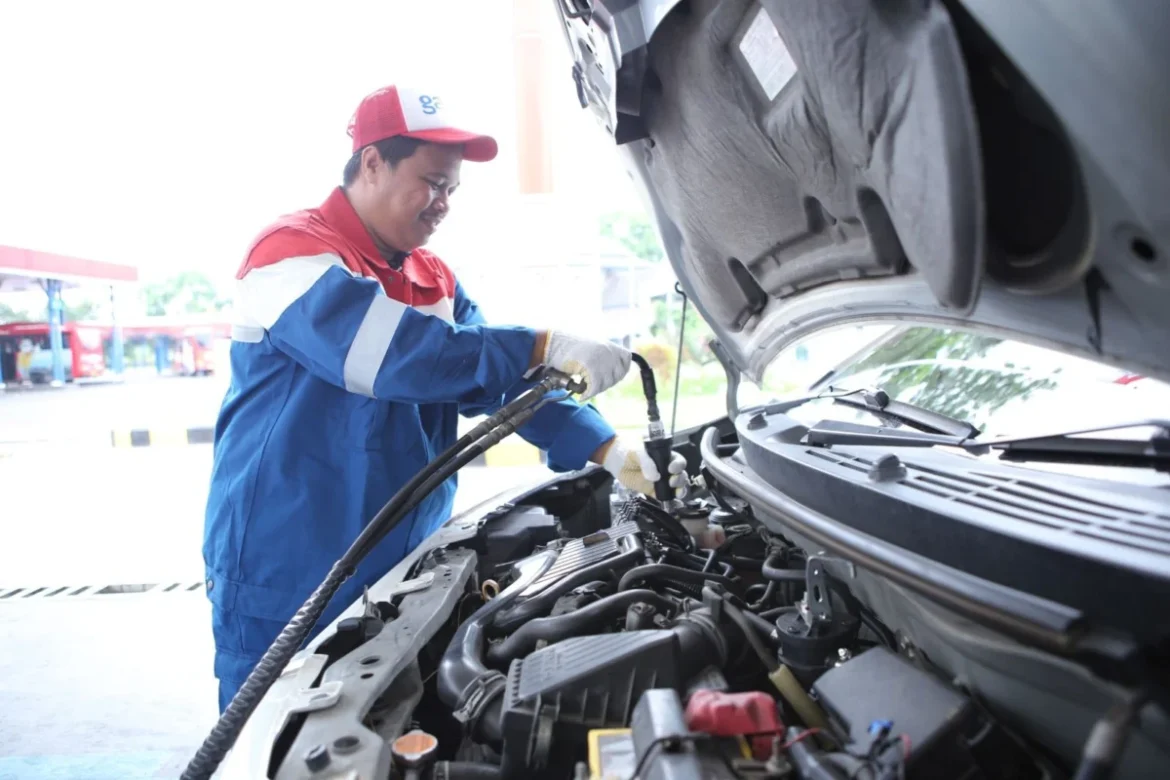
The acceleration of Bahan Bakar Gas (BBG), or Compressed Natural Gas (CNG), as a viable alternative fuel for vehicles in Indonesia is gaining significant momentum, with proponents highlighting its technical superiority, environmental benefits, and economic advantages over traditional Bahan Bakar Minyak (BBM), or petroleum fuels. This strategic shift is positioned not merely as an alternative but as a potential new standard, promising optimal engine performance and a considerably reduced environmental footprint. The push aligns with Indonesia’s broader energy diversification goals and commitments to sustainable development.
Indonesia’s Strategic Pivot: The Imperative for Energy Diversification
Indonesia, a nation blessed with abundant natural resources, including significant natural gas reserves, has long sought to reduce its reliance on fossil fuels, particularly imported oil. The global volatility of crude oil prices, coupled with increasing environmental concerns and national energy security imperatives, has propelled the government and state-owned enterprises to champion domestic natural gas as a cornerstone of the nation’s energy future. The acceleration of BBG adoption is a critical component of this overarching strategy. Historically, initiatives to introduce alternative fuels have faced various hurdles, including infrastructure limitations and consumer perception. However, the current drive, spearheaded by entities like Pertamina’s Subholding Gas, reflects a renewed and more robust commitment, aiming to overcome past challenges through strategic investments and policy support. This push is not just about fuel; it’s about reshaping Indonesia’s energy landscape, fostering economic resilience, and contributing to global climate action.
The nation’s significant natural gas reserves, estimated to be among the largest in Asia, provide a compelling domestic source for BBG, offering a stable and predictable supply chain. This contrasts sharply with the reliance on imported crude oil for BBM, which exposes the economy to international price fluctuations and depletes foreign exchange reserves. By leveraging its domestic gas resources, Indonesia aims to enhance its energy sovereignty, stabilize fuel costs for consumers, and reduce the financial burden of fuel subsidies, which have historically represented a substantial drain on the state budget. The environmental agenda further strengthens the case for BBG. As a signatory to the Paris Agreement, Indonesia is committed to reducing its greenhouse gas emissions. Transitioning a significant portion of its transportation sector to cleaner-burning natural gas is a tangible step towards achieving these ambitious climate targets.
Technical Superiority: Enhancing Performance and Eco-Friendliness
One of the most compelling arguments for BBG lies in its inherent technical advantages over conventional liquid fuels. BBG boasts a significantly higher Research Octane Number (RON), typically ranging from 120 to 130. This elevated octane rating is a critical factor, as it allows engines to operate with higher compression ratios without experiencing "knocking" or pre-ignition. Higher compression ratios directly translate into increased thermal efficiency, meaning more energy is extracted from the fuel, leading to better fuel economy and enhanced engine performance. For vehicle owners, this translates into a more responsive and powerful driving experience, particularly in modern engines designed to leverage such high-octane fuels.
Beyond performance, the environmental benefits of BBG are substantial. As a fuel primarily composed of methane (CH4), BBG undergoes a more complete combustion process compared to gasoline or diesel. This cleaner combustion profile results in a drastic reduction in harmful emissions. Specifically, BBG vehicles are estimated to produce approximately 20% lower carbon dioxide (CO2) emissions than vehicles running on conventional petroleum fuels. This reduction is a direct contribution to mitigating climate change. Furthermore, the combustion of BBG produces significantly lower levels of other detrimental pollutants, including nitrogen oxides (NOx), sulfur oxides (SOx), and particulate matter (PM2.5), which are major contributors to urban air pollution and respiratory illnesses. The absence of lead, benzene, and other toxic additives commonly found in gasoline further underscores BBG’s environmental credentials, making it a "greener" fuel choice.
An often-overlooked benefit for vehicle longevity is the clean-burning nature of BBG. Unlike liquid fuels, BBG combustion leaves virtually no residue or carbon deposits on engine components. This characteristic is crucial for the long-term health of an engine. Carbon buildup can lead to decreased efficiency, premature wear and tear on engine parts, and the need for frequent and costly maintenance. By eliminating these residues, BBG contributes to extending the lifespan of engine components, such as spark plugs, valves, and catalytic converters, thereby reducing overall maintenance costs and increasing the operational reliability of vehicles. This optimal interaction with engine mechanics makes BBG a superior choice for sustained vehicle performance and reduced ownership expenses.
Ensuring Safety and Building Robust Infrastructure
Public perception regarding the safety of alternative fuels is paramount for widespread adoption. Concerns about the integrity of high-pressure gas tanks and the potential for leaks are often raised. However, the industry has proactively addressed these concerns through stringent safety standards and advanced engineering. BBG vehicles are equipped with specialized tanks designed to withstand extremely high pressures and impacts, far exceeding typical operating conditions. These tanks are constructed from robust materials and undergo rigorous testing to meet international safety certifications.
Maisalina, Director of Operations and Commercial at Gagas, a key player in the BBG sector, emphatically states, "Masyarakat tidak perlu khawatir mengenai aspek keamanan, karena pemasangan setiap converter kit maupun tangki BBG melalui standar yang keselamatan internasional oleh tenaga ahli yang kompeten." (The public does not need to worry about safety aspects, because the installation of every converter kit and BBG tank adheres to international safety standards by competent experts.) This assurance highlights the commitment to professional installation and adherence to global best practices. Moreover, in the rare event of a leak, natural gas is lighter than air and dissipates rapidly into the atmosphere, significantly reducing the risk of accumulation and subsequent explosion, unlike heavier petroleum vapors that tend to pool. Modern BBG systems also incorporate automatic shut-off valves and pressure relief devices, further enhancing safety by isolating the fuel supply in case of an accident or system malfunction.
The expansion of refueling infrastructure, specifically Stasiun Pengisian Bahan Bakar Gas (SPBG), is critical for mass adoption. While Indonesia has made strides, the current network of SPBGs is still developing, particularly outside major urban centers. To address this, there’s an ongoing collaborative effort involving state-owned enterprises like Pertamina, through its Subholding Gas (PGAS), and private sector partners to significantly increase the number of refueling stations nationwide. This includes deploying mobile refueling units and establishing dedicated BBG corridors along major transportation routes. The goal is to ensure that BBG is as accessible and convenient as traditional petroleum fuels, thereby removing a significant barrier to conversion for both individual consumers and commercial fleets.
Economic Advantages for Consumers and National Prosperity
The economic benefits of BBG are a powerful driver for its adoption, both at the individual consumer level and for the national economy. A key attraction is the stable and comparatively low price of BBG. Currently, the price is fixed at approximately Rp4,500 per Liter Setara Pertalite (LSP). This pricing strategy is sustainable because the source gas is predominantly domestic, insulating it from the volatile international oil markets that dictate BBM prices. This stability offers predictable operating costs for vehicle owners and commercial operators, a significant advantage in budget planning.
To put this into perspective, the daily average consumption rates provided illustrate potential savings:
- Private Vehicles: Average 10 LSP per day. At Rp4,500/LSP, daily cost is Rp45,000. If an equivalent amount of Pertalite (Rp10,000/liter) were used, the cost would be Rp100,000, representing over 50% savings.
- Taxis: Average 20 LSP per day, costing Rp90,000 daily.
- Bajaj and Angkots (public minibuses): Average 15-20 LSP per day, costing Rp67,500 to Rp90,000 daily.
- Trucks or Buses: Average 125-165 LSP per day, costing Rp562,500 to Rp742,500 daily.
Considering that 1 LSP can cover a distance of up to 10 kilometers, the cost-efficiency for high-mileage vehicles, especially those in public transportation and logistics, is substantial. These savings translate into higher profitability for businesses and increased disposable income for individual drivers, stimulating economic activity.
On a national scale, the widespread adoption of BBG yields profound economic benefits. Reducing the consumption of imported petroleum products directly improves Indonesia’s balance of payments, strengthening the national currency. Furthermore, it lessens the government’s expenditure on fuel subsidies, freeing up crucial funds for investment in other critical sectors like infrastructure, education, and healthcare. The domestic production, distribution, and conversion of natural gas also foster local industry growth, creating new jobs in various segments, from gas exploration and processing to vehicle conversion services and maintenance. This holistic economic impact underscores BBG’s potential as a catalyst for sustainable national development.
Current Adoption and Targeted Segments
While the overall penetration of BBG vehicles in Indonesia is still growing, the government and industry stakeholders are strategically targeting specific segments for accelerated adoption. Public transportation, including taxis, bajaj, and angkots, represents a prime candidate due to their high daily mileage and the significant cumulative environmental and economic impact of their operations. Mandates and incentives, such as subsidies for converter kit installations, have been implemented to encourage these fleets to switch to BBG. For example, the original article indicates that taxis average 20 LSP per day, while bajaj and angkots average 15-20 LSP per day, highlighting the substantial fuel savings these operators can achieve.
Commercial fleets, particularly long-haul trucks and intercity buses, are also a key focus. With daily consumption rates ranging from 125-165 LSP, the economic benefits for these operators are immense, directly impacting their operational costs and competitiveness. Pertamina’s Subholding Gas, through its various initiatives, is actively working to onboard more large-scale commercial users by offering comprehensive BBG solutions, including dedicated refueling facilities and maintenance support.
For private vehicle owners, the adoption rate has been slower, primarily due to the initial cost of converter kits and the perceived scarcity of refueling stations. However, as the infrastructure expands and awareness grows about the long-term savings and environmental advantages, interest is expected to surge. Maisalina’s statement, "Dengan banyak manfaat yang dapat dirasakan, kami berharap minat terhadap BBG semakin meningkat," (With many benefits that can be felt, we hope that interest in BBG will continue to increase), reflects the industry’s optimism and strategic communication efforts to educate the public. The focus is on demonstrating that the initial investment in conversion is quickly recouped through lower fuel costs and reduced maintenance.
Challenges and the Path Forward
Despite the clear advantages and concerted efforts, the widespread adoption of BBG in Indonesia faces several challenges that require sustained attention and strategic solutions. The most prominent challenge remains the limited refueling infrastructure. While significant strides have been made, the current network of SPBGs is still not extensive enough to provide the same level of convenience as gasoline stations, particularly in remote areas. This "range anxiety" can deter potential converters. To address this, continued government investment, public-private partnerships, and innovative solutions like mobile refueling stations are crucial.
Another hurdle is the initial conversion cost for vehicles. While the long-term savings are substantial, the upfront expense of installing a BBG converter kit and tank can be a barrier for some vehicle owners, especially those with limited capital. Government subsidies, financing schemes, or tax incentives could play a vital role in making conversion more accessible and attractive. Furthermore, public awareness and education are essential to dispel misconceptions about safety and performance, ensuring that consumers are well-informed about the benefits of BBG.
The supply chain for converter kits, specialized maintenance services, and trained technicians also needs to be robustly developed to support a growing fleet of BBG vehicles. Standardization of conversion processes and certification of workshops are important to ensure quality and safety across the board. Maisalina emphasizes this, stating, "Sebagai bagian dari Subholding Gas Pertamina, kami juga terus memperkuat kapabilitas agar layanan BBG semakin massif dan optimal sebagai solusi bahan bakar yang andal bagi masyarakat di berbagai wilayah." (As part of Pertamina’s Subholding Gas, we also continue to strengthen capabilities so that BBG services become more massive and optimal as a reliable fuel solution for communities in various regions.) This commitment underscores the strategic importance of building a comprehensive ecosystem around BBG.
Broader Implications and Future Outlook
The accelerated adoption of BBG is more than just a fuel switch; it represents a significant step in Indonesia’s broader energy transition journey. By leveraging its abundant domestic natural gas resources, the nation is moving towards greater energy independence, reducing its vulnerability to global oil price shocks, and reallocating resources from fuel subsidies to more productive investments. This transition also positions Indonesia as a leader in sustainable energy practices within the region, contributing meaningfully to global efforts against climate change.
Looking ahead, BBG is likely to serve as a crucial bridge fuel in Indonesia’s long-term energy strategy. While electric vehicles (EVs) and hydrogen fuel cell technology represent the ultimate clean energy goals, the infrastructure and cost barriers for widespread EV adoption remain significant in the short to medium term. BBG offers an immediate, practical, and cleaner alternative that can be implemented on a large scale with existing engine technology, providing tangible environmental and economic benefits today. The experience gained in developing gas infrastructure and promoting alternative fuels will also be invaluable as Indonesia eventually transitions towards even more advanced clean energy solutions.
In conclusion, the strategic push for BBG in Indonesia is a multi-faceted initiative addressing energy security, environmental sustainability, and economic prosperity. With its superior technical characteristics, proven safety record, and compelling economic advantages, BBG is poised to become an increasingly dominant force in Indonesia’s transportation sector. The concerted efforts of the government, state-owned enterprises, and industry players to expand infrastructure, provide incentives, and educate the public are critical to realizing the full potential of this cleaner, more efficient, and domestically sourced fuel, paving the way for a more sustainable and resilient energy future for the archipelago nation.
