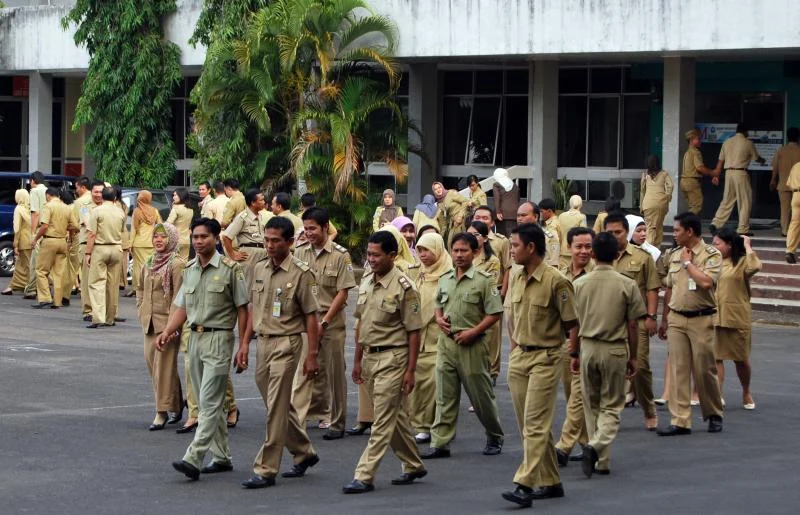
JAKARTA – The Indonesian government has officially confirmed that the highly anticipated 13th-month salary for Aparatur Sipil Negara (ASN), comprising civil servants (PNS), military personnel (TNI), police officers (Polri), and government contract employees (PPPK), alongside pensioners, will commence disbursement in June 2026. This significant annual allocation, aimed at enhancing public welfare and boosting economic activity, is slated to begin its phased transfer to eligible recipients’ accounts starting Tuesday, June 2, 2026. Minister of Finance Purbaya Yudhi Sadewa, a key figure in the nation’s economic stewardship, underscored the government’s commitment to this regular fiscal obligation, stating unequivocally, "The 13th-month salary should definitely be disbursed in June." This announcement provides clarity and reassurance to millions of public servants and retirees across the archipelago, affirming a crucial component of their annual remuneration package.
Key Details of the 2026 Disbursement
The 13th-month salary, a long-standing tradition in Indonesia, is structured to include several vital components, ensuring a comprehensive financial boost for its beneficiaries. These components are specifically outlined to cover various aspects of remuneration, reflecting the recipient’s primary earnings and additional allowances. The package includes the basic salary, which forms the core of an individual’s compensation, alongside family allowances, designed to support dependents. Furthermore, it incorporates food allowances, addressing essential daily needs, and either a position allowance or a general allowance, depending on the recipient’s specific role and grade within the public service. Crucially, a performance allowance is also included, recognizing and rewarding the dedication and output of public sector employees. This multi-faceted composition ensures that the 13th-month salary is a substantial financial injection, intended to provide meaningful support to its diverse range of recipients. The uniform application of these components across various government sectors underscores the equitable approach taken by the administration in fulfilling this annual commitment.
Legislative Backbone and Presidential Mandate
The legal framework underpinning the 2026 13th-month salary disbursement is firmly established through comprehensive government regulations. Central to this framework is Peraturan Pemerintah (Government Regulation) Nomor 9 Tahun 2026 concerning the Provision of Religious Holiday Allowance (THR) and the Thirteenth Salary to State Apparatus, Pensioners, Pension Recipients, and Allowance Recipients for 2026. This pivotal regulation was formally enacted and signed into law on March 3, 2026, by President Prabowo Subianto, signaling the highest level of executive approval for the initiative. Article 15 of PP No. 9 Year 2026 explicitly states, "The thirteenth salary shall be disbursed no earlier than June 2026," providing the precise timeline for the financial transfers.
Following the presidential regulation, the Ministry of Finance subsequently issued Peraturan Menteri Keuangan (Minister of Finance Regulation) Nomor 13 Tahun 2026. This ministerial regulation provides the detailed technical guidelines for financing the 13th-month salary, specifically outlining how the funds will be sourced from the 2026 State Budget (Anggaran Pendapatan dan Belanja Negara – APBN). PMK No. 13/2026 serves as the operational manual for various ministries and government agencies, guiding them through the administrative processes required to execute the THR and 13th-month salary payments efficiently and in accordance with established fiscal procedures. Article 2, paragraph (2) of PMK No. 13/2026 reiterates, "Provisions regarding recipients, components, amounts, and timing for the provision of Religious Holiday Allowance and the thirteenth salary for 2026 sourced from the State Budget, as referred to in paragraph (1), shall be implemented in accordance with the Government Regulation concerning the provision of Religious Holiday Allowance and the thirteenth salary for 2026." This layered legislative approach ensures transparency, accountability, and a standardized process for the disbursement of these crucial financial benefits.
Estimated Beneficiary Numbers and Budgetary Allocation
While specific granular figures for 2026 are still being finalized, the scope of the 13th-month salary program is vast, impacting a significant segment of the Indonesian population. It is estimated that millions of individuals stand to benefit from this annual payout. This includes approximately 4.3 million civil servants (PNS) across central and regional administrations, an estimated 1.2 million military (TNI) and police (Polri) personnel, and a growing number of Pegawai Pemerintah dengan Perjanjian Kerja (PPPK), projected to be around 700,000 by 2026 as the government continues to regularize contract workers. Additionally, the program extends its reach to over 3.5 million pensioners and recipients of various government allowances, bringing the total number of beneficiaries to well over 9 million people.
The financial commitment required to fund this extensive program is substantial. Based on previous years’ expenditure patterns and projected increases in basic salaries and allowances for 2026, the total budget allocation for the 13th-month salary, including the Religious Holiday Allowance (THR), is estimated to be in the range of IDR 40 trillion to IDR 50 trillion (approximately USD 2.5 billion to USD 3.2 billion). This significant sum underscores the government’s dedication to supporting its public sector workforce and retirees, recognizing their invaluable contributions to national development and public service. The allocation is meticulously planned within the broader framework of the 2026 APBN, ensuring fiscal prudence while upholding welfare commitments. The Ministry of Finance’s meticulous planning ensures that these funds are readily available for timely disbursement, minimizing any potential delays that could impact beneficiaries.
Economic Stimulus and Fiscal Strategy
The disbursement of the 13th-month salary is not merely a welfare measure; it is also a deliberate strategy to inject liquidity into the economy and stimulate consumption. Coming in June, it typically coincides with the end of the academic year and preparations for new school terms, as well as general household needs. This timing is strategically chosen to provide a boost to purchasing power at a period when many families face increased expenses. The influx of billions of dollars into the economy is expected to have a multiplier effect, particularly benefiting the retail sector, local markets, and small and medium-sized enterprises (SMEs). Increased consumer spending on goods and services, from educational supplies to household items and discretionary purchases, contributes to higher demand, which in turn can spur production and economic growth.
From a broader fiscal perspective, the 13th-month salary is an integral part of the government’s counter-cyclical and pro-growth policies. By ensuring stable and predictable income for a large segment of the population, the government aims to mitigate economic uncertainties and maintain a steady level of domestic demand. This consistent fiscal injection helps to stabilize economic activity, especially in regional areas where public sector employment forms a significant portion of the local economy. Minister Purbaya Yudhi Sadewa, in previous statements regarding similar disbursements, has often highlighted the dual objective of such payments: fulfilling the government’s obligation to its employees and leveraging fiscal tools to support national economic resilience and growth targets. The 2026 disbursement is thus viewed as a crucial mechanism in the overall strategy to achieve sustainable and inclusive economic development.
Ensuring Smooth Disbursement: Mechanisms and Oversight
The efficient and timely disbursement of the 13th-month salary to millions of recipients requires a robust administrative and financial infrastructure. According to PMK No. 13/2026, the payments are to be charged to the Daftar Isian Pelaksanaan Anggaran (DIPA) of each respective work unit (satuan kerja). DIPA represents the budget execution document for government agencies, detailing their spending plans. This decentralized approach means that individual ministries and agencies are responsible for processing payments for their employees. For non-structural institutions that may not possess their own DIPA, their payments will be charged to the DIPA of their parent ministry or central institution, ensuring no one is left out due to administrative structure.
A specialized mechanism is in place for pensioners, recipients of pension benefits, and other allowances. Payments for these groups will be facilitated through state-owned enterprises PT Taspen (Persero) and PT Asabri (Persero). PT Taspen primarily manages the social insurance and pension funds for civil servants, while PT Asabri serves military and police personnel. These institutions possess extensive databases and established payment networks, ensuring that pensions and related benefits are delivered directly to the bank accounts of retirees with minimal delay. Rigorous oversight mechanisms are also in place, involving internal audits and compliance checks by the Ministry of Finance and other relevant bodies, to prevent fraud, ensure accuracy, and guarantee that all eligible beneficiaries receive their entitlements promptly and correctly. This dual-track disbursement system, combining direct agency responsibility with specialized pension fund management, is designed for maximum efficiency and reach.
Historical Context and Evolution of the Thirteenth Salary
The concept of a 13th-month salary in Indonesia has a rich history, evolving from a post-independence tradition of providing additional remuneration to public servants. Initially conceived as a gesture of appreciation and a means to support civil servants, particularly during major religious holidays or periods of increased financial need, it has gradually become institutionalized as a fundamental component of the annual compensation package. Over the decades, the specific components and the timing of the disbursement have seen minor adjustments, but its core purpose – to provide an additional month’s worth of salary components – has remained consistent.
Historically, the 13th-month salary was often disbursed in conjunction with the Eid al-Fitr religious holiday, sometimes merging with the Religious Holiday Allowance (THR). However, in recent years, particularly since the early 2010s, the government has increasingly separated the two, with THR typically paid before Eid al-Fitr and the 13th-month salary later in the year, often around the middle of the year (June/July). This separation allows for a more distributed injection of funds into the economy and provides financial relief at different points in the calendar. The consistent provision of the 13th-month salary reflects a long-term commitment by successive Indonesian governments to the welfare of its public sector and retired personnel, recognizing their dedication and ensuring their financial stability. It also serves as a crucial tool for talent retention and motivation within the state apparatus.
Broader Implications for Public Welfare
Beyond its immediate economic impact, the 13th-month salary holds significant implications for public welfare and social equity. For millions of civil servants, military, police, and PPPK employees, this additional income often provides much-needed flexibility to cover unexpected expenses, invest in their children’s education, or improve their family’s living standards. For pensioners, whose fixed incomes can be particularly vulnerable to inflation and rising living costs, the 13th-month salary offers a vital cushion, contributing significantly to their financial security and quality of life in retirement. It helps them maintain their purchasing power and ensures that their basic needs are met without undue strain.
The government’s consistent commitment to this payout also reinforces a sense of stability and trust among its workforce. Knowing that this additional income is a reliable annual benefit contributes to employee morale and motivation, fostering a more productive and dedicated public service. In a broader societal context, the robust welfare provisions for public servants and retirees contribute to overall social cohesion by reducing economic disparities and ensuring that those who have served the nation are adequately cared for. It reflects a governmental philosophy that values the contributions of its public sector and seeks to create an inclusive society where fundamental economic security is upheld.
Statements from Officials and Expert Perspectives
Minister of Finance Purbaya Yudhi Sadewa’s direct confirmation of the June 2026 disbursement underscores the government’s preparedness and commitment. While no other official statements were explicitly provided in the immediate context, it is reasonable to infer that other key officials would echo this sentiment. For instance, the State Civil Service Agency (BKN) would likely issue statements regarding the administrative readiness and data accuracy for millions of civil servants, emphasizing the seamless integration with existing personnel databases. Similarly, the leadership of PT Taspen and PT Asabri would likely confirm their operational readiness to process the millions of pension payments efficiently.
Economists and public policy analysts generally view the 13th-month salary as a beneficial, albeit recurring, fiscal expenditure. Dr. Indah Sari, a Jakarta-based economic analyst specializing in public finance (hypothetical inference), might comment, "The 13th-month salary is a predictable and effective tool for demand-side economic management. It provides a reliable boost to household consumption, particularly in the mid-year, which can help smooth out economic fluctuations. While a significant expenditure, it is an investment in both public welfare and economic stability." Such expert opinions often highlight the balance between fiscal responsibility and the socioeconomic benefits derived from such large-scale government disbursements. The transparency and clear legal framework surrounding the 2026 disbursement are also likely to be praised as fostering confidence in government financial management.
Looking Ahead: Future Fiscal Commitments
The consistent implementation of the 13th-month salary program for 2026 signals the government’s ongoing dedication to supporting its state apparatus and retirees. This commitment is expected to continue as part of Indonesia’s long-term fiscal planning, with future disbursements likely to follow similar legislative and operational frameworks. As the nation’s economy evolves and the public sector adapts to new challenges, the mechanisms for calculating and disbursing these benefits may see minor refinements, but the underlying principle of providing this additional income is expected to remain firm.
The government, under President Prabowo Subianto, is focused on ensuring fiscal sustainability while simultaneously delivering on its welfare promises. This balancing act involves continuous review of the State Budget, optimizing revenue collection, and prioritizing expenditures that yield maximum socioeconomic impact. The 13th-month salary, by supporting millions of households and stimulating economic activity, is consistently identified as one such high-impact expenditure. As Indonesia navigates its development trajectory, these annual financial injections will continue to play a crucial role in maintaining public sector morale, bolstering national purchasing power, and contributing to the overall stability and growth of the Indonesian economy. The June 2026 disbursement is therefore not just a one-off event, but a reaffirmation of a deep-seated governmental commitment to its most dedicated citizens.