The visit of President Joko Widodo to the PT Trans Pacific Petrochemical Indotama (TPPI) refinery in Tuban, East Java, on Wednesday, November 11, 2015, marked a significant milestone in Indonesia’s pursuit of energy sovereignty. Accompanied by a high-level delegation, including Minister of State-Owned Enterprises (SOE) Rini Soemarno, Pertamina President Director Dwi Soetijpto, Vice President of Corporate Communication Wianda Pusponegoro, and Director General of Oil and Gas at the Ministry of Energy and Mineral Resources IGN Wiratmaja, the President’s inspection was aimed at assessing the operational readiness of a facility that had long been mired in financial and legal complexities. The TPPI refinery, located in the Jenu District of Tuban, represents a critical asset in the national energy infrastructure, capable of significantly reducing the country’s dependence on imported fuel and petrochemical products.
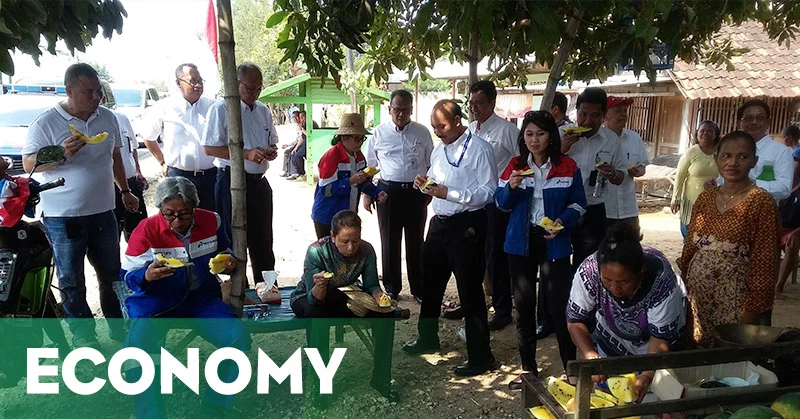
During the site visit, an informal and humanizing moment occurred when the entourage, led by Minister Rini Soemarno, took a brief pause from their official duties to interact with the local community. While walking through the vicinity of the refinery, the delegation was greeted by residents who were eager to meet the government officials and the leadership of the state oil company. In a gesture of grassroots engagement, the group stopped at a local residence where the owner also sold watermelons harvested from nearby fields. Minister Rini Soemarno, known for her hands-on approach, encouraged the group to sample the local produce, praising the quality of the Tuban watermelons. This brief interaction served as a bridge between the high-level industrial objectives of the state and the agricultural reality of the local population surrounding the TPPI complex. After the brief refreshment, the delegation proceeded to the core of the refinery to conduct a technical review of the facility’s reactivation progress.
The Strategic Importance of the TPPI Refinery
The PT Trans Pacific Petrochemical Indotama refinery is one of the most sophisticated industrial facilities in Southeast Asia, designed to process condensate into high-value petroleum and petrochemical products. For years, the facility had operated sporadically or remained completely idle due to a combination of mounting debts, ownership disputes, and supply chain inconsistencies. At the time of President Widodo’s visit in late 2015, the refinery’s reactivation was a top priority for the "Nawa Cita" administration, which sought to bolster domestic refining capacity to stabilize the national economy.
The TPPI facility has a processing capacity of approximately 100,000 barrels of condensate per day. When fully operational, it is capable of producing essential fuels such as Mogas 88 (Premium), LPG, and kerosene, alongside vital petrochemicals like Paraxylene, Benzene, Orthoxylene, and Toluene. The ability to produce these chemicals domestically is crucial for Indonesia’s manufacturing sector, particularly for the production of plastics, fibers, and detergents, which otherwise rely heavily on expensive imports. By revitalizing TPPI, the government aimed to save billions of dollars in foreign exchange reserves that would otherwise be spent on importing refined products from Singapore and other international hubs.
Historical Context and the Path to Reactivation
The history of TPPI is a complex narrative of industrial ambition hampered by financial volatility. Established in the mid-1990s, the company was initially a joint venture involving local conglomerates and international partners. However, the 1997-1998 Asian Financial Crisis dealt a severe blow to its capital structure, leading to a decade-long struggle with debt restructuring. The Indonesian government, through the Indonesian Bank Restructuring Agency (IBRA) and later through Pertamina and the Ministry of Finance, became increasingly involved in the company’s survival due to its strategic value.
By 2015, the debt owed by TPPI to various state entities, including Pertamina and SKK Migas, had reached nearly $1 billion. The decision to bring the refinery back online required a complex legal and financial framework to ensure that Pertamina could take operational control while navigating the claims of various creditors. President Widodo’s presence in Tuban was a clear signal that the executive branch was providing the necessary political will to cut through the bureaucratic red tape that had kept the refinery dormant. The goal was to integrate TPPI into Pertamina’s broader refinery development master plan (RDMP) to create a more resilient energy supply chain.
Technical Specifications and Production Potential
The technical capabilities of the TPPI refinery are centered around its aromatic plant and its condensate splitter. Unlike traditional refineries that process heavy crude oil, TPPI is optimized for light condensate, which is a byproduct of natural gas production. This makes it an ideal partner for Indonesia’s domestic gas fields.
From a production standpoint, the reactivation of the aromatic unit allows for the production of:

- Paraxylene: A primary raw material for the production of Purified Terephthalic Acid (PTA), which is used in the textile industry for polyester.
- Benzene: A foundational chemical for a wide range of industrial applications, including the production of nylon and various plastics.
- Light Naphtha: Which can be further processed into gasoline, helping to meet the massive domestic demand for transport fuel.
At its peak efficiency, the refinery can produce around 600,000 tons of Paraxylene per year. In 2015, Indonesia was a net importer of this chemical, and the resumption of TPPI’s operations was projected to fulfill a significant portion of domestic demand, thereby improving the trade balance in the chemical sector.
The "Watermelon Diplomacy" and Social Impact
The moment where Minister Rini Soemarno and the Pertamina leadership stopped to eat watermelons with Tuban residents highlights a critical aspect of large-scale industrial projects: the relationship with the host community. The TPPI refinery is located in an area where agriculture remains a primary source of livelihood. The success of the refinery is inextricably linked to the social stability and economic prosperity of the Jenu District.
By stopping to engage with the watermelon sellers, the officials signaled that the government’s industrial ambitions would not come at the expense of local interests. The "watermelon diplomacy" served to humanize the administration and provided a platform for locals to voice their hopes for job creation and infrastructure development. The reactivation of the refinery was expected to create thousands of direct and indirect jobs, ranging from technical engineering roles within the plant to logistics and service-sector opportunities in the surrounding town.
Pertamina’s Role in National Energy Security
Under the leadership of Dwi Soetijpto, Pertamina was tasked with transforming from a mere fuel distributor into a world-class integrated energy company. The acquisition and management of TPPI were central to this strategy. During the visit, Soetijpto emphasized that the refinery would be used to maximize the value of domestic condensate.
Prior to the 2015 push for reactivation, much of Indonesia’s condensate was exported as a raw commodity, only for the country to buy back refined gasoline at a premium. The TPPI project corrected this inefficiency. Pertamina’s involvement also ensured a steady supply of feedstock for the refinery, solving one of the primary issues that had led to previous shutdowns. The integration of TPPI into the Pertamina system allowed for better coordination of fuel stocks across the Indonesian archipelago, particularly in East and Central Java.
Economic Implications and Future Outlook
The broader economic implications of the TPPI visit were felt in the financial markets and the energy sector. Analysts noted that the government’s commitment to reviving "brownfield" projects like TPPI was a more cost-effective way to increase refining capacity compared to building "greenfield" refineries from scratch, which can take up to a decade to complete.
The immediate impact of the reactivation was a reduction in the volume of fuel imports handled by the Integrated Supply Chain (ISC), the division that replaced the controversial PETRAL. By processing fuel domestically at TPPI, the government estimated savings of up to $2 billion annually in import costs. Furthermore, the production of LPG at the site helped support the national conversion program from kerosene to gas, which was a cornerstone of Indonesia’s domestic energy policy at the time.
In the years following the 2015 visit, the TPPI refinery has continued to evolve. The government eventually moved toward a full takeover of the facility, with Pertamina becoming the majority shareholder. This transition has allowed for further investment in the facility, including upgrades to its production units to meet Euro IV and Euro V fuel standards. The vision shared by President Widodo and Minister Rini Soemarno in Tuban has largely materialized, as TPPI now stands as a pillar of the Indonesian petrochemical industry.
Conclusion of the Visit
As the delegation concluded their tour of the Tuban facility, the message was clear: the era of allowing strategic assets to sit idle was over. The combination of high-level political support, technical expertise from Pertamina, and a focus on social engagement provided a blueprint for how the Indonesian government intended to manage its state-owned enterprises. The simple act of sharing a watermelon with the people of Tuban served as a reminder that the ultimate goal of these multi-billion dollar industrial projects is the welfare and prosperity of the Indonesian people. The visit to the TPPI refinery was not just an inspection of pipes and tanks; it was a reaffirmation of a national commitment to energy independence and economic resilience.