
The ongoing search and rescue operations for five journalists and three vessel crew members who went missing in the treacherous waters of the Sunda Strait faced significant setbacks on Sunday, September 13, 2026, as severe weather conditions grounded critical aerial support units. Despite the deployment of a robust multi-agency joint task force, intermittent rain, high-velocity winds, and severely reduced visibility prevented the planned launch of search helicopters, forcing commanders to rely temporarily on maritime assets and shoreline sweeps.
The tragic incident, which has gripped the nation and drawn intense focus from media freedom organizations and maritime authorities alike, highlights the inherent dangers of conducting search and rescue missions in one of Indonesia’s most heavily navigated and dynamically complex maritime corridors. As the operation enters a critical phase, authorities remain steadfast in their commitment to locating the missing individuals, even as meteorological challenges continue to test the limits of emergency responders.
Current Operational Status and Weather Obstacles
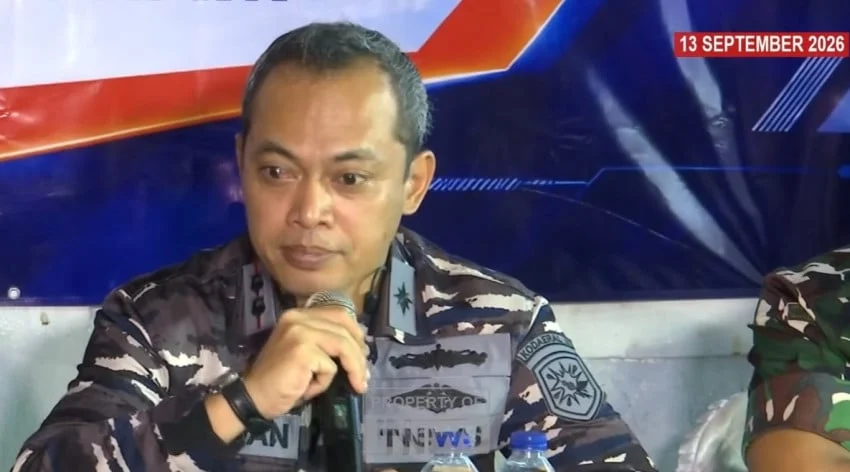
Speaking at a press conference held at the Carita Search and Rescue (SAR) Post, Commander of the Banten Naval Base (Danlanal), Lieutenant Colonel (P) Wawan Subagyo Mardani, provided a candid assessment of the operational hurdles confronting the joint task force. He confirmed that while the aviation units are fully prepped and personnel remain on high alert, safety protocols prohibit the deployment of helicopters under the current meteorological constraints.
Helicopter operations are currently restricted by adverse weather conditions, Lieutenant Colonel Wawan explained to members of the press. Although the aircraft cannot take off at this moment, the specialized aerial personnel remain stationed and are maintaining a strict standby posture, ready to mobilize the moment conditions improve.
The commander emphasized that the aerial component remains an indispensable element of the overarching SAR strategy. Coordination with the Head of the National Search and Rescue Agency (Kakansar) ensures that air support will be integrated back into the daily sortie schedule as soon as the skies clear and visibility parameters return to safe thresholds. The shared assessment among operational leaders is that forcing flights through heavy fog and turbulent squalls would unnecessarily endanger flight crews without guaranteeing effective coverage of the designated search zones.
Chronology of the Incident and Search Efforts
The maritime tragedy unfolded in early September 2026, when a vessel carrying a contingent of five media professionals and three maritime crew members lost all communication while traversing the Sunda Strait. The group was reportedly on assignment to document maritime conditions and local environmental developments when their vessel encountered extreme weather, leading to its disappearance.
Upon receiving distress notifications, the Indonesian Navy (TNI AL), in collaboration with the National SAR Agency (Basarnas), the Marine Police, and local volunteer networks, immediately initiated a comprehensive search operation. Over the course of the six-day mission, the operational footprint has expanded significantly, incorporating surface vessels, rubber boats, and specialized diving teams.
Throughout the week, the joint SAR team has systematically combed through designated sectors of the Sunda Strait, factoring in prevailing ocean currents, wind vectors, and tidal patterns supplied by the Meteorology, Climatology, and Geophysical Agency (BMKG). Despite continuous day-and-night efforts, physical evidence recovered thus far has been sparse, underscoring the vastness of the search area and the deep underwater topography characteristic of the strait.
Reinforcement of Maritime Assets
In response to the grounding of aerial units due to inclement weather, maritime commanders have pivoted to strengthen surface-level capabilities. Plans have been finalized to integrate additional naval assets into the operational grid to maintain momentum.
Tomorrow, major naval vessels, including KRI Leuser and the patrol craft KAL Pohawang, are scheduled to formally rejoin the active search grid in the Sunda Strait. These vessels bring advanced radar tracking systems, sonar capabilities, and larger operational ranges, which will significantly bolster the capacity of the surface fleet to scan deep-water sectors and difficult-to-reach coastal pockets where currents might have drifted the missing vessel or its occupants.
The introduction of KRI Leuser and KAL Pohawang represents a crucial tactical shift, compensating for the temporary absence of aerial reconnaissance. Naval planners anticipate that the specialized sonar equipment aboard these ships will be instrumental in identifying subsurface anomalies along the seabed of the strait.
Background Context of the Sunda Strait
The Sunda Strait, connecting the Java Sea to the Indian Ocean and separating the major islands of Java and Sumatra, is globally recognized as a vital maritime shipping lane. However, it is also notoriously treacherous for navigation. The strait is characterized by complex underwater bathymetry, strong tidal currents driven by water exchanges between two major oceans, and rapid, unpredictable weather shifts.
Furthermore, the presence of the Anak Krakatau volcano complex within the strait adds another layer of environmental volatility. Sudden seismic activity, localized atmospheric pressure changes, and abrupt squalls are frequent phenomena in this geographic zone, posing constant hazards to both commercial shipping and small-to-medium-scale watercraft.
The disappearance of the journalists and crew highlights the daily risks faced by media workers who venture into challenging environments to fulfill their reporting duties. Professional journalism in maritime and remote regions often requires reporters to place themselves in high-risk situations, making robust safety protocols and rapid emergency response systems paramount.
Official Responses and Stakeholder Reactions
The ongoing crisis has elicited widespread concern across Indonesia, prompting statements of solidarity from press councils, journalistic unions, and government officials. Media advocacy groups have expressed profound anxiety over the safety of their colleagues, while commending the relentless dedication of the search and rescue personnel working under arduous physical conditions.
Basarnas, along with the Indonesian Navy, has maintained a transparent communication channel with the families of the missing journalists and crew members, providing regular briefings at the Carita SAR Post. Psychological support teams have also been deployed to assist the families during this period of prolonged uncertainty.
In official statements, military and civilian leadership have reiterated that the search operation will continue unabated, subject to tactical adjustments dictated by weather windows. The unified command structure has stressed that no stone will be left unturned in the effort to account for all eight missing individuals.
Broader Implications for Maritime Safety and Media Protocols
As the search operation enters its critical second week, the incident has catalyzed broader discussions regarding maritime safety standards for vessels operating in volatile waters like the Sunda Strait. Experts in maritime logistics and media management are calling for a comprehensive review of safety equipment mandates, mandatory weather briefing protocols, and real-time tracking systems for all watercraft carrying non-military personnel on specialized assignments.
The operational challenges faced by Lieutenant Colonel Wawan and his team also underscore the critical need for advanced meteorological forecasting infrastructure tailored specifically to micro-climates within major straits and archipelagic waters. Enhanced forecasting tools would allow rescue coordinators to optimize deployment schedules, minimizing downtime caused by sudden weather shifts.
For now, the immediate focus of the state apparatus remains laser-focused on the primary objective: locating the five journalists and three crew members. As KRI Leuser and KAL Pohawang prepare to augment the surface fleet, and as search teams eagerly await a break in the weather to launch their grounded helicopters, the search grid across the Sunda Strait remains active, resolute, and braced for any breakthrough.
