
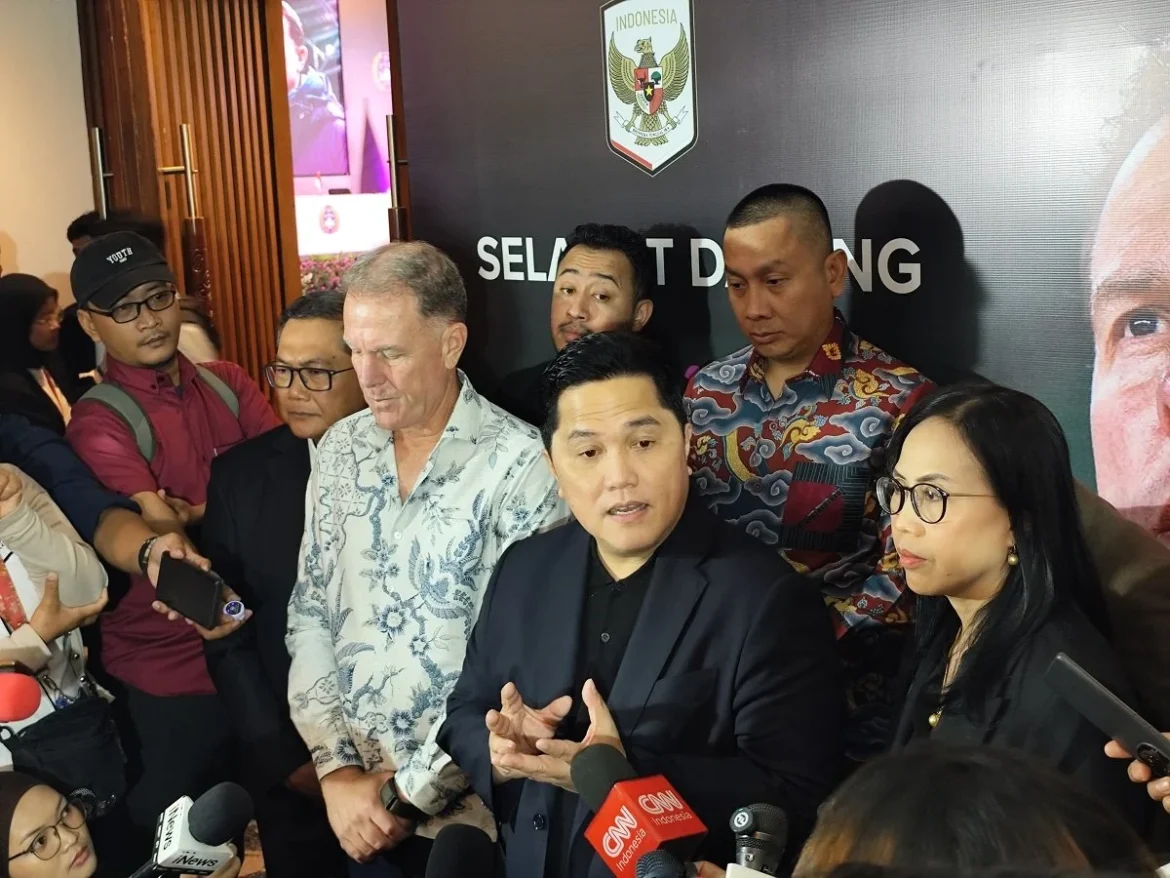
The Football Association of Indonesia, commonly known as PSSI, has officially announced the appointment of Alen Stajcic as the new head coach of the Indonesia Women’s National Team. The official unveiling, which took place in Jakarta on Monday, November 9, 2026, marks a significant milestone in the federation’s ongoing strategy to elevate the standard, competitiveness, and global profile of women’s football in the country. Stajcic steps into the role following the departure of his predecessor, Satoru Mochizuki, who parted ways with the Indonesian setup after a tenure characterized by foundational developmental efforts.
In an official statement addressing the media, PSSI Chairman Erick Thohir shed light on the rigorous selection process and the strategic rationale behind securing the services of the 53-year-old Australian tactician. Thohir emphasized that Stajcic’s proven track record, extensive international experience, and deep familiarity with Asian football dynamics made him the ideal candidate to guide the Garuda Pertiwi through their next phase of competitive development.
Strategic Vision and PSSI’s Commitment to Gender Equality in Football
During his address to journalists in Jakarta, Erick Thohir reiterated that the leadership under his tenure remains steadfastly committed to the holistic growth of Indonesian football, leaving no distinction in the level of institutional support provided to both men’s and women’s national teams.
"If we talk about the national team, our commitment since the very beginning of this PSSI management period has never differentiated between the men’s and women’s national teams," Erick Thohir stated. "We want to build a sustainable ecosystem. To achieve that, we need a leader who not only understands how to win matches but also comprehends how to build a winning culture from the ground up. Alen Stajcic possesses the exact profile, vision, and leadership qualities required to push the boundaries of our women’s football."
Thohir’s remarks highlight a broader strategic push by the Indonesian football governing body to bridge the historical gap in infrastructure, competitive exposure, and professional development between male and female national squads. By bringing in a coach with World Cup pedigree, PSSI aims to signal to regional competitors that Indonesia is serious about transforming its women’s national team into a formidable force in Southeast Asia and beyond.
A Proven Pedigree: Alen Stajcic’s Coaching Journey and Milestones

Alen Stajcic arrives in Indonesia with a stellar reputation forged over two decades of coaching at both club and international levels. Born in Australia, Stajcic carved out a notable path in the sport, beginning his professional coaching career in 2002 when he took the reins of the New South Wales Sapphires. His impact was immediate; in his debut season, he guided the club to a commendable runner-up finish in the 2002-2003 Australian Women’s Soccer League. Demonstrating his tactical acumen and ability to build cohesive units, Stajcic returned the following season to capture the championship title with the Sapphires.
His success at the domestic level caught the attention of larger clubs, leading to an appointment with Sydney FC’s women’s team, where he further cemented his reputation as one of Australia’s premier managers. His impressive club credentials naturally paved the way for a transition to the international stage. Stajcic was eventually appointed head coach of the Matildas, the Australia Women’s National Team, where he spent several years developing a competitive philosophy that prioritized tactical discipline, physical resilience, and high-intensity pressing.
However, one of the most defining chapters of Stajcic’s managerial career unfolded in October 2021, when he took charge of the Philippines Women’s National Team. Tasked with transforming a squad that historically struggled for continental recognition, Stajcic orchestrated a miraculous turnaround. Under his guidance, the Filipinas achieved a historic milestone by qualifying for the 2023 FIFA Women’s World Cup—marking the first time in history that a Philippine football team, men’s or women’s, reached the global tournament. Furthermore, he led the squad to victory at the 2022 AFF Women’s Championship, defeating regional powerhouses and capturing the hearts of football fans across Southeast Asia.
Following his successful stint with the senior Philippine team, Stajcic briefly returned to youth development, taking over the Philippines Women’s U-17 national team in September 2026. His intimate knowledge of Southeast Asian football culture, combined with his global tournament experience, made him an exceptionally attractive target for PSSI’s scouting committee.
The Transition: Succeeding Satoru Mochizuki
Stajcic’s arrival follows the departure of Japanese coach Satoru Mochizuki. During his time at the helm, Mochizuki played an instrumental role in introducing modern technical training methods, improving ball-retention philosophies, and fostering discipline among younger Indonesian players. Under Mochizuki, the team focused heavily on grassroots integration and laying down fundamental tactical pillars.
However, as PSSI looks toward stiffer continental and international challenges—including upcoming qualifiers for major tournaments and regional championships—the federation recognized the need for a manager with proven experience in navigating high-stakes qualification campaigns. While Mochizuki built the foundational framework, Stajcic is expected to translate that groundwork into tangible competitive results, instilling a ruthless winning mentality and a strategic blueprint capable of challenging traditional regional giants such as Vietnam, Thailand, and Myanmar.
Chronology of Key Events Leading to the Appointment

The decision to appoint Alen Stajcic is the culmination of months of evaluation following the structural adjustments within the women’s national team coaching staff.
- Late 2024 to Mid-2026: PSSI systematically evaluates the performance of the women’s national team across various age groups, noting steady improvements in technical capabilities but identifying a distinct deficit in international tournament experience and psychological resilience under pressure.
- September 2026: Rumors circulate regarding international managerial candidates as PSSI actively scouts for a high-profile tactician with proven Asian football expertise. Concurrently, Stajcic concludes his immediate commitments with youth setups in the region.
- Early November 2026: Negotiations between PSSI and Alen Stajcic reach a successful conclusion. The federation finalizes contract details, securing his services for the senior women’s national team.
- Monday, November 9, 2026: PSSI officially introduces Alen Stajcic to the public and media in Jakarta as the new head coach of the Indonesia Women’s National Team, setting off a wave of optimism among local supporters and sports analysts alike.
Implications and Future Outlook for Garuda Pertiwi
The appointment of a manager of Stajcic’s caliber carries profound implications for the trajectory of Indonesian women’s football. For years, the development of the women’s game faced structural hurdles, ranging from inconsistent domestic league schedules to limited international friendly fixtures. However, with the national federation taking proactive steps to secure elite leadership, the landscape is shifting toward professionalization.
Stajcic’s immediate mandate will involve evaluating the current player pool, integrating promising young talents from the domestic leagues, and implementing a rigorous tactical system ahead of upcoming international windows. His prior success with the Philippines demonstrates his capability to maximize the potential of Southeast Asian players by instilling tactical discipline and fostering a resilient team culture.
Furthermore, Stajcic’s presence is expected to attract greater commercial interest, media coverage, and grassroots participation in women’s football across Indonesia. When a coach with a World Cup resume commits to a national project, it validates the ambitions of aspiring female footballers throughout the archipelago, proving that the pathway to the international stage is both viable and actively supported by the highest levels of sports administration.
As Alen Stajcic officially takes charge of the training ground sessions in Jakarta, all eyes will be on the Garuda Pertiwi. With a seasoned master tactician now leading the charge, Indonesian women’s football enters a new era defined by higher expectations, professional ambition, and the ultimate pursuit of continental and global competitiveness.
