
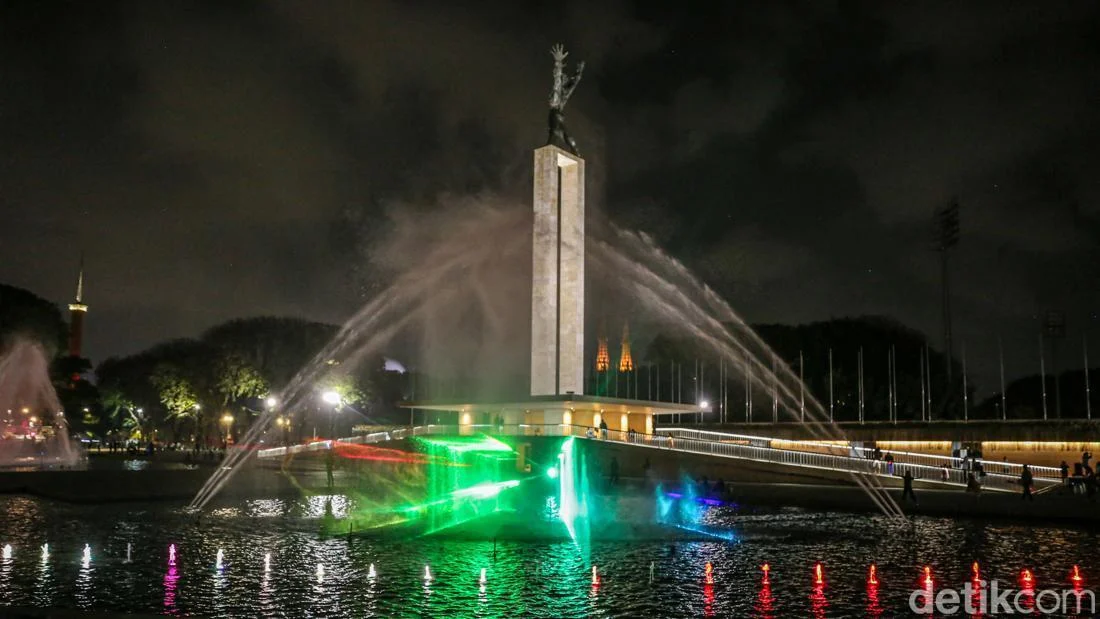
The historic Lapangan Banteng in Central Jakarta has once again cemented its status as a premier urban sanctuary, drawing thousands of visitors this past Sunday evening, November 1, 2026, with its signature "Dancing Fountain" show. As night fell over the capital, the transformation of the park’s central plaza into a mesmerizing stage of light, water, and sound provided a stark, beautiful contrast to the surrounding concrete landscape. This performance, which has become a staple of Jakarta’s public leisure offerings, serves as a poignant reminder of the city’s ongoing efforts to revitalize its public spaces and foster communal interaction.
A Symphony of Elements Under the Night Sky
The performance, which began promptly at 23:00 WIB, was characterized by high-pressure water jets synchronized with a diverse musical score. The choreography of the water—ranging from delicate, mist-like sprays to powerful, soaring columns—danced in tandem with a rhythmic soundtrack that blended classical orchestral elements with traditional Indonesian compositions.
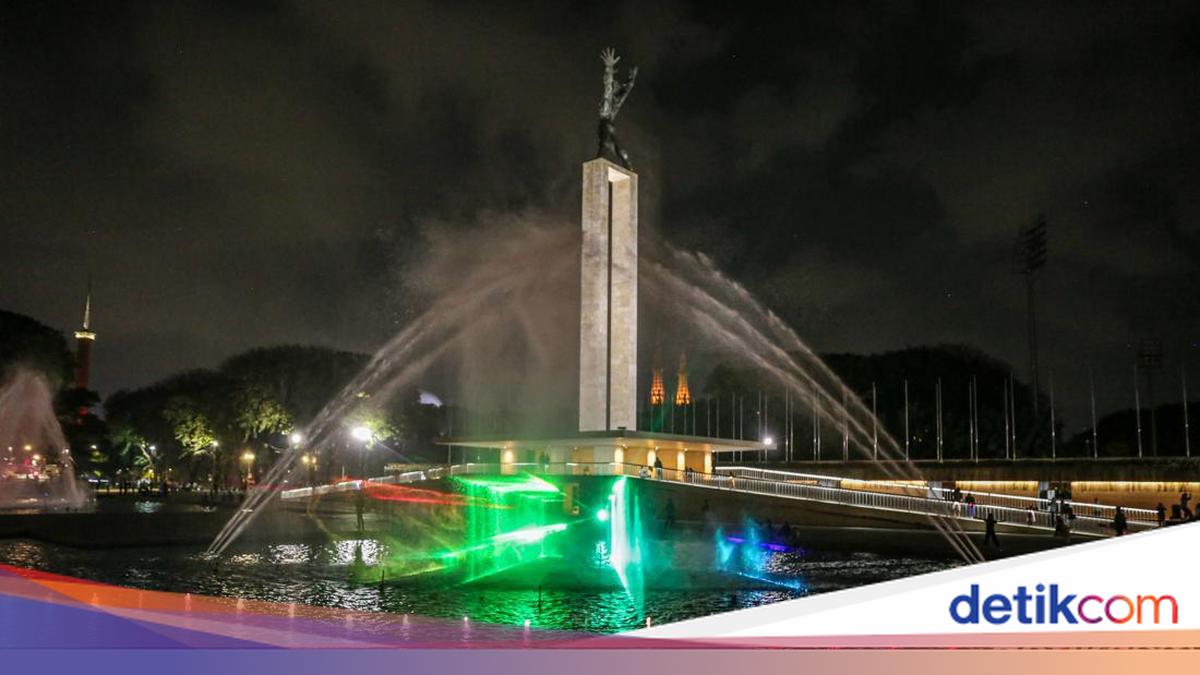
Technologically, the display relies on a sophisticated array of programmable nozzles and LED lighting systems submerged within the park’s expansive reflecting pool. Observers noted that the fluidity of the water patterns, which shifted from spiraling arcs to geometric lattices, demonstrated a significant technical upgrade in the fountain’s control systems. The inclusion of high-definition laser projections, which cast silhouettes of traditional dancers—specifically practitioners of Pencak Silat—onto the "screen" of falling water, provided an immersive cultural narrative that resonated deeply with the local audience.
The Historical Significance of Lapangan Banteng
To understand the current cultural importance of these fountain shows, one must look at the historical evolution of Lapangan Banteng. Originally known as Waterlooplein during the Dutch colonial era, the area has undergone several iterations, from a military training ground to a site of political protest and monumental significance, most notably marked by the West Irian Liberation Monument.
The revitalization project completed in 2018 aimed to shift the perception of the area from a mere transit point or political rally site to a family-friendly destination. By integrating the dancing fountain, urban planners sought to inject a sense of "nighttime economy" and safety into the heart of Jakarta. Public parks that remain active after dark are statistically safer and more conducive to social cohesion. The success of the November 1st event suggests that the city’s vision of a "park for the people" is being realized, as residents from various socioeconomic backgrounds converged to witness the display, proving that high-quality public art does not need to be sequestered within the walls of a museum or a paid venue.

Chronology and Operational Context
The installation of the fountain was a centerpiece of the 2018 renovation, but its operation has faced various challenges, including maintenance requirements and energy efficiency concerns. Since its inception, the show has been refined through a series of scheduled updates.
- 2018: Initial launch of the revitalized Lapangan Banteng, featuring the inaugural dancing fountain show.
- 2020–2022: Operations were intermittently paused or restricted due to the global pandemic, which limited large-scale public gatherings.
- 2023–2025: Gradual expansion of the musical repertoire and the integration of advanced laser technology to keep the attraction relevant for returning visitors.
- November 1, 2026: The current performance marks a milestone in the park’s post-pandemic recovery, signaling a return to full-scale, high-intensity public cultural programming.
Maintenance of such a facility is no small feat. It requires daily calibration of the water filtration systems and periodic electrical inspections of the submersible lights. The Jakarta Parks and Forestry Agency has emphasized that these shows are not merely aesthetic; they are part of a broader strategy to maintain the park’s infrastructure by keeping the water systems active, which helps prevent stagnant water buildup and promotes environmental hygiene within the plaza.
Economic and Social Implications
The economic impact of free, high-quality public entertainment cannot be overstated. By providing a zero-cost venue for families, the Jakarta administration effectively lowers the barrier to entry for leisure activities. According to urban planning studies conducted in major metropolises, the presence of active, well-lit, and programmed public spaces increases foot traffic for surrounding local businesses, including street food vendors and small-scale entrepreneurs who operate in the vicinity of Lapangan Banteng.

Furthermore, the integration of cultural themes—such as the projected imagery of Pencak Silat—serves an educational purpose. For younger generations of Jakartans who may not be exposed to traditional arts in their daily digital lives, these performances act as a bridge to cultural heritage. The marriage of technology and tradition creates a "soft power" that reinforces national identity while providing a modern, Instagrammable backdrop that promotes the city’s image globally.
Official Response and Public Sentiment
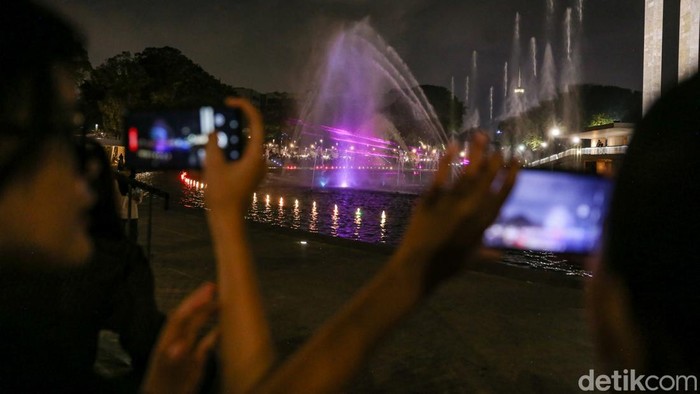
While official statements from the provincial government often emphasize the logistical and technical successes of these projects, the true measure of their value is reflected in public sentiment. Visitors on Sunday night expressed a high level of satisfaction, with many noting that the performance felt more sophisticated than in previous years.
"The choreography is much tighter," remarked one long-time resident who frequently visits the park. "In the past, the water and music seemed slightly disjointed. Tonight, the way the light hit the water when the music reached its crescendo was genuinely moving."
From an administrative perspective, the sustainability of these programs remains a key focus. The Jakarta government has indicated that it intends to continue investing in the maintenance of the Lapangan Banteng facilities, viewing them as essential "urban lungs" that provide both environmental and social relief in a city that is notoriously crowded and prone to heat island effects.
Analyzing the Future of Urban Public Spaces
Looking ahead, the success of the Lapangan Banteng fountain raises questions about the scalability of such initiatives. Can other parks in the city adopt similar models? The challenge lies in the balance between installation costs and the long-term utility of the site. Critics often point to the high electricity and water costs associated with such fountains. However, advocates argue that when balanced against the public health benefits of providing accessible, high-quality public spaces, the expenditure is justified.
The ongoing success of this specific location is also due to its accessibility. Located near major transit hubs like the Juanda and Gambir stations, the park is easily reachable for those living outside the city center. This accessibility is a cornerstone of modern, inclusive urban design. As Jakarta continues to navigate its identity as a global city, the role of public squares like Lapangan Banteng will become increasingly critical.
Conclusion
The dancing fountain show on November 1, 2026, was more than a mere display of water and light; it was a testament to the resilience of Jakarta’s public spaces. By blending the aesthetic beauty of a water show with the historical weight of the park and the cultural richness of Indonesian heritage, the city has created an environment that brings people together.
As the night concluded and the crowds dispersed, the quiet return of the park to its natural state was just as significant as the show itself. Lapangan Banteng remains a vital organ of the city, a place where history, technology, and community converge. For the thousands who witnessed the display, the event provided a momentary escape from the relentless pace of urban life, confirming that even in a sprawling megalopolis, there is always room for art, reflection, and a little bit of magic under the stars. The persistence of these shows, despite the inevitable passage of time and the changing needs of the city, ensures that Lapangan Banteng will remain a central point of gravity for the people of Jakarta for many years to come.
