
The investigation into the tragic bullying and subsequent death of Silva Nur Intania Putri, a student at SMAN 7 Malang, has taken a significant turn. East Java Regional Police (Polda Jatim) have uncovered crucial new evidence that not only expands the scope of the ongoing criminal inquiry but also points toward a broader network of perpetrators involved in sustained abuse against the victim. Following the initial designation of four teenage girls as suspects in the deadly assault, law enforcement authorities are now actively pursuing additional individuals captured in newly surfaced video documentation.
The case, which has sent shockwaves through the educational community and sparked intense public outrage across Indonesia, underscores the escalating crisis of peer violence and severe bullying within secondary educational institutions. As investigators delve deeper into the systemic failures that allowed this tragedy to unfold, the East Java Police have pledged uncompromising transparency and strict legal accountability for all parties complicit in the harassment and physical abuse leading up to Silva Nur Intania Putri’s untimely death.
Chronology of Events and the Escalation of Violence
The sequence of events leading to the fatal outcome began to crystallize following comprehensive inquiries conducted by local and regional law enforcement divisions. According to police findings, Silva Nur Intania Putri was subjected to a severe episode of coordinated pengeroyokan (group assault) perpetrated by her peers, which ultimately resulted in fatal injuries. While initial reports focused primarily on the immediate altercation that caused her death, subsequent investigations have revealed a deeply disturbing pattern of preceding abuse.
The turning point in the investigation occurred when the victim’s grieving family handed over critical digital evidence to the authorities. This evidence consists of two distinct video recordings that document prior instances of physical and psychological violence directed at Silva. According to the timeline established by investigators, these newly uncovered abuses took place on the night of Wednesday, November 25, 2026, during an incident separate from the fatal assault.
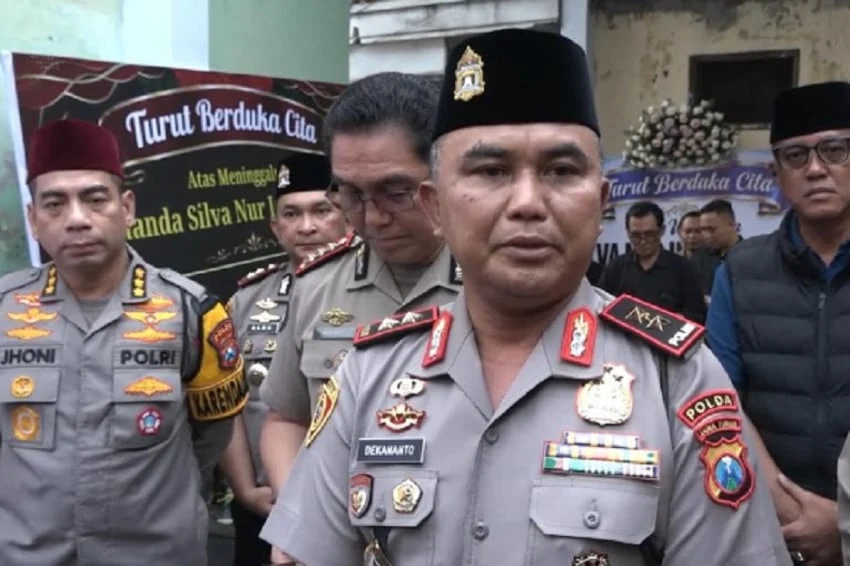
East Java Police Chief Inspector General Dekananto Eko confirmed the acquisition of these vital exhibits during an official condolence visit to the victim’s family home located in Balearjosari Village, Blimbing District, Malang City, on Saturday afternoon, November 28, 2026. The revelation of these videos fundamentally shifts the investigative trajectory, transforming what was initially examined as an isolated violent confrontation into a series of calculated, repeated acts of peer-on-peer aggression.
Discovery of New Evidence and Police Response
The newly submitted video footage has provided detectives with undeniable visual confirmation of sustained mistreatment. Upon reviewing the digital files, investigators identified at least one suspect who had already been formally detained and charged in connection with the primary bullying case. However, more alarmingly, the footage also captured the presence and active participation of other individuals who had not yet been implicated or arrested.
Speaking to the press following his meeting with the victim’s family, Inspector General Dekananto Eko emphasized the gravity of the new findings. The police chief stated that law enforcement agencies would utilize every available resource to track down and interrogate the newly identified suspects.
"I received a report from the mother of the late victim indicating that there are two additional videos showing that the deceased experienced prior violence," Inspector General Dekananto stated. "From these two videos, we identified one suspect who has already been detained, alongside other potential perpetrators. We are going to thoroughly uncover this, process the case comprehensively, and conduct intensive examinations to investigate these preceding incidents."
The commitment to expanding the investigation reflects mounting pressure from both civil society and government oversight bodies to dismantle environments that foster unchecked adolescent violence. Authorities have indicated that forensic digital analysis of the recovered mobile devices and social media accounts associated with the suspects is currently underway to determine the full extent of the psychological and physical torment inflicted upon the victim.
Legal Developments and Associated Civil Unrest
The legal fallout from the death of Silva Nur Intania Putri has been swift, contentious, and occasionally volatile. Prior to the latest discovery of the new video evidence, the East Java Police made headlines by taking the unprecedented step of barring the four primary teenage suspects from participating in their scheduled school examinations. Law enforcement justified this administrative restriction by citing the severity of the charges, the ongoing nature of the criminal investigation, and the necessity of prioritizing judicial proceedings over academic milestones for those accused of involvement in a fatal assault.
However, the handling of the case has not been without serious public friction. The social friction surrounding the arrests culminated in a violent civil disturbance. Reports confirmed that law enforcement agencies were forced to arrest 38 individuals following widespread vandalism and the deliberate arson of a police vehicle parked near the residence of one of the suspect’s families. The incident highlighted the dangerous volatility of public sentiment, as community anger over the tragedy threatened to spill over into lawless retaliation.
Police reinforcements were swiftly deployed to restore public order, and the perpetrators of the property destruction and arson are currently facing separate criminal charges for obstructing justice and committing violent acts against public officials. The unrest underscores the immense social tension gripping Malang City as neighbors, activists, and concerned citizens demand absolute justice for the deceased student.
Contextualizing the Crisis: Bullying in Indonesian Schools
The tragedy at SMAN 7 Malang is far from an isolated incident, reflecting a broader, systemic crisis regarding bullying and physical violence within the Indonesian educational ecosystem. Despite numerous national campaigns, ministerial regulations, and anti-bullying protocols implemented by the Ministry of Education, Culture, Research, and Technology, peer-on-peer violence remains a persistent and deeply entrenched problem in middle and high schools.
Sociological experts and child protection advocates note that modern bullying often extends far beyond traditional physical intimidation, exacerbated by the ubiquity of digital devices and social media platforms. The creation and circulation of humiliating videos—frequently used by perpetrators to exert psychological dominance and ensure the victim’s isolation—have become a harrowing hallmark of contemporary adolescent aggression. In many cases, institutional oversight mechanisms fail to detect early warning signs due to underreporting, fear of retaliation, or a reluctance by school administrators to acknowledge disciplinary failures that could damage institutional reputations.
The case of Silva Nur Intania Putri has thus galvanized child protection organizations, such as the Indonesian Child Protection Commission (KPAI), to demand a comprehensive overhaul of how schools handle bullying complaints. Advocates are calling for mandatory psychological evaluations for students, stricter enforcement of preventative policies, and legal accountability not only for the direct perpetrators but also for institutional leaders who fail to maintain a safe campus environment.
Broader Implications and Future Outlook
As the investigation enters its next critical phase, the implications for the judicial process, educational policy, and public security in East Java are profound. The decision by Polda Jatim to aggressively pursue secondary suspects demonstrates a zero-tolerance approach toward adolescent violence, signaling a potential shift in how law enforcement handles juvenile delinquency cases of extreme severity.
For the academic community in Malang and across Indonesia, the tragedy serves as a grim wake-up call. Schools are under intense scrutiny to reevaluate their supervisory frameworks, enhance student counseling services, and establish confidential, secure reporting channels where students can disclose abuse without fear of social ostracization or retaliatory violence.
Meanwhile, the legal team representing the suspects, as well as the families of the accused teenagers, face mounting challenges as public opinion hardens against the perpetrators. As the police conclude their intensive examinations of the newly acquired video evidence, additional formal charges are widely expected to be filed against the remaining individuals identified in the footage.
The ultimate pursuit of justice for Silva Nur Intania Putri will likely serve as a watershed moment in Indonesia’s ongoing legal and cultural battle against school bullying. As judicial proceedings advance, the collective gaze of the nation remains fixed on Malang City, waiting to see whether the full weight of the law will successfully deliver accountability, deterrence, and a measure of closure to a deeply grieving family.
