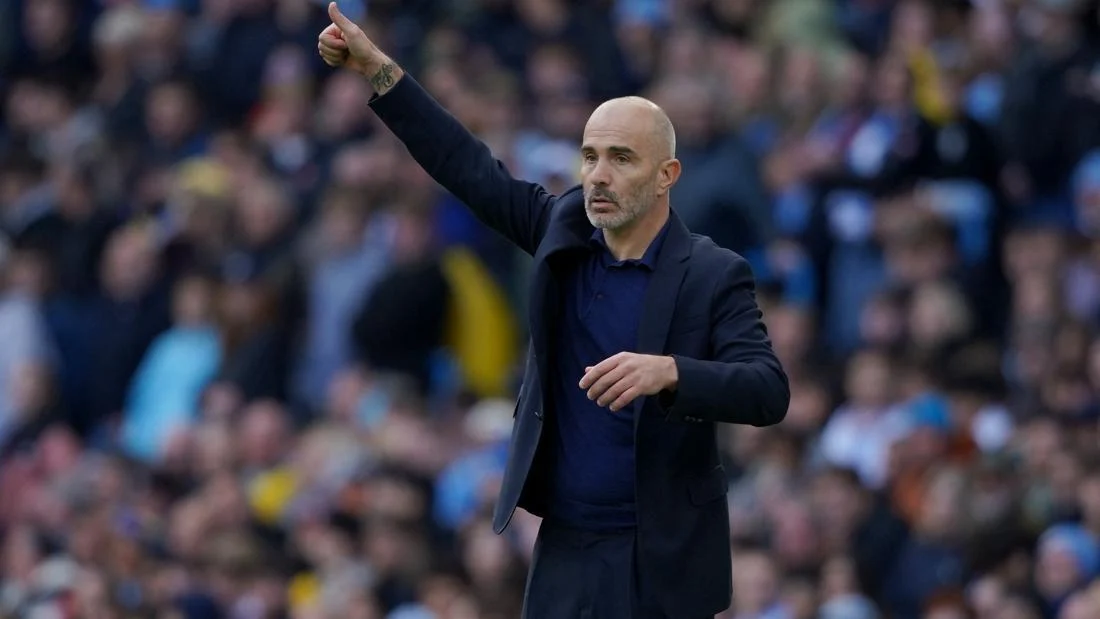
The arrival of a new manager at a club as decorated as Manchester City is always a moment of intense scrutiny, but for Enzo Maresca, the pressure is amplified by the gargantuan shadow cast by his predecessor. Following the conclusion of his first 10 Premier League matches, the Italian tactician finds himself at a pivotal juncture in his tenure. With seven victories followed by a recent dip in form, the Etihad Stadium faithful are closely monitoring whether this represents a temporary transition period or a sign of deeper structural shifts. To understand the gravity of his current standing, one must look at the historical benchmarks set by the managers who preceded him under the ownership of the Abu Dhabi United Group.
The Initial Rapor: Assessing the Maresca Era
Enzo Maresca’s opening 10-match stretch in the Premier League has been a tale of two phases. The initial seven matches showcased a side that seemed to have seamlessly integrated his tactical philosophies, characterized by rapid ball circulation and high-intensity pressing. However, the subsequent three matches have exposed vulnerabilities that have seen the team drop points, leaving them third in the table with 21 points.
While some critics point to the recent slump as a cause for concern, statistical context suggests that Maresca’s start is not an anomaly in the context of City’s modern history. The demands placed upon a Manchester City manager are unique; there is no grace period for adjustment when the objective is synonymous with league dominance and European glory. Maresca inherits a squad that has been molded to near perfection, yet the challenge lies in maintaining that high-performance output while implementing his own nuances.
Historical Benchmarks: The Predecessors
To evaluate Maresca’s performance, it is essential to look at the records of those who have occupied the dugout since the club’s transformation in 2008.
Pep Guardiola: The Gold Standard
When Pep Guardiola arrived in the summer of 2016, he was greeted with immense expectation. His opening 10 matches resulted in seven wins, two draws, and one loss, accumulating 23 points. At that stage, Manchester City sat atop the Premier League table. However, it is a historical footnote of great interest that despite this blistering start, City finished third in the 2016-17 season. Guardiola’s journey proved that early success is not a guarantee of the final destination, as he required a full season to recalibrate the squad’s tactical discipline and personnel before embarking on a period of unprecedented domestic dominance.
Manuel Pellegrini: The Pragmatic Champion
Manuel Pellegrini’s start in the 2013-14 season was statistically more modest, with the Chilean manager accruing 19 points from his first 10 games. At the time, skeptics questioned his ability to stabilize the defense and command the locker room. Yet, the narrative arc of that season was one of the most remarkable in the club’s history. Pellegrini eventually steered the team to the Premier League title, proving that a measured, steady start—even one lacking in immediate, overwhelming points—can be the foundation for a championship run.
Roberto Mancini: The Mid-Season Catalyst
Roberto Mancini’s tenure began differently, as he was appointed mid-season in 2009-10 to replace Mark Hughes. His first 10 matches yielded 20 points, a commendable return given the instability of the period. Under Mancini, the team’s upward trajectory was clear; he inherited a squad in flux and managed to elevate them from mid-table mediocrity to a fifth-place finish, setting the stage for the FA Cup and Premier League title wins that would define his era.
Comparative Analysis: Data and Expectations
When placing Maresca’s 21-point tally alongside his predecessors, he sits comfortably in the middle of the pack. He has outperformed Pellegrini’s initial 19-point return and is performing similarly to the early stretches seen under Mancini. While he trails Guardiola’s initial 23-point haul, the disparity is marginal in the context of a 38-game season.
However, the primary difference lies in the environment. Maresca is not merely replacing a manager; he is succeeding a legend who secured 20 major trophies. The "Guardiola Tax"—the inherent pressure to replicate the stylistic and trophy-laden success of the previous manager—is a weight that few in world football have had to bear. The expectation is not just to win, but to win with the clinical aesthetic that became the club’s signature over the last eight years.
Tactical Implications and Squad Dynamics
The recent three-match winless streak has sparked debates regarding tactical rigidity. Opponents appear to be finding ways to disrupt the buildup play that Maresca favors. In professional football, the "first 10 games" rule often applies, where opposing managers have finally gathered enough data to identify patterns in the new manager’s approach.
Internally, the club remains focused on the long-term process. Sources close to the club suggest that the management views this period as a necessary phase of evolution. The transition from the Guardiola system to a Maresca-led structure requires not just tactical adjustments but a psychological shift within the dressing room. Players who have known only one way of playing for nearly a decade must now adapt to subtle changes in movement, transition speed, and defensive positioning.
The Road Ahead: Can Maresca Deliver?
The question occupying the minds of the Manchester City faithful is whether Maresca can mirror the success of Manuel Pellegrini, who turned a slow start into a league title in his debut season. The Premier League is a grueling marathon, and the points dropped in October are often forgotten if a team hits their stride by the turn of the year.
Maresca’s ability to foster resilience within the squad will be his greatest test. A manager’s true worth is often revealed not during the seven-game winning streaks, but in how they manage the locker room and tactical adjustments following a series of disappointing results. If Maresca can shore up the defensive vulnerabilities that have surfaced in recent weeks, the quality within the squad is more than capable of mounting a sustained title challenge.
Institutional Stability and Future Outlook
Manchester City’s leadership structure, built under the Abu Dhabi United Group, has long prioritized stability over reactive decision-making. Unlike many of their rivals who might panic after a minor slump, City’s hierarchy tends to view these periods as opportunities for assessment.
The club’s technical staff is currently engaged in analyzing the performance data from the last three matches. Key areas of focus likely include the team’s defensive transition speed and the efficiency of the final-third penetration. With a squad that boasts world-class talent in every position, the capacity for a quick turnaround is high.
Furthermore, the integration of new tactical instructions often leads to a "dip-and-rise" pattern. The initial seven wins may have been fueled by the residual momentum of the previous system, while the subsequent three matches might represent the "teething phase" of implementing new, distinct instructions. The true test of Maresca’s tenure will be the next 10 games, where he will be expected to demonstrate a tactical evolution that combines his personal vision with the winning pedigree of the club.
Conclusion
Enzo Maresca occupies a unique position in the annals of Manchester City’s history. He is a manager tasked with upholding a legacy while simultaneously defining his own identity. His 21-point return from his first 10 matches is a solid, albeit imperfect, start. By historical standards, he is well within the range of success, standing alongside managers who eventually brought significant silverware to the Etihad Stadium.
As the season progresses, the scrutiny will only intensify. However, the objective remains clear: to navigate the challenges of the Premier League and maintain Manchester City’s position at the pinnacle of English football. Whether Maresca can replicate the trophy-laden debut of his predecessors remains to be seen, but the data suggests that he has the foundation, the squad, and the institutional support to navigate this transition effectively. The coming months will be the true barometer of his capability, testing his tactical acumen and his capacity to lead a dynasty through its next chapter.