The landscape of modern computing is undergoing a significant shift as consumers increasingly weigh the merits of ultra-compact desktop solutions against traditional portable workstations. At the center of this discourse is the GEEKOM IT12 MAX, a device that challenges the conventional wisdom regarding desktop power and portability. Priced at approximately Rp12,985,000, the IT12 MAX enters a competitive bracket where it faces direct competition from well-established laptop models, such as the HP Pavilion 16, which features the Intel Ultra 5-125U processor, 16GB of LPDDR5 RAM, and a 1TB NVMe SSD. While the financial investment is comparable, the fundamental value proposition differs drastically, prompting a detailed examination of what the modern professional or creative user gains by opting for a Mini PC over a mobile counterpart.
The Hardware Dilemma: Desktop Flexibility vs. Portable Utility
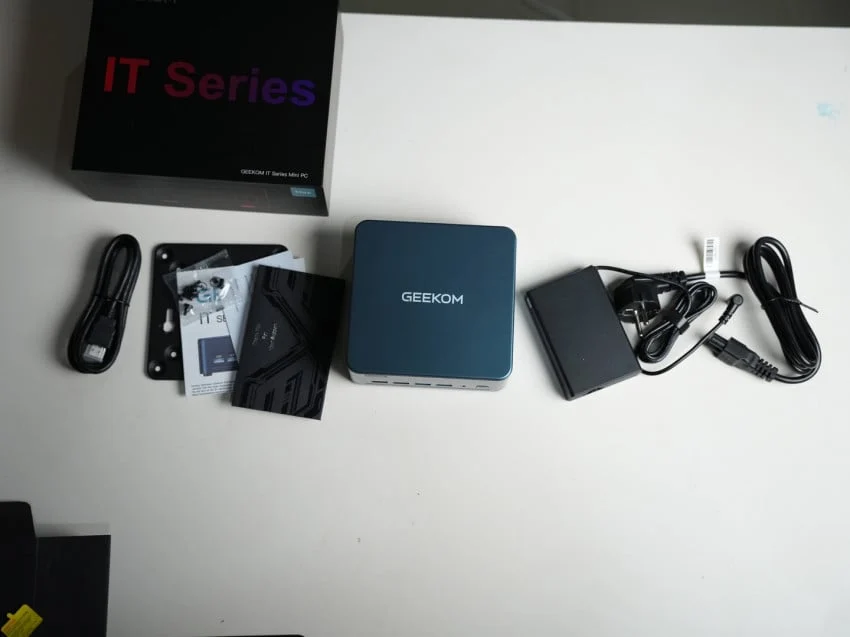
To understand the positioning of the GEEKOM IT12 MAX, one must first deconstruct the core components of the "value for money" equation. A laptop is an all-in-one ecosystem: it provides a display, a battery, a keyboard, a trackpad, and a chassis—all in a package weighing roughly 1.8 kilograms. Conversely, the IT12 MAX is a pure computing engine. It requires external peripherals to function, meaning the initial purchase price is merely the entry point.
However, the strength of the GEEKOM IT12 MAX lies in its modularity and long-term expandability. While the HP Pavilion 16’s RAM is soldered to the motherboard, limiting future-proofing, the IT12 MAX offers a more flexible architecture. The device supports SSD upgrades that can scale up to 2TB or even 5TB, providing a significant advantage for users who handle large datasets or high-resolution media files. In the professional environment, where data storage requirements grow exponentially, this capacity for internal expansion makes the IT12 MAX a compelling long-term investment compared to the fixed-spec limitations of many modern slim-profile laptops.
Chronology and Evolution of the Mini PC Segment
The rise of the Mini PC segment is not an overnight phenomenon but the culmination of a decade-long drive toward power efficiency in semiconductor design. Historically, desktop PCs were characterized by massive towers that consumed significant electrical power and required extensive cooling. The transition began in earnest around 2012, when Intel introduced the "Next Unit of Computing" (NUC) concept. GEEKOM, among other manufacturers, has capitalized on this evolution, refining the integration of mobile-class processors into desktop environments.
In the past three years, the segment has shifted from "basic office terminals" to "performance-capable workstations." The IT12 MAX represents the latest iteration of this shift, utilizing current-generation architecture to bridge the gap between low-power consumption and high-performance throughput. The industry has observed a pattern: as Intel and AMD improve the performance-per-watt ratio of their mobile chips, Mini PC manufacturers have been the quickest to adopt these advancements, often outpacing the traditional desktop OEM market in terms of rapid product refreshes.
Performance Benchmarks and Creative Capabilities
A common point of skepticism regarding Mini PCs is their performance in resource-intensive tasks, specifically gaming and video editing. However, the integration of Intel’s Arc Graphics technology changes the narrative. Based on internal GEEKOM performance data, the integrated graphics within the IT12 MAX are designed to outperform legacy entry-level discrete GPUs, such as the NVIDIA GTX 1650 or the AMD RX 460, particularly in 1080p gaming environments.

For gaming enthusiasts, the IT12 MAX is well-suited for MOBA titles, indie games, and titles that prioritize optimization over raw graphical fidelity. While users should temper expectations for AAA modern titles at "Ultra" settings—as this is an integrated solution rather than a top-tier discrete GPU—the device remains competent for its intended use cases.
In the realm of professional content creation, the story is more compelling. The hardware-based AV1 decoding support integrated into the processor architecture facilitates smoother video playback and faster rendering previews, significantly reducing CPU load during editing workflows. For professionals, the connectivity options are perhaps the most critical feature. The IT12 MAX supports four simultaneous 8K displays. This capability allows for an expansive multi-monitor setup: one screen dedicated to the timeline, another for real-time preview, and additional displays for client communication and reference materials. This multi-display support is an essential requirement for modern video editors and graphic designers, often providing a workflow advantage that a single-screen laptop cannot match without the aid of expensive docking stations.
Furthermore, the inclusion of a USB4 port provides a future-proof path for power users. Should the need for increased graphical processing power arise, the USB4 interface allows for the integration of external GPUs (eGPUs), effectively transforming the Mini PC into a high-performance workstation on demand.
Energy Efficiency and Environmental Impact
Beyond performance, the GEEKOM IT12 MAX is a case study in modern energy efficiency. The device operates on a base power consumption of just 28 watts. In contrast, high-performance processors like the Intel Core i9-12900HK often require 45 watts or more. Under peak load, the IT12 MAX consumes between 40 and 50 watts during short bursts of turbo-frequency activity, eventually stabilizing at 28 to 35 watts during sustained workloads.
GEEKOM claims that this efficiency results in an energy saving of up to 92% compared to traditional desktop computers, which typically draw 350 watts or more. While these figures represent manufacturer-provided estimates and are subject to third-party verification, the underlying technical reality is sound. Given that the chip’s base TDP (Thermal Design Power) is a mere 15 watts, the power management profile of the IT12 MAX is significantly more conservative than that of a standard tower PC.
From an environmental standpoint, the company estimates that a transition to such energy-efficient hardware could lead to a substantial reduction in carbon emissions. While a single device’s contribution is incremental, the broader implication for corporate IT departments looking to reduce their carbon footprint is clear. By migrating to compact, low-wattage systems, firms can achieve significant energy savings across a large fleet of workstations, aligning with modern Environmental, Social, and Governance (ESG) initiatives.
Strategic Implications for the Market
The decision to choose a Mini PC over a laptop is no longer just about space-saving; it is about choosing the right tool for a specific work style. The GEEKOM IT12 MAX is an ideal candidate for "stationary-flexible" professionals. These are individuals who require a powerful, quiet, and reliable machine for office or home-based creative work but do not necessarily require the mobility of a laptop.

The market implications of this trend are profound. Manufacturers of traditional laptops are increasingly forced to compete not just on processor speed, but on build quality, battery life, and screen technology to justify the price premium over Mini PCs. Conversely, Mini PC makers must continue to focus on port availability, thermal management, and ease of maintenance to remain competitive.
For the average consumer, the GEEKOM IT12 MAX signals that the "desktop" as a concept has been successfully miniaturized. It is no longer a bulky piece of furniture but a discrete, high-performance tool that fits into almost any workspace. As the industry continues to move toward more efficient architectures, the barrier to entry for high-performance computing will continue to lower, making the IT12 MAX a representative model of a changing technological era.
Final Technical Analysis
When analyzing the total cost of ownership (TCO) for a device like the IT12 MAX, the buyer must account for the purchase of a monitor, keyboard, and mouse. However, for many professionals, these items are already part of their existing workspace infrastructure. When viewed through the lens of performance per dollar, the IT12 MAX offers a compelling argument for those who have outgrown their existing machines but do not wish to be locked into the fixed-hardware limitations of a laptop.
With 16GB of RAM as the baseline, the device handles multitasking with ease—whether it is managing dozens of browser tabs, running complex spreadsheet macros, or executing creative software suites. The stability of the platform, combined with the modularity of its storage, positions the GEEKOM IT12 MAX as a versatile workhorse. As the boundaries between consumer and professional hardware continue to blur, the Mini PC emerges as a rational, efficient, and increasingly powerful alternative to the status quo, offering a refined solution for the modern, efficiency-minded digital worker.
Ultimately, the GEEKOM IT12 MAX is not merely a piece of hardware; it is a manifestation of the current industrial trend toward minimizing the environmental and spatial footprint of computing without sacrificing the core functionality required for today’s complex digital tasks. Whether for the creative professional, the office manager, or the home enthusiast, the device provides a balanced approach to modern computing needs.