
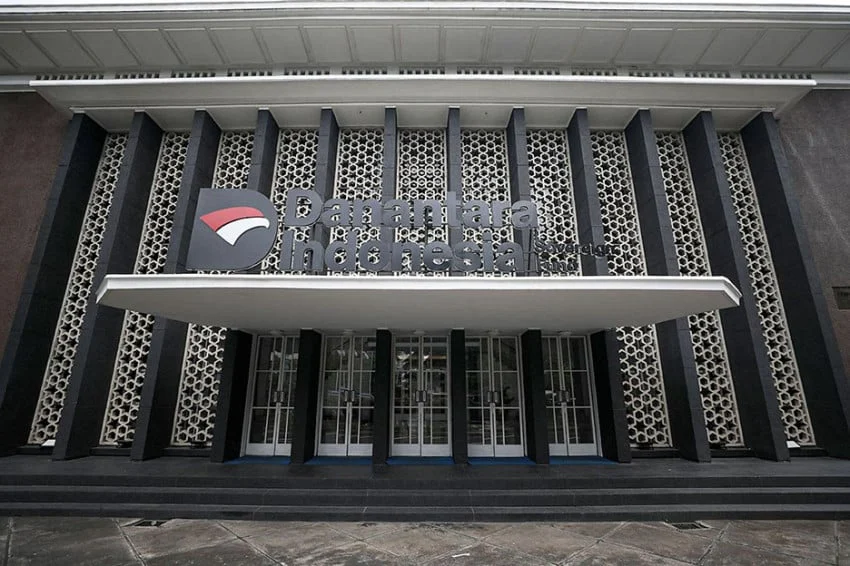
The recent participation of Danantara Indonesia in the prestigious international forum hosted by TIME magazine in New York has emerged as a focal point for discussions regarding Indonesia’s sovereign investment strategy and global economic positioning. By securing a presence alongside industry titans such as Toyota and American Airlines, the newly formed investment management entity has effectively placed itself on the international stage. While the move is widely viewed as a strategic masterstroke for visibility, experts emphasize that sustained success will depend heavily on the alignment between this high-profile exposure and the entity’s underlying governance and operational performance.
The Strategic Value of Global Platforms
For an emerging entity like Danantara, which operates as a sovereign wealth fund and investment holding body for Indonesia, the ability to engage with a global audience is paramount. The TIME100 Next forum, known for gathering influential leaders, innovators, and titans of industry, offers more than just a networking opportunity; it provides an environment of credibility transfer.
Nugroho Agung Prasetyo, a senior practitioner in public relations and an instructor at the London School of Public Relations (LSPR), notes that in the realm of reputation management, presence is often synonymous with perception. "In communication, particularly when establishing institutional identity, appearing in a forum with high international credibility strengthens visibility. It opens doors to stakeholders who were previously inaccessible or unfamiliar with the Indonesian investment landscape," Agung stated.
This approach is rooted in the concept of "association branding." When an entity is showcased within the same ecosystem as global household names, it implicitly signals to international investors that the institution is prepared for the rigors of the global market.
Chronology and Context of the Engagement
The discussions surrounding Danantara’s presence at the event were punctuated by a clarification regarding the nature of the partnership. Amidst speculation regarding the financial arrangements of the sponsorship, Danantara issued a formal clarification. The institution emphasized that while its logo was prominently displayed at the TIME100 Next 2026 event, there was no direct outflow of capital for sponsorship purposes. This distinction is critical for a public-facing institution in Indonesia, where transparency in government-linked spending is subject to intense public and parliamentary scrutiny.
The timeline of the event—occurring in the final quarter of 2026—aligns with a broader push by the Indonesian government to consolidate its state-owned assets and investment vehicles. By positioning itself in New York, the financial capital of the world, Danantara is signaling a departure from localized investment management toward a more aggressive, internationally integrated portfolio.
Building Institutional Credibility: Beyond the Logo
While the optics of the New York forum are positive, industry analysts argue that global capital markets are driven by performance, not just presence. Building long-term trust requires a shift from "visibility" to "viability."
"Exposure is the starting point, but the credibility transfer only lasts as long as the institution proves its competence," says Agung. For Danantara, this means implementing world-class governance standards, ensuring transparency in decision-making, and demonstrating a clear strategy for value creation. Global institutional investors, such as pension funds and sovereign wealth funds from other nations, prioritize regulatory stability and risk management above all else.
The challenge for Danantara lies in demonstrating that it can operate with the agility of a private equity firm while maintaining the rigorous oversight expected of a state-backed entity. This balance is often the litmus test for any national investment vehicle aiming to attract foreign direct investment (FDI).
Indonesia’s Investment Landscape: A Broader Perspective
To understand the significance of Danantara’s move, one must view it through the lens of Indonesia’s current economic trajectory. According to recent data from the Ministry of Investment, Indonesia has been aggressively pursuing downstreaming policies, particularly in the mineral processing and electric vehicle (EV) battery sectors.
Danantara is expected to play a central role in managing the assets that support these initiatives. By engaging with the international community at forums like TIME’s, the entity is essentially marketing Indonesia as an investable asset class rather than just a collection of individual projects.
Current economic indicators show that while Indonesia maintains a robust GDP growth rate, the competition for global capital is fierce. Emerging markets in Southeast Asia and Africa are all vying for the same pool of institutional investment. Therefore, the narrative control provided by high-profile international forums is a necessary component of the broader economic statecraft.
The Role of Corporate Branding in Sovereignty
The involvement of the Indonesian government in corporate branding through entities like Danantara represents a modern shift in diplomacy. Traditionally, sovereign investment vehicles remained in the background. However, in an era of digital information and globalized finance, "soft power" has become a tangible asset.
By associating with TIME, a brand with a century-old reputation, Danantara is attempting to "borrow" some of that longevity and trust. This is a common, yet delicate, public relations strategy. If the entity performs well, the association reinforces its stature. If the entity suffers from governance scandals or poor performance, the association could potentially lead to a "reputational drag," where the negative perception of the entity impacts the perception of the forum itself.
Challenges and Future Implications
Looking ahead, the road for Danantara involves navigating several key challenges:
- Regulatory Harmonization: Ensuring that the entity’s internal bylaws align with international standards to satisfy foreign institutional investors.
- Performance Metrics: Moving beyond the "PR phase" to deliver measurable ROI on investments, which will be the ultimate determinant of trust.
- Communication Strategy: Maintaining a consistent narrative across both domestic and international channels. Domestic audiences will want to see benefits for the national economy, while international investors will want to see market-driven returns.
The presence at the New York forum is a statement of intent. It says to the world that Indonesia is no longer content to wait for investment to arrive; it is going to the centers of global finance to invite it. However, as the initial buzz of the event fades, the focus will inevitably shift to the quarterly reports, the transparency of the deal-making processes, and the leadership’s ability to navigate the complex geopolitical landscape of 2026 and beyond.
Analysis of the "Credibility Transfer"
The term "credibility transfer," as mentioned by practitioners, is a psychological phenomenon in branding. When an unknown or new entity appears next to a known entity (e.g., Toyota), the consumer (or investor) subconsciously attributes the known entity’s traits to the new one.
However, this transfer is fragile. If an investor conducts due diligence and finds that the management structure of the new entity lacks independence, the "halo effect" vanishes instantly. Thus, Danantara’s current strategy must be viewed as a high-stakes gamble. By entering the spotlight, they have invited the world to look closer. The quality of what the world sees when it looks closer—the governance, the legal framework, and the financial health—will determine whether this international exposure pays dividends or becomes a cautionary tale of over-marketing.
Conclusion
The strategic engagement of Danantara Indonesia in international forums signifies a maturation of Indonesia’s approach to global finance. It marks a transition from passive participation to active, deliberate branding. While the move has been successful in garnering attention and establishing a baseline for international recognition, the real work begins now.
The long-term success of this initiative will be measured not by the prestige of the forums attended or the logos displayed on screens in New York, but by the tangible capital inflows and the sustainability of the partnerships formed. As Danantara continues its evolution, the integration of rigorous corporate governance and transparent communication will be the true metrics of its success. In the competitive arena of global investment, appearance may open the door, but substance is the only currency that guarantees a seat at the table for the long term.
For Indonesia, the path forward is clear: utilize the international platform to build the brand, but ensure that the internal machinery is robust enough to sustain the weight of global expectations. As the world watches, the next few years will prove whether Danantara can turn this strategic visibility into a cornerstone of the nation’s economic future.
