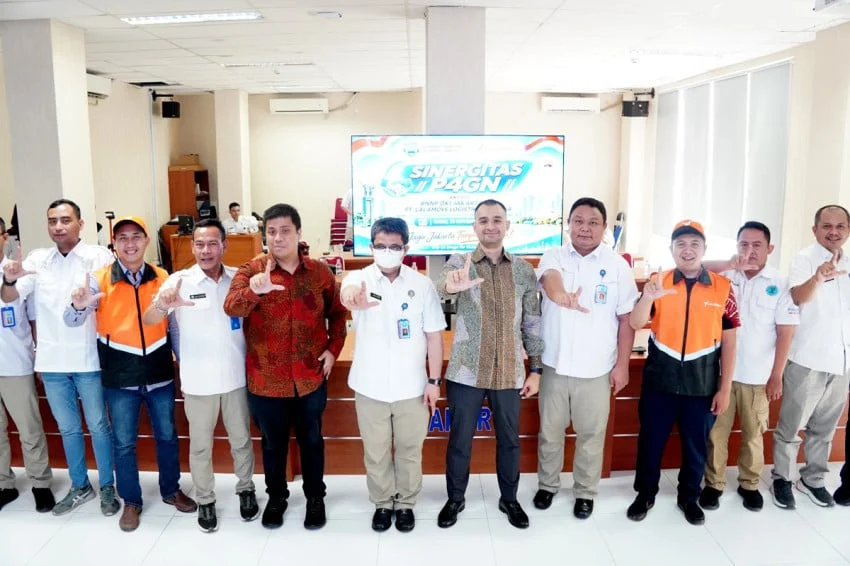
JAKARTA — In an era defined by hyper-connectivity and the rapid expansion of digital logistics, the exponential growth of on-demand delivery services has undeniably transformed modern commerce. However, this convenience has simultaneously introduced complex operational vulnerabilities, most notably the exploitation of courier networks by transnational and domestic drug syndicates seeking discreet channels for illicit trafficking. Addressing this escalating security challenge head-on, the Jakarta Provincial National Narcotics Agency (BNNP DKI Jakarta) and leading on-demand logistics platform Lalamove Indonesia have officially formalized a strategic partnership aimed at fortifying supply chain security and preventing the use of courier services for the illicit distribution of narcotics and precursor chemicals.
The formalization of this alliance took place at the BNNP DKI Jakarta office located in Cideng, Central Jakarta, where senior executives and law enforcement officials gathered to execute a comprehensive Perjanjian Kerja Sama (PKS), or Cooperation Agreement. This landmark pact centers on the prevention and eradication of drug abuse and the illicit trafficking of narcotics, psychotropics, and precursor substances. By bridging the gap between private-sector logistics management and public-sector law enforcement intelligence, the initiative establishes a robust collaborative framework designed to intercept illicit packages, train logistics personnel, and streamline reporting mechanisms for suspicious activities.
The Genesis of the Partnership: A Response to Evolving Criminal Tactics
The modern illicit drug trade has undergone a paradigm shift. Traditional face-to-face drug transactions, notorious street-corner exchanges, and high-risk drops have increasingly been replaced by app-based courier services. Criminal networks recognize that on-demand delivery platforms offer a veneer of legitimacy. Packages containing illicit substances are frequently disguised as ordinary consumer goods, documents, or food items, exploiting the sheer volume of daily transactions processed by logistics giants.
For logistics providers like Lalamove, this reality presents a profound operational dilemma. While the core business model relies on speed, efficiency, and user privacy, these very attributes can inadvertently shield bad actors from scrutiny. Recognizing that private logistics firms cannot effectively combat sophisticated criminal syndicates in isolation, industry leaders have increasingly turned toward proactive public-private partnerships. The collaboration with BNNP DKI Jakarta represents a proactive realization that safeguarding the digital economy requires institutional synergy, where corporate technological infrastructure meets the investigative expertise of law enforcement agencies.
Chronology of Collaboration and Implementation
Discussions leading up to the formalization of the PKS spanned several months, characterized by security audits, workflow integration assessments, and intensive dialogues between Lalamove Indonesia’s operational security teams and BNNP DKI Jakarta’s intelligence divisions.
Phase one of the collaborative framework involved threat assessments. Both entities analyzed historical data regarding how courier services are typically exploited. Typically, illicit actors utilize burner accounts, falsified identities, and cash-on-delivery or digital wallet transactions to obfuscate their tracks. Furthermore, items are often booked during peak operational hours when delivery personnel are under immense pressure to complete trips quickly, reducing the likelihood of deep package scrutiny.
Phase two, formalized by the recent signing ceremony at the Cideng headquarters, establishes operational protocols. Under this agreement, Lalamove and BNNP DKI Jakarta have instituted a direct communication channel. This channel enables real-time verification and rapid response should a driver or the platform’s internal monitoring system flag a suspicious delivery. The protocol ensures that drivers who suspect they are carrying illicit items have a safe, confidential, and immediate avenue to report the incident to authorities without facing legal jeopardy or physical danger from bad actors.
Perspectives from Leadership and Stakeholder Insights
Addressing the media following the signing ceremony, Lalamove Indonesia Managing Director Andito B. Prakoso articulated the company’s unwavering stance on corporate responsibility within the logistics sector. Prakoso emphasized that the modern delivery platform’s mandate extends far beyond mere transactional efficiency and market share expansion.
“We recognize that our responsibility as a leading logistics platform is not only to provide fast, practical, and efficient delivery solutions for the public, but also to ensure that our technology and infrastructure are utilized strictly for legitimate, lawful, and responsible purposes,” stated Prakoso. He underscored that partnering with law enforcement agencies like BNNP DKI Jakarta is an indispensable step in building an immutable shield around the delivery ecosystem, ensuring that hardworking driver-partners are not unwittingly turned into accomplices in federal crimes.
Echoing these sentiments, representatives from BNNP DKI Jakarta commended Lalamove Indonesia for taking a pioneering step within the app-based logistics industry. Law enforcement officials noted that drug syndicates constantly adapt to technological innovations, making it imperative for regulatory and enforcement bodies to forge proactive alliances with tech-driven enterprises. The agency highlighted that private-sector cooperation significantly enhances the state’s capacity to intercept narcotics before they reach end-users, thereby crippling local distribution networks at their logistical roots.
Broader Industry Implications and the Future of Secure Logistics
The strategic pact between Lalamove Indonesia and BNNP DKI Jakarta arrives at a critical juncture for Indonesia’s burgeoning digital economy. As the country’s e-commerce and on-demand services sectors continue to post double-digit growth, the security architecture governing these platforms faces unprecedented scrutiny.
The implications of this agreement extend across multiple operational dimensions:
-
Enhanced Driver Safety and Awareness: Driver-partners represent the frontline of any delivery network. Through this collaboration, Lalamove plans to roll out comprehensive educational modules and awareness campaigns designed to train drivers on how to identify red flags—such as unusually packaged items, nervous or evasive senders and receivers, and recurring requests for anonymous drop-offs. Crucially, the partnership provides drivers with clear legal protections and streamlined reporting channels when encountering suspicious shipments.
-
Technological Integration and Data Sharing: While maintaining strict adherence to user privacy laws and data protection regulations, the partnership paves the way for enhanced coordination in tracking fraudulent accounts. By leveraging data analytics, logistics platforms can increasingly spot anomalous booking patterns, such as sudden spikes in requests from specific geographical hotspots known for illicit activities, and share these insights with enforcement authorities.
-
Setting a New Industry Benchmark: By institutionalizing anti-narcotics protocols, Lalamove sets a high compliance standard for the broader on-demand logistics landscape in Indonesia. Industry observers anticipate that other transport and delivery networks will face mounting pressure from regulators and the public to emulate this proactive posture, transforming supply chain security from an afterthought into a core operational pillar.
-
Deterrence Effect on Organized Crime: The visible alliance between tech platforms and state anti-narcotics agencies serves as a powerful psychological deterrent. When criminal syndicates realize that logistics providers are actively collaborating with law enforcement and equipped with rapid-reporting mechanisms, the perceived safety of utilizing app-based couriers for drug trafficking diminishes significantly.
Conclusion and Forward Outlook
The formalization of the Cooperation Agreement between Lalamove Indonesia and BNNP DKI Jakarta marks a watershed moment in the intersection of digital technology, public safety, and corporate governance in Indonesia. By bridging the gap between corporate operational scale and state investigative authority, the initiative addresses one of the most insidious vulnerabilities of the modern gig economy.
As this partnership transitions from the boardroom to daily operational execution, its ultimate success will be measured by the disruption of drug supply chains, the protection of innocent courier partners, and the enduring integrity of Indonesia’s digital logistics infrastructure. In an era where technology can be weaponized by illicit actors, proactive collaborations of this caliber demonstrate that public-private synergy remains the most formidable defense in safeguarding society and preserving the lawful utility of modern innovation.