
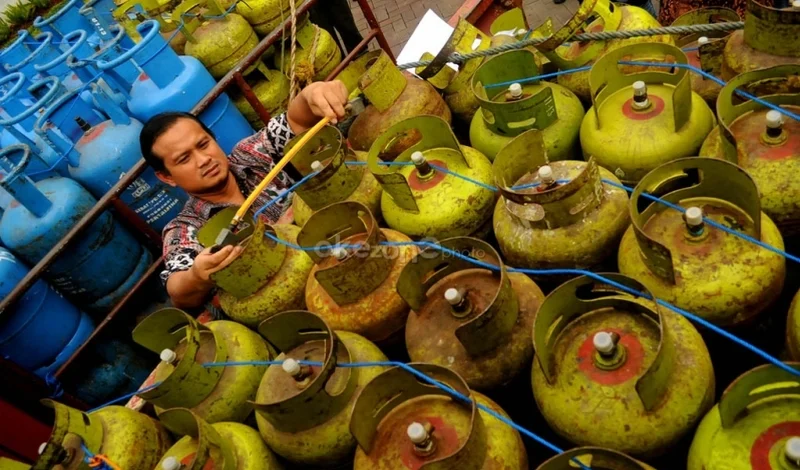
Balikpapan — In response to widespread community concerns and rumors regarding a potential vacuum in the local energy supply chain, PT Pertamina Marketing Operation Region (MOR) VI Kalimantan swiftly deployed emergency market operations for 3-kilogram liquefied petroleum gas (LPG) cylinders across Balikpapan, East Kalimantan. The strategic intervention, executed on Thursday, November 5, 2015, was designed to directly counter panic-driven purchasing behaviors and reassure consumers that the government-subsidized energy commodities remained fully available within the region.
The mobilization of these targeted market operations highlights the delicate balance energy distributors must maintain between actual physical inventory and public sentiment. While official assurances from both corporate entities and municipal governments repeatedly confirmed adequate reserve levels, the psychological impact of localized queues and unverified scarcity reports necessitated immediate, tangible action from state-owned enterprises to restore public confidence.
Background Context of the Energy Distribution Landscape
During the mid-2010s, Indonesia’s distribution network for the heavily subsidized 3-kilogram LPG cylinders—affectionately referred to by citizens as "gas melon" due to its distinctive bright green coloration—frequently faced logistical and psychological hurdles. Designed exclusively for low-income households and micro-enterprises, the subsidized energy product required stringent oversight to ensure it reached its intended demographic without leaking into the commercial sector or falling victim to speculative hoarding.
Balikpapan, serving as a major economic and industrial hub in East Kalimantan, relied heavily on a structured supply chain managed through official agents and sub-agents (pangkalan). However, rapid urbanization, fluctuating maritime logistics connecting the island of Borneo with Java and other distribution nodes, and periodic spikes in consumer demand often triggered localized anxiety. Whenever rumors of supply disruptions circulated via word-of-mouth or early digital messaging platforms, consumer reactions were typically swift: long queues formed outside official distribution points, draining daily quotas within hours and creating a self-fulfilling prophecy of scarcity.
Chronology of the Intervention and Operational Deployment
The sequence of events leading to the November 5 market operations began earlier in the week, when reports and rumors regarding empty shelves at various retail points began circulating among Balikpapan residents. Anticipating potential panic buying and seeking to preempt any genuine distribution bottlenecks, PT Pertamina MOR VI mobilized its field teams to execute a localized supply injection.
According to official reports provided by corporate communications representatives on Thursday, November 5, 2015, the emergency intervention was structured around specific distribution points known for high population density and retail activity. Each designated operational site was initially allocated an abundant supply of 150 cylinders to satisfy immediate local demand.
The physical implementation of the market operations focused heavily on key neighborhoods. Pertamina established direct sales posts in areas such as Gunung Sari and the urban village (kelurahan) of Karang Jati. Despite initial concerns over empty shelves, the operational reality on the ground quickly debunked the severity of the shortage narrative. Monitoring data collected by field supervisors indicated that demand, while active, was easily met by the allocated stock. By afternoon, sales tallies revealed significant surpluses remaining at the deployment sites: Gunung Sari retained 80 unsold cylinders from its initial 150-unit allocation, while Karang Jati maintained a surplus of 50 units.
Expanding the safety net beyond these primary deployment zones, Pertamina concurrently extended the market operation framework across a network of 15 secondary distribution bases and sub-agents (pangkalan) throughout Balikpapan, ensuring that outlying residential zones shared in the stabilized supply buffer.
Official Responses and Stakeholder Perspectives
Addressing the public and media in Balikpapan, Andar Titi Lestari, speaking in her capacity as the Humas (Public Relations) representative for Pertamina MOR VI, firmly put to rest any notions of a systemic crisis. She emphasized that the primary motivation behind the deployment was preventative rather than corrective.

"This operation is intended to anticipate the vacancies that were rumored to have occurred. Each location has been allocated 150 tubes," Titi stated during her briefing on Thursday, November 5, 2015. She reiterated that the physical stock within regional storage facilities and transit hubs remained robust, pointing out that the operational data—specifically the surplus cylinders remaining at the Gunung Sari and Karang Jati sites—demonstrated that local supply comfortably outstripped the actual consumption rate.
To prevent future recurrences of artificial shortages driven by consumer behavior, Pertamina issued a dual-pronged appeal to the public. First, consumers relying on the subsidized 3-kilogram cylinders were urged to purchase strictly according to their normal household consumption patterns, avoiding the temptation to stockpile. Second, and crucially, Pertamina strongly reminded members of the economically capable strata of society—households and businesses not qualifying for government welfare—to consciously pivot toward commercial alternative products.
"Since our stock is entirely sufficient, we urge members of the capable income bracket to purchase alternative LPG sizes, such as the 12-kilogram variants or the Bright Gas product line," Titi elaborated.
Local Government Validation
The assertions put forward by the state energy corporation were fully corroborated by municipal authorities. Arzeadi, serving as the Head of the Economic Section (Kabag Ekonomi) for the City Government of Balikpapan, stepped forward to provide administrative clarity, confirming that official monitoring channels had detected no structural deficits in the municipality’s energy reserves.
"From the information we have gathered, including comprehensive data provided directly by Pertamina, the stock of subsidized LPG remains completely secure," Arzeadi affirmed.
Offering a sociological and logistical explanation for the visual phenomenon of long queues that frequently misled the public into believing a crisis was unfolding, Arzeadi pointed to consumer behavior patterns at the retail level. Many official distribution bases enforced strict purchase caps—typically limiting individual buyers to a maximum of two 3-kilogram cylinders per transaction—to ensure equitable distribution among neighbors.
However, this regulation inadvertently fostered a workaround culture. "If there is a queue of people at a distribution base, it does not mean the gas is scarce. Usually, buyers are restricted to purchasing two cylinders per visit. However, individuals occasionally queue at multiple different bases to acquire more than their fair share, creating the outward illusion of a massive gas shortage," Arzeadi explained, shedding light on the mechanics of localized panic buying.
Broader Economic Implications and Systemic Analysis
The events of November 2015 in Balikpapan serve as a classic case study in the vulnerability of subsidized commodity supply chains to informational shocks. In developing and emerging economies like Indonesia, where state-mandated price controls protect vulnerable populations from global commodity price volatility, the psychological management of supply expectations is just as critical as physical pipeline logistics.
When a rumor of scarcity takes root, the resulting economic friction manifests as deadweight loss: consumers expend valuable time standing in multiple queues, transportation costs rise as buyers chase phantom inventories, and municipal officials are forced to divert administrative resources from long-term economic planning to manage short-term public relations crises.
Furthermore, the persistent challenge of subsidy leakage—whereby affluent consumers exploit price differentials by purchasing fuel intended strictly for the poor—remains a structural burden on the state budget. Pertamina’s active promotion of commercial alternatives like Bright Gas during the Balikpapan market operations represented an ongoing institutional effort to segment the market, gently steering higher-income demographics away from the subsidized pool without resorting to immediate, heavy-handed rationing mechanisms.
Ultimately, the successful containment of the Balikpapan LPG scare demonstrated the efficacy of rapid, transparent institutional communication coupled with modest, highly visible physical interventions. By flooding rumored deficit zones with surplus inventory and allowing local government officials to independently verify warehouse reserves, stakeholders effectively short-circuited the feedback loop of panic. The episode underscored a vital lesson for energy governance in decentralized regions: maintaining consumer trust requires not only an uninterrupted physical supply of fuel, but also an agile communication infrastructure capable of separating logistical reality from ground-level speculation.
