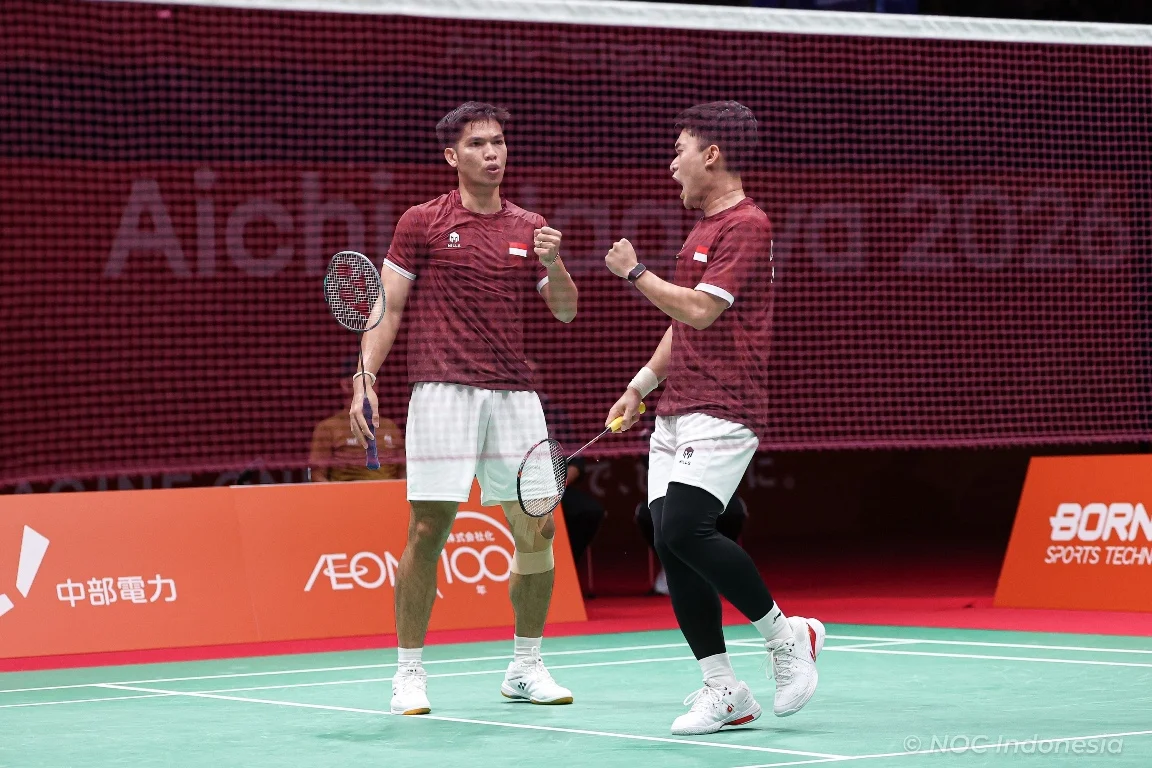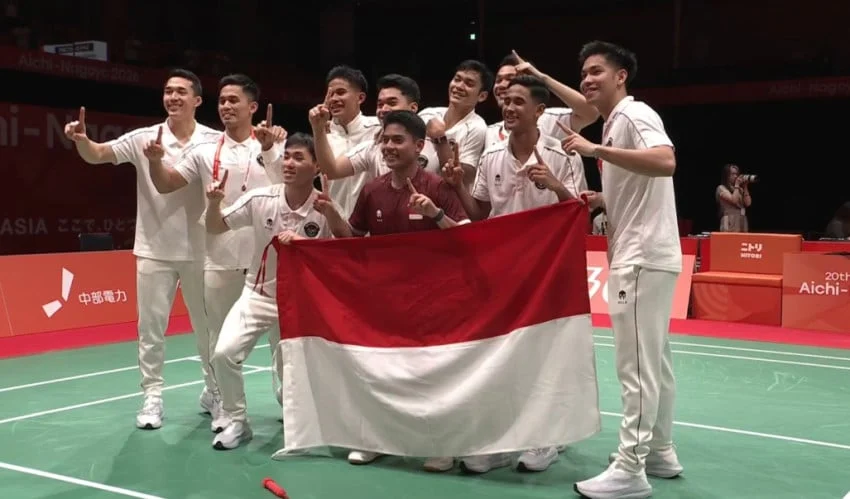
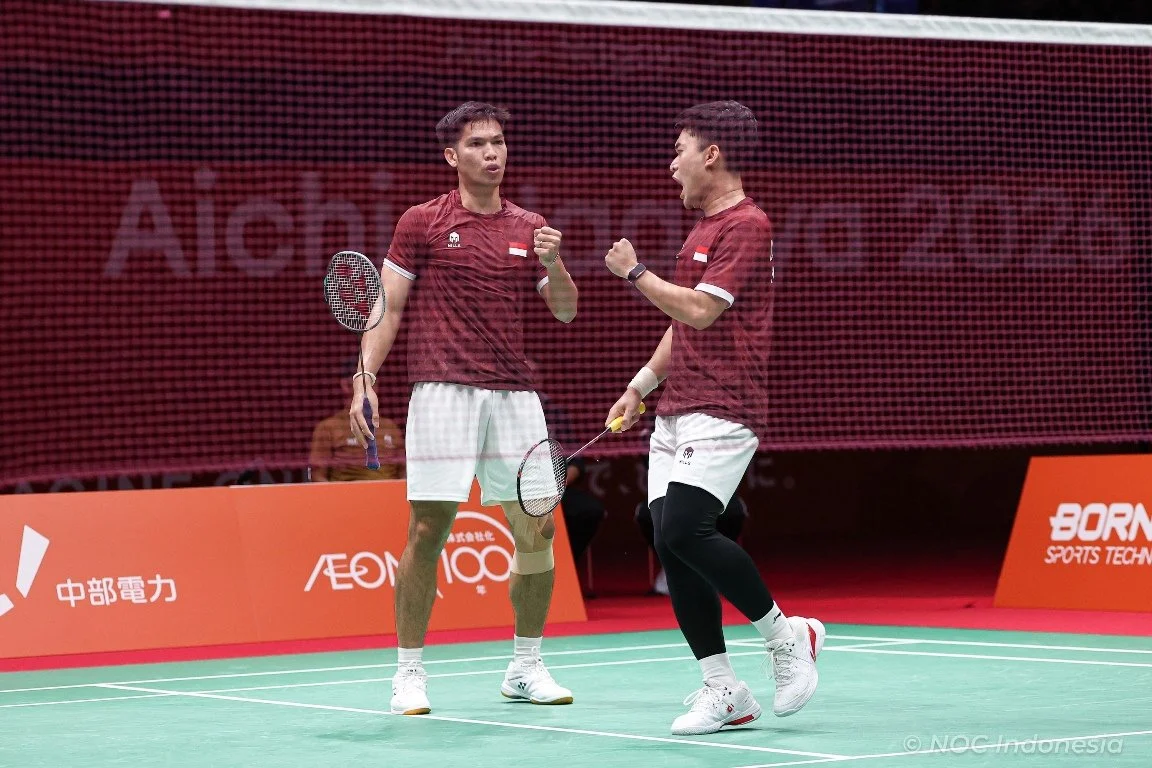
The Indonesian badminton contingent has added another prestigious chapter to its storied history at the quadrennial multi-sport extravaganza, securing a momentous gold medal in the men’s doubles individual event at the Asian Games 2026. The triumphant pair, Leo Rolly Carnando and Daniel Marthin, etched their names into the annals of national sporting glory following a fiercely contested, high-stakes final held at the Ichinomiya City Municipal Gymnasium in Ichinomiya, Japan. Facing off against the formidable Chinese duo of Liang Wei Keng and Wang Chang on Tuesday, September 29, 2026, the Indonesian representatives demonstrated extraordinary grit, tactical adaptation, and unyielding psychological resilience to turn the tide of the match and claim the ultimate prize of a gold medal.
The victory not only underscores the enduring dominance and depth of Indonesia’s men’s doubles division on the international stage but also serves as a poignant redemption arc for a pair that has steadily climbed through the competitive hierarchy of the Badminton World Federation (BWF) circuit. By defeating one of the world’s leading pairs in a dramatic three-game thriller, Leo and Daniel validated the rigorous training regimens, strategic planning, and unwavering faith invested in them by the Badminton Association of Indonesia (PBSI) and the wider coaching staff.
The Championship Clash: A Chronological Breakdown of the Final
The gold medal match lived up to its billing as a showcase of elite-level badminton, featuring explosive smashes, lightning-fast net exchanges, and grueling rallies that tested the physical and mental limits of both pairs. The Ichinomiya City Municipal Gymnasium was packed to capacity, with supporters, officials, and media personnel bearing witness to a classic confrontation between two of the sport’s most dynamic duos.
From the outset, the Chinese pair of Liang Wei Keng and Wang Chang imposed a relentless offensive tempo. Utilizing their powerful jump smashes and sharp interceptions at the forecourt, the Chinese duo kept the Indonesian pair on the defensive. Leo Rolly Carnando and Daniel Marthin struggled to find their rhythm early on, conceding crucial points through unforced errors under pressure. Despite a valiant effort to close the gap, Leo and Daniel dropped a tightly contested first game with a score of 19-21, putting them on the back foot and heightening the urgency for the remainder of the match.
Recognizing the gravity of the situation, the Indonesian coaching staff provided immediate tactical adjustments during the interval between the first and second games. The instructions emphasized reducing unforced errors, varying the speed of the lift to neutralize Liang’s steep attack, and taking proactive control of the net area.
The strategic shift bore immediate fruit in the second game. Leo and Daniel emerged onto the court with renewed energy and palpable determination. Their defensive wall proved impenetrable, turning defense into attack with blistering counter-drives that rattled the Chinese opponents. Displaying exceptional synergy and court coverage, the Indonesian pair completely dismantled their adversaries’ game plan, cruising to a commanding 21-13 victory in the second game to force a decisive rubber set.
With the momentum firmly shifted, the third and final game became a battle of attrition and nerves. Both pairs traded points in a tense sequence, neither willing to yield an inch of territory. At critical junctures, the communication and mutual trust between Leo and Daniel proved to be the differentiating factor. Maintaining their composure despite the deafening roar of the arena, the Indonesians executed precise cross-court drives and decisive smashes to pull ahead. As the scoreboard ticked toward the finish line, Leo and Daniel successfully fended off a late surge from Liang and Wang, sealing the third game 21-18 and securing the Asian Games gold medal.

The Turning Point: Motivation and On-Court Chemistry
The emotional aftermath of the final point encapsulated the magnitude of the achievement. Upon realizing victory was theirs, Leo Rolly Carnando and Daniel Marthin collapsed onto the court floor in sheer disbelief and exhaustion before embracing each other in a deeply emotional celebration. The triumph was a culmination of years of relentless dedication, sacrifice, and perseverance through various injuries and fluctuating forms.
Reflecting on the turning point of the match, Daniel Marthin revealed the psychological catalyst that propelled them through the adversity of the first-game loss. According to the statements released by the PBSI, the pair relied heavily on constant communication and mutual encouragement to recalibrate their focus when the pressure reached its peak.
"First of all, thank you to God. We are deeply grateful that both of us were able to constantly remind each other throughout the match," Daniel stated in the official PBSI release.
He further elaborated on the driving motivational force that stoke their competitive fire during the darkest moments of the final: "We also kept telling each other, ‘If not now, when else are we going to win?’ Therefore, we wanted to maximize the opportunity that had been given to us to the absolute fullest."
This sense of historical destiny and urgency resonated deeply within their gameplay. The rhetorical question—Kalau enggak sekarang kapan lagi? (If not now, when else?)—transformed into a tangible physical output, driving them to chase down impossible shuttles and execute high-risk, high-reward shots with pinpoint precision. The synergy between Leo’s explosive rear-court power and Daniel’s astute front-court interception reached its zenith in the third game, leaving the Chinese opposition searching for answers they could not find.
Contextualizing the Triumph: Season Trajectory and Background
The gold medal at the Asian Games 2026 is not an isolated flash of brilliance but rather the continuation of an upward trajectory for Leo Rolly Carnando and Daniel Marthin, affectionately known to badminton fans as "The Babies." Prior to their success in Ichinomiya, the pair demonstrated their championship credentials by claiming the title at the Thailand Open 2026 earlier in the competitive calendar. That victory served as a crucial stepping stone, boosting their world ranking and instilling the necessary confidence to navigate elite-level fields.
The Asian Games hold a uniquely revered status in Asian sports, often considered second only to the Olympic Games in terms of prestige, emotional weight, and national pride. For Indonesian badminton, the tournament carries a heavy legacy of historical success. Historically, Indonesia has relied heavily on badminton to deliver its most prized medals at multi-sport events, and the men’s doubles discipline has traditionally been a stronghold of national pride, boasting legendary predecessors who set global benchmarks.
Entering the 2026 edition of the Asian Games, the Indonesian badminton team faced immense expectations from the public and sports authorities alike. The pressure to maintain the country’s proud tradition of excellence weighed heavily on the shoulders of the athletes. For Leo and Daniel, carrying this mantle required not only technical excellence but also psychological fortitude to perform under the intense scrutiny of millions of viewers back home.

Strategic Implications and the Broader Impact on Indonesian Badminton
The victory of Leo Rolly Carnando and Daniel Marthin carries significant strategic implications for the future of Indonesian badminton, particularly regarding squad depth and generational transition within the national training center (Pelatnas PBSI).
In recent years, the global men’s doubles landscape has become intensely competitive, characterized by a congested tier of elite pairs from China, South Korea, Chinese Taipei, Malaysia, India, and Denmark. Margins of victory have shrunk significantly, making physical conditioning, analytical preparation, and mental resilience absolute prerequisites for success. By defeating world-class opponents like Liang Wei Keng and Wang Chang on a major multi-sport stage, Leo and Daniel have reaffirmed that they belong to the absolute upper echelon of the sport.
Furthermore, this triumph provides a massive psychological boost to the entire Indonesian badminton ecosystem. Following periods of mixed results across various international Opens and World Tour events, the gold medal at the Asian Games acts as a validation of the ongoing systematic development programs managed by the PBSI. It highlights the effectiveness of targeted training interventions designed to enhance players’ ability to manage pressure during high-stakes moments.
From a national perspective, the victory reinforces the status of badminton as Indonesia’s undisputed premier sport. Success at major international platforms such as the Asian Games consistently generates widespread public engagement, inspires younger generations to take up the sport, and secures continued governmental and corporate sponsorship for the national federation.
Conclusion: A Legacy Cemented and Future Horizons
As the dust settles on the Ichinomiya City Municipal Gymnasium, the images of Leo Rolly Carnando and Daniel Marthin standing atop the podium with the red-and-white flag raised high will remain indelible symbols of Indonesian athletic perseverance. Their journey from a disheartening first-game deficit to a triumphant championship finish exemplifies the very essence of elite sportsmanship: the refusal to surrender when faced with formidable odds.
With the Asian Games 2026 gold medal securely in their trophy cabinet, Leo and Daniel have firmly established their names among the greats of contemporary badminton. Yet, the relentless nature of the BWF calendar ensures that the celebration will be short-lived. As they look toward future challenges, including the ongoing World Tour circuit and the ultimate horizon of the Olympic Games, the mindset encapsulated by Daniel Marthin—if not now, when else?—will undoubtedly continue to serve as their guiding philosophy, propelling them toward even greater heights in the years to come.