
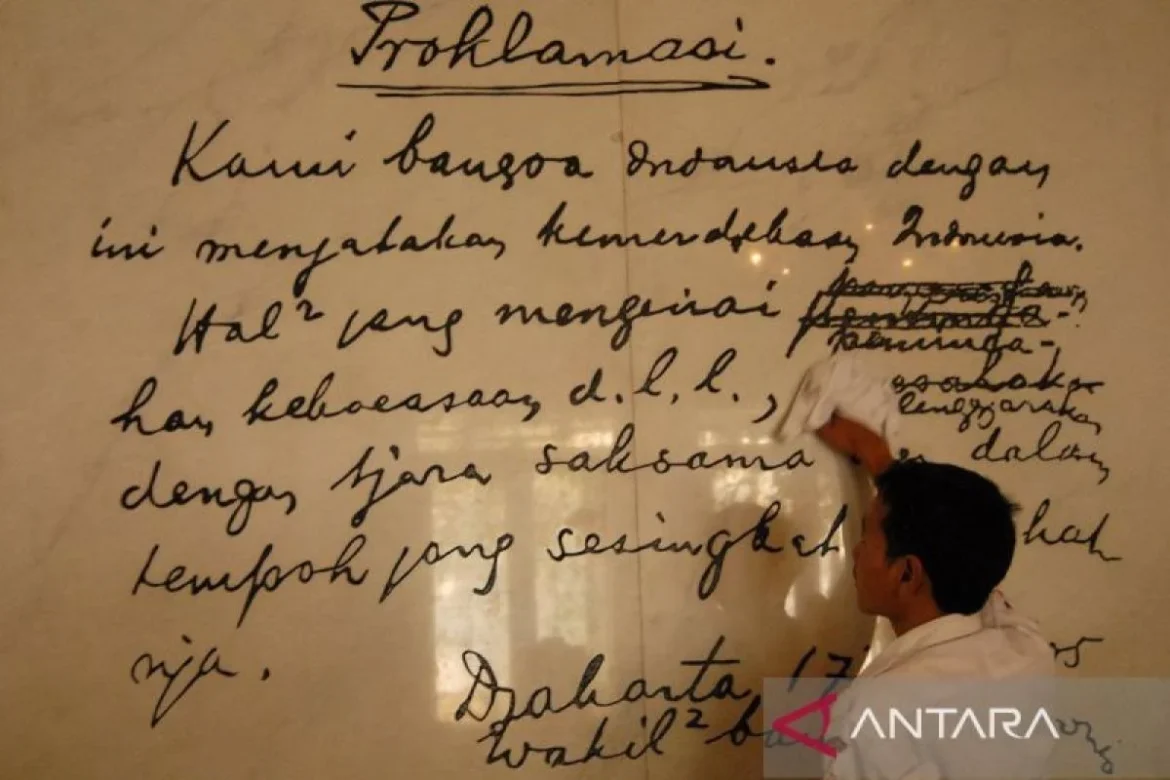
The Proclamation of Indonesian Independence, read by Sukarno on August 17, 1945, stands as the foundational document of the Indonesian nation, marking the definitive end of centuries of colonial rule. While the proclamation is often distilled into the image of Sukarno and Mohammad Hatta standing at Pegangsaan Timur 56, the reality of its birth was a complex, high-stakes political drama. It was the culmination of clandestine negotiations, intense pressure from youth movements, and a fragile alignment of interests that occurred in the immediate power vacuum following the sudden collapse of the Imperial Japanese Army.
The Strategic Vacuum: August 1945
The context of the proclamation was dictated by the rapid shifting of the global geopolitical landscape. On August 15, 1945, Japan officially announced its surrender to the Allied powers following the atomic bombings of Hiroshima and Nagasaki. This surrender created a precarious state of affairs in the Indonesian archipelago—a "status quo" period where the Japanese military forces were still present but effectively stripped of their mandate, while the Allied forces had not yet arrived to establish administration.
Indonesian youth organizations, or the Golongan Muda, were acutely aware of this transition. They recognized that if the declaration of independence were delayed, it risked being perceived as a gift from the Japanese occupation forces rather than an authentic expression of the people’s will. This urgency triggered the Rengasdengklok Incident, where Sukarno and Hatta were temporarily sequestered by radical youth leaders to isolate them from Japanese influence and pressure them into an immediate, unilateral declaration of sovereignty.
A Chronology of the Final Hours
The path to the proclamation moved with dizzying speed between August 16 and 17:
- August 16, 21:00 WIB: Sukarno and Hatta returned to Jakarta from Rengasdengklok after negotiations led by Ahmad Soebardjo, who promised that the proclamation would be enacted that night.
- August 16, 23:00 WIB: The drafting session commenced at the residence of Rear Admiral Tadashi Maeda on Jalan Imam Bonjol, Jakarta. Maeda, a Japanese naval officer, had expressed sympathy for the Indonesian independence movement, providing a safe harbor for the nationalist leaders.
- August 17, 03:00 WIB: The final draft of the proclamation text was agreed upon in the dining room of Maeda’s residence.
- August 17, 04:00 WIB: Sayuti Melik finalized the typed version of the text, incorporating minor editorial changes to the original handwritten draft.
- August 17, 10:00 WIB: The proclamation was read to a gathered crowd at Pegangsaan Timur 56, Jakarta, signaling the birth of the Republic.
The Key Architects and Their Contributions
The drafting process was a collaborative effort, though the roles were distinct and deeply impactful.
Sukarno served as the primary scribe, synthesizing the ideological foundations of the nation into a brief, potent statement. His role was not merely that of a writer, but as the orator who would ultimately bestow legitimacy upon the text. Mohammad Hatta provided the intellectual scaffolding, particularly regarding the phrasing of the transfer of power, ensuring the document would stand up to the scrutiny of international law.
Ahmad Soebardjo acted as the crucial diplomat. His ability to negotiate with the Japanese military leadership, specifically securing Maeda’s residence, was the logistical catalyst that made the meeting possible. Without his intervention in Rengasdengklok, the timeline of the proclamation would have been delayed, potentially allowing Allied forces to intervene or re-establish colonial structures.
Sayuti Melik’s role as the typist was arguably more significant than mere clerical work. His decision to alter specific words—such as changing "tempoh" to "tempo"—refined the document into the definitive version now preserved in the National Archives. Furthermore, the contribution of Sukarni, a firebrand youth leader, cannot be overstated. It was Sukarni who insisted that the proclamation be signed only by Sukarno and Hatta on behalf of the Indonesian people, a move that solidified the dual-leadership identity of the nation at its inception.
Supporting Figures: The Invisible Infrastructure
The proclamation would have been impossible without the logistical and symbolic contributions of others. Fatmawati, the wife of Sukarno, spent the preceding days sewing the Bendera Pusaka (the Heirloom Flag) from red and white cotton. This flag was not merely a textile; it was the visual embodiment of the state.
Rear Admiral Tadashi Maeda’s role remains a subject of historical analysis. While he was a Japanese officer, his defiance of the broader Japanese policy of maintaining the status quo provided the essential physical space for the drafting. His house has since been repurposed as the Museum of the Proclamation Formulation, serving as a permanent record of this cross-cultural cooperation during a period of war.
Fact-Based Analysis of Implications
The proclamation of 1945 did not merely declare an end to colonial rule; it fundamentally altered the trajectory of the 20th century in Southeast Asia. It served as a catalyst for other independence movements in the region, providing a blueprint for the rejection of re-established colonial administrative structures.
However, the implications were immediate and severe. The declaration triggered a four-year diplomatic and armed struggle, known as the National Revolution, against the Dutch who sought to reclaim their former colony. The brevity of the proclamation—comprising only two main sentences—was a strategic choice. By keeping the text simple, the founders focused on the essence of sovereignty rather than providing an exhaustive list of governance details that might have invited internal dissent or provided the Dutch with specific legal points to argue against.
Official Historical Preservation
In contemporary Indonesia, the preservation of the original manuscripts and the artifacts surrounding the proclamation has become a matter of national security and cultural heritage. The National Archives of the Republic of Indonesia (ANRI) currently holds the original handwritten and typed drafts. The government’s recent efforts to rotate these artifacts between the National Monument (Monas) in Jakarta and the new capital city (IKN) reflect a symbolic bridging of the nation’s historical origins with its future trajectory.
These logistical operations—the Kirab or procession of the flag and documents—are more than ceremonial. They represent the institutional recognition that the proclamation is a living document. The involvement of the State Secretariat (Setpres) in managing these items ensures that they are protected from environmental degradation and historical erasure.
Historical Reflections
Historians note that the atmosphere of the 1945 drafting was one of intense, controlled chaos. The lack of a unified Japanese directive allowed for a "window of opportunity" that lasted roughly 48 hours. Had the nationalist leaders waited for the arrival of the Allied Civil Affairs Administration (NICA), the legal path to independence would have been significantly more difficult, likely requiring long-term negotiations that could have been derailed by colonial interests.
The reaction from the international community at the time was cautious. Many Allied powers were initially unaware of the gravity of the situation in Jakarta, viewing it through the lens of a regional uprising rather than a formal declaration of statehood. It took the subsequent years of the National Revolution to transform the proclamation from a statement of intent into a recognized reality on the world stage.
Conclusion
The proclamation of August 17, 1945, was not an accidental occurrence, nor was it the work of a single man. It was a precise, calculated intervention by a group of leaders and activists who understood the ephemeral nature of power. By securing the site, drafting the text, and forcing the signatures within the narrow timeframe afforded by the Japanese surrender, these individuals secured the sovereignty of a nation that would eventually become the world’s fourth most populous country.
The legacy of the proclamation remains in the daily governance of the Indonesian state. Every year, the commemoration serves as a reminder that sovereignty was not handed down, but rather seized through intellectual courage and strategic collaboration. The diverse roles played by the "Golongan Tua" (the older generation, including Sukarno and Hatta) and the "Golongan Muda" (the youth, including Sukarni) remind us that the foundation of a nation is often built on the tension between caution and radical action, eventually finding common ground in the pursuit of national dignity.
