
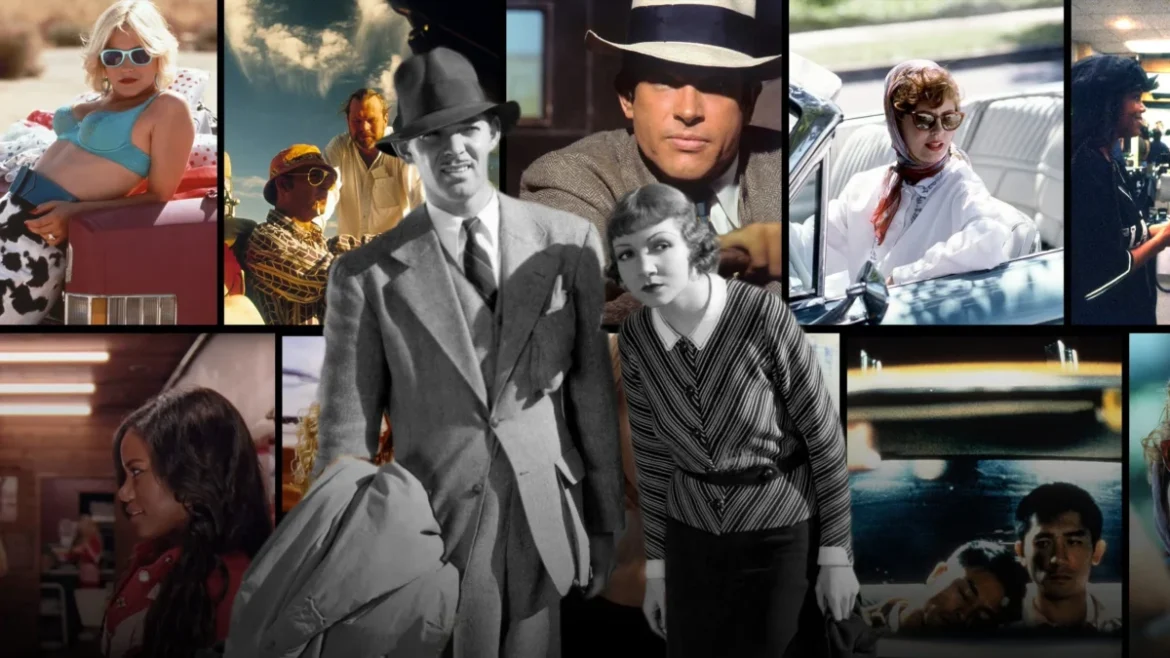
The road trip film has long served as a cornerstone of global cinema, functioning not merely as a narrative device but as a profound catalyst for character transformation and societal critique. From the avant-garde stylings of Wong Kar-wai to the gritty realism of John Singleton, directors have utilized the "open road" to explore themes of freedom, alienation, and identity. This genre, which often follows a formulaic trajectory of departure, journey, and arrival, has been continuously reinvented by filmmakers to reflect the shifting cultural landscapes of their respective eras. Whether chronicling the desperate flight of outlaws or the meditative wanderings of grieving souls, these films validate John Steinbeck’s famous observation that "people don’t take trips; trips take people."
The Historical Foundations: Pre-War Rom-Coms and Philosophical Journeys
The road trip genre found its early footing in the 1930s, a period marked by economic hardship and a growing desire for escapism. Frank Capra’s It Happened One Night (1934) remains the definitive blueprint for the romantic road movie. The film follows Ellie (Claudette Colbert), a socialite fleeing her father, and Peter (Clark Gable), a cynical reporter. The production was famously fraught; Colbert initially disliked the script and only agreed to the role for a doubled salary. However, the film became the first in history to sweep the "Big Five" Academy Awards: Best Picture, Director, Actor, Actress, and Screenplay. Its iconic hitchhiking scene, where Ellie uses her leg to stop a car, challenged the rigid censorship of the Hays Code era and established the road as a space where social hierarchies could be dismantled.
In Europe, the genre took a more introspective turn. Ingmar Bergman’s Wild Strawberries (1957) utilized a drive to an academic ceremony as a vehicle for psychological exploration. As Professor Isak Borg travels through the Swedish countryside, the physical journey triggers a series of vivid memories and hallucinations. Bergman’s work demonstrated that the road trip could serve as a bridge between the present and the subconscious, a theme that would later influence directors like Wim Wenders and Ryusuke Hamaguchi.
The New Hollywood Era: Outlaws and Social Realism
By the late 1960s, the road trip film began to reflect the disillusionment of a generation. Arthur Penn’s Bonnie and Clyde (1967) revolutionized the genre by glamorizing criminal fugitives and introducing a level of graphic violence previously unseen in American cinema. The film’s success signaled the birth of "New Hollywood," where traditional moralities were replaced by ambiguous anti-heroes. The road was no longer just a path to romance; it was a getaway route from a suffocating establishment.
In the same vein of social critique, Barbara Loden’s Wanda (1970) offered a stark, documentary-style look at a woman’s aimless drift through the coal-mining regions of Pennsylvania. Loden, who wrote, directed, and starred in the film, portrayed a protagonist who lacked the agency typically found in road movie leads. Wanda challenged the "freedom" trope of the genre, suggesting that for those at the bottom of the socio-economic ladder, the road offers no escape, only further marginalization.
This era also produced Sorcerer (1977), William Friedkin’s harrowing tale of four outcasts transporting unstable nitroglycerin across the South American jungle. Despite being overshadowed by the release of Star Wars, Sorcerer is now regarded as a masterpiece of tension. Friedkin’s insistence on practical effects and grueling location shoots in the Dominican Republic resulted in a film that captured the visceral danger of the road, reflecting the nihilism of the post-Vietnam era.
The 1980s and 90s: Subversion and Identity Politics
The late 20th century saw the road trip genre expand to include diverse voices and subversive themes. Wim Wenders’ Paris, Texas (1984) captured the vast, lonely landscapes of the American Southwest through the eyes of a European director. With a screenplay by Sam Shepard and a haunting slide-guitar score by Ry Cooder, the film explored the fragmentation of the American family and the difficulty of emotional reconciliation.
The 1990s introduced films that used the road to explore gender and sexual identity. Ridley Scott’s Thelma & Louise (1991) became a feminist landmark, depicting two women whose weekend getaway turns into a flight from patriarchal violence. The film’s ending remains one of the most discussed in cinematic history, symbolizing a choice of total freedom over a return to domestic subjugation.
Similarly, The Adventures of Priscilla, Queen of the Desert (1994) took the road trip to the Australian Outback. By placing two drag queens and a transgender woman in a lavender bus, director Stephan Elliott used the genre to address rural prejudice and the concept of "chosen family." The film’s extravagant costumes won an Academy Award, but its true legacy lies in its humanization of LGBTQ+ characters during a decade of significant social transition.
In Hong Kong, Wong Kar-wai’s Happy Together (1997) moved the road trip to Argentina. Released during the year of the Hong Kong handover, the film’s depiction of a volatile gay couple lost in a foreign land served as a metaphor for the political displacement and uncertainty felt by many in Hong Kong. The film won Wong the Best Director award at Cannes, cementing his status as a master of atmospheric, non-linear storytelling.
Genre Hybrids: Thrillers, Psychedelia, and Poetic Justice
The versatility of the road trip format allowed for unique genre hybrids. The Hitcher (1986) transformed the open highway into a landscape of terror, playing on the primal fear of the "dangerous stranger." Conversely, David Lynch’s Wild at Heart (1990) and the Tony Scott-directed, Quentin Tarantino-written True Romance (1993) blended the road movie with hyper-violent neo-noir and surrealist romance. These films emphasized style and pop-culture iconography, such as Nicolas Cage’s snakeskin jacket in Wild at Heart, which he famously claimed represented his "belief in personal freedom."
John Singleton’s Poetic Justice (1993) brought the genre into the heart of the 90s hip-hop era. Starring Janet Jackson and Tupac Shakur, the film used a mail truck journey from South Central Los Angeles to Oakland to explore urban grief and the healing power of art. The inclusion of Maya Angelou’s poetry gave the film a literary weight, proving that the road trip could be a vehicle for Black female interiority.
Meanwhile, Terry Gilliam’s Fear and Loathing in Las Vegas (1998) offered a drug-fueled, satirical deconstruction of the American Dream. Based on Hunter S. Thompson’s seminal work of Gonzo journalism, the film used the road to Vegas as a hallucinatory descent into the "savage heart" of a nation obsessed with consumption and artifice.
Modern Interpretations: Digital Realism and Meditative Grief
In the 21st century, the road trip movie has adapted to the digital age while returning to its roots in literature. Janicza Bravo’s Zola (2021) made history as the first major film adapted from a viral Twitter thread. The film’s frenetic editing and use of social media notification sounds captured the chaotic energy of a 48-hour trip from Detroit to Florida. While stylized, Zola addressed the dark realities of sex trafficking and the performative nature of modern identity.
In contrast, Ryusuke Hamaguchi’s Drive My Car (2021), based on a short story by Haruki Murakami, utilized the road for quiet, prolonged contemplation. Much of the film takes place inside a red Saab 900, where a widowed theater director and his young driver develop a bond through shared silence and recorded rehearsals. The film’s three-hour runtime allows the audience to experience the passage of time and the slow process of mourning. Drive My Car won the Academy Award for Best International Feature Film, proving that even in a fast-paced digital world, the slow journey remains a powerful tool for emotional resonance.
Broader Impact and Implications
The enduring popularity of the road trip genre lies in its inherent flexibility. It serves as a narrative "skeleton" that can be dressed in the aesthetics of any culture or era. From a technical standpoint, the genre has pushed the boundaries of cinematography, from the wide-screen vistas of Paris, Texas to the intimate, cramped interiors of Drive My Car.
Sociologically, road movies often act as "state of the union" addresses. They provide a cross-section of a country, showing the diverse people and landscapes that exist between the points of departure and destination. By forcing characters into confined spaces—whether a bus, a convertible, or a mail truck—filmmakers create a "pressure cooker" environment that strips away social pretenses.
The implications of these films extend beyond the box office. They have influenced fashion, music, and travel culture, turning certain routes (like Route 66 or the Australian Outback) into pilgrimage sites for cinephiles. More importantly, they continue to offer a universal message: that the most significant discoveries are rarely found at the destination, but are instead forged through the trials, encounters, and reflections that occur along the way. As long as there are roads to travel and stories to tell, the road trip genre will remain a vital and evolving part of the cinematic lexicon.
