
JAKARTA — The complex and politically charged process of divesting shares in PT Freeport Indonesia (PTFI) continues to navigate various regulatory, financial, and strategic milestones, drawing significant attention from government officials, market analysts, and the public. Amid ongoing deliberations regarding the future ownership structure of the massive mining operation in Papua, the Indonesian government has reiterated its confidence in the nation’s corporate capabilities. Specifically, financial authorities have asserted that domestic State-Owned Enterprises (SOEs) possess the necessary technical expertise, financial acumen, and operational capacity to successfully acquire and manage the gold and copper mining giant.
The conversation surrounding the involvement of state enterprises gained momentum as two prominent Indonesian BUMNs—PT Aneka Tambang (Persero) Tbk (ANTM), commonly known as Antam, and PT Inalum (Persero)—were identified as the primary state vehicles designated to acquire the divested shares. As the government presses forward with its mandate to increase national ownership in strategic natural resource assets, the question of whether local entities can manage an operation as vast and technologically demanding as the Grasberg mine has been a subject of intense national debate.
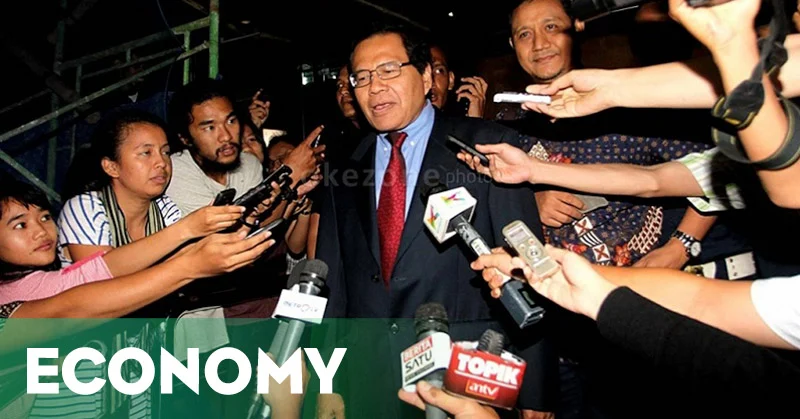
Addressing these concerns directly, Sonny Loho, who served as the Director General of State Assets at the Ministry of Finance, expressed strong optimism regarding the preparedness of state-owned mining and metallurgical firms. Speaking to reporters at the Ministry of Finance headquarters in Jakarta, Loho firmly dismissed skepticism surrounding the competency of Indonesian corporations to run the enterprise. His remarks came at a time when domestic stakeholders were closely scrutinizing the financial mechanics and logistical feasibility of the share acquisition process.
"Yes, they are capable; there is no reason to doubt them. Our mining companies are already performing very well," Loho stated, emphasizing the established track record of Indonesia’s primary resource-extraction firms. He further urged the public and various interest groups to shed unwarranted anxieties regarding the transition of management or ownership stakes to local entities, advocating for a confident and forward-looking approach to national economic sovereignty. "There is no need to worry. People in Indonesia worry too much; we must be brave. We have to be able to manage it," he added.
Background Context of the PT Freeport Indonesia Divestment
The divestment of shares in PT Freeport Indonesia represents one of the most critical economic and diplomatic maneuvers in the country’s contemporary history. Operating the Grasberg minerals district in Mimika Regency, Papua—which holds some of the largest recoverable reserves of copper and gold in the world—PT Freeport Indonesia has historically been dominated by United States-based mining conglomerate Freeport-McMoRan Inc. For decades, the sheer scale of the operation, coupled with the immense capital requirements and advanced engineering needed for high-altitude, block-caving underground mining, led critics to argue that domestic firms lacked the prerequisites to take a controlling or significant stake.
However, the political landscape shifted dramatically under successive administrations aiming to secure a greater share of the country’s mineral wealth for the Indonesian state, in alignment with Article 33 of the 1945 Constitution, which dictates that land, water, and the natural resources contained therein shall be controlled by the state and used to the greatest extent for the prosperity of the people.
The legal foundation for divestment was substantially strengthened by Government Regulation No. 77 of 2014 concerning the Third Amendment to Government Regulation No. 23 of 2010 on the Implementation of Mineral and Coal Mining Business Activities. This regulation mandated that foreign-owned mining companies operating in Indonesia must progressively divest their shares to domestic participants—including the central government, regional governments, state-owned enterprises, regional-owned enterprises, or private national entities—until domestic ownership reaches a specified majority threshold.
Chronology of State-Owned Enterprise Involvement
The journey toward securing state control over PT Freeport Indonesia has been characterized by protracted negotiations, shifting regulatory frameworks, and complex valuation disputes. The roadmap involving PT Aneka Tambang and PT Inalum as the designated state champions began to take formal shape as the timeline for the 30 percent divestment requirement approached.
In the preceding years, PT Freeport Indonesia faced mounting obligations to offer shares to the Indonesian government under its Contract of Work (CoW), which was originally signed in 1967 and renegotiated in 1991. While initial divestment schedules faced delays due to disagreements over share valuations, compliance with environmental regulations, the construction of domestic processing and refining facilities (smelters), and the transition from open-pit to underground mining, the government maintained a steadfast policy of increasing national equity.
By positioning state-owned enterprises like Antam—a diversified mining and metals company with extensive experience in gold, nickel, and bauxite mining—and Inalum—which later evolved into the holding company for state mining industries (MIND ID)—Jakarta sought to create a consolidated front. The strategy was designed to pool financial resources and technical oversight, ensuring that the acquisition of Freeport shares would not overly strain a single balance sheet, but would instead leverage the collective strength of Indonesia’s mining sector.
Financial and Operational Readiness of Indonesian BUMNs
A central argument raised by financial analysts and government planners during the 2015 divestment discussions centered on the balance sheet strength and operational readiness of Antam and Inalum. Managing an enterprise the size of PT Freeport Indonesia requires navigating international commodity markets, securing substantial syndicated loans, and maintaining high standards of environmental, social, and corporate governance (ESG).
Proponents of the state-led acquisition argued that Indonesian BUMNs had matured significantly over the preceding decades. PT Aneka Tambang boasted decades of operational history, managing complex mining concessions, processing plants, and international export protocols. Meanwhile, PT Inalum, as the country’s sole primary aluminum smelting enterprise, possessed deep experience in heavy industrial manufacturing and strategic state resource management.
Furthermore, financial advisors pointed out that an acquisition of this magnitude would not rely solely on the internal cash flows of the individual BUMNs. Instead, it was anticipated that the acquisition would be financed through a combination of sovereign backing, international banking syndicates, and strategic debt issuances, structured in a way that would eventually amortize the acquisition costs through future dividend distributions and operational revenues generated by the Grasberg mine itself.
Reactions from Stakeholders and Industry Observers
The stance articulated by the Ministry of Finance met with varied reactions across the political and economic spectrum. Nationalist politicians and labor unions broadly welcomed the push for increased state control, viewing the integration of PT Freeport Indonesia into the BUMN ecosystem as a historic correction of historical imbalances in resource distribution. For decades, critics argued that the lion’s share of profits from Papua’s mineral wealth flowed overseas, leaving local regions with insufficient long-term developmental gains.
Conversely, market analysts and financial conservatives expressed cautious prudence. Their concerns did not necessarily stem from a lack of faith in Indonesian engineering talent, but rather from the massive financial exposure and commodity price volatility inherent in the global mining sector. Analysts emphasized that operating a high-cost, technologically complex asset like Grasberg required insulation from political interference, sustained capital expenditure, and uninterrupted access to global technology providers.
Industry experts noted that while state-owned enterprises are fully capable of managing large-scale mining operations, the ultimate success of the transition would hinge on maintaining professional corporate governance, ensuring merit-based leadership appointments, and preserving operational continuity without compromising safety or environmental standards.
Broader Economic Implications and Long-Term Outlook
The policy direction favoring state-owned enterprise stewardship of PT Freeport Indonesia carries profound implications for the domestic economy and the structure of Indonesia’s capital markets.
First, successfully integrating a world-class asset into the BUMN portfolio enhances the consolidated asset base and revenue-generating capacity of the state. Dividends collected from the mining operations flow directly into the state budget, providing fiscal space for infrastructure development, education, and public health initiatives.
Second, the move serves as a powerful signal to the international mining and investment community regarding Indonesia’s evolving resource nationalism framework. While the government has asserted greater control over strategic sectors, it has concurrently sought to maintain a stable, predictable framework for foreign investment, emphasizing partnerships, transparent divestment formulas, and adherence to international business standards.
Third, the operational involvement of local entities fosters the transfer of advanced mining technology and management skills to domestic engineers and executives. The complex transition from open-pit mining to large-scale underground block caving at Grasberg demands cutting-edge technical proficiency. By working alongside international experts and gradually assuming full managerial control, Indonesian personnel gain invaluable experience that can be applied to other domestic mining projects.
As the divestment process continued to unfold following these ministerial assurances, the foundation was laid for subsequent landmark developments, including the eventual acquisition of a majority 51 percent stake in PT Freeport Indonesia by the Indonesian state through MIND ID in later years. The early confidence expressed by officials such as Sonny Loho underscored a pivotal ideological and economic shift: a transition from passive regulation of foreign concessionaires to active, sovereign stewardship of the nation’s vital natural endowments.