
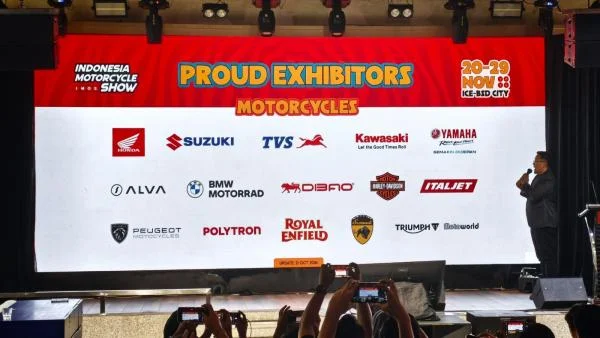
The Indonesia Motorcycle Show (IMOS) 2026 is set to mark a significant milestone in the evolution of the nation’s automotive sector, with organizers announcing an ambitious 10-day exhibition schedule running from November 20 to November 29, 2026. This expanded duration, hosted at the Indonesia Convention Exhibition (ICE) in BSD City, Tangerang, signals a strategic shift in how the industry intends to engage both consumers and stakeholders. Occupying Hall 9 and Hall 10 with a sprawling footprint exceeding 15,000 square meters, the event is positioned to be the largest and most comprehensive motorcycle showcase in the country’s history.
A Strategic Expansion of Industry Visibility
The decision to extend the duration of IMOS 2026 from the traditional shorter windows to a full 10-day program reflects a broader trend in global automotive exhibitions. By providing more time for public engagement, the Indonesian Motorcycle Industry Association (AISI) aims to bridge the gap between manufacturer innovation and consumer adoption. The move to ICE BSD City, a venue known for its world-class facilities and capacity for large-scale logistics, underscores the professional stature that AISI intends to project for the domestic market.
For industry observers, this expansion is not merely about floor space; it is about depth. With more than 15,000 square meters of exhibition area, manufacturers will have the necessary room to showcase not only current fleet models but also experimental concepts, advanced battery-swapping technologies, and localized supply chain developments.
The Vision Behind Riding Toward A Sustainable Future
The central theme for this year’s exhibition, "Riding Toward A Sustainable Future," serves as the guiding principle for all scheduled activities. According to Yosef Utama, the Head of Commercial for AISI, this theme was chosen to encapsulate the industry’s pivot toward environmentally conscious mobility.
The global automotive landscape is currently undergoing a radical transformation, and Indonesia—as one of the world’s largest motorcycle markets—is at the epicenter of this change. The integration of electric vehicles (EVs) and hybrid technologies has become a necessity rather than an alternative. The theme highlights the collaborative effort between public policy makers and private manufacturers to transition toward a decarbonized transport ecosystem. It suggests a roadmap where internal combustion engines (ICE) continue to be refined for higher efficiency while electric motorcycles are scaled for mass-market affordability.
Economic Implications for the Domestic Market
Thomas Wijaya, Chairman of AISI, emphasized that IMOS 2026 serves as a crucial barometer for the national industry. The motorcycle sector remains the lifeblood of transportation for millions of Indonesians, and its health is a primary indicator of national economic vitality.
"We want to move beyond the concept of a simple trade show," Wijaya noted. "Our goal is to act as a catalyst that accelerates market growth and provides a platform where the industry can demonstrate its maximum contribution to the national economy."
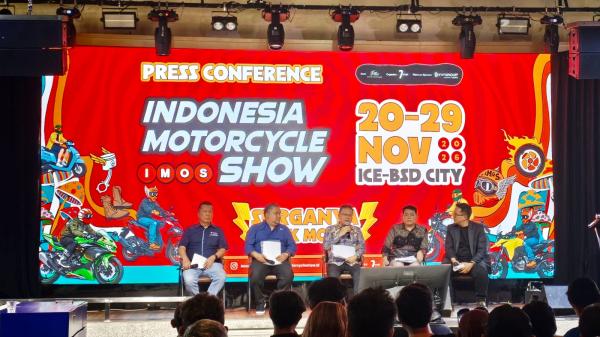
Data from recent years suggests that the Indonesian market is resilient but requires constant stimulus. Following the post-pandemic recovery, the focus has shifted toward modernization. IMOS 2026 is expected to influence consumer sentiment significantly. By hosting a longer event, the organizers hope to provide families and professional buyers with ample opportunity to test ride new models, consult with financial institutions regarding credit schemes, and understand the practical benefits of the latest technological safety features.
Historical Context and Evolution of IMOS
To understand the significance of the 2026 event, one must look at the chronology of the Indonesia Motorcycle Show. Initially established as a biennial event, the exhibition has evolved from a simple display of new motorcycle releases into a holistic ecosystem event. Over the past decade, IMOS has expanded its scope to include the aftermarket sector, riding gear, safety seminars, and infrastructure for electric charging stations.
The 2026 iteration represents the maturation of these efforts. Historically, the exhibition served as a venue for major Japanese brands—Honda, Yamaha, Suzuki, and Kawasaki—to unveil their latest designs. However, the 2026 edition will feature a noticeably higher concentration of EV-focused brands, including domestic startups and international players entering the Indonesian market for the first time. This shift in the exhibitor profile mirrors the Indonesian government’s target of reaching a net-zero emission goal, which relies heavily on the electrification of two-wheeled transport.
Analyzing the Market Landscape
Market analysts point out that the 10-day duration of IMOS 2026 will allow for a more structured programming schedule. Organizers are expected to host technical workshops, B2B meetings, and policy forums alongside the consumer-facing exhibits.
The industry is currently facing a dual challenge: maintaining the reliability of traditional engines while simultaneously scaling up the production of electric motorcycles. Factors such as the government’s subsidy programs for electric bikes, the availability of charging infrastructure, and the development of local battery manufacturing facilities are all expected to be focal points of discussion at the show.
Furthermore, the scale of 15,000 square meters allows for interactive demonstrations. Unlike static displays of the past, the 2026 exhibition will feature dedicated zones for "Smart Mobility," where companies can showcase connected vehicle technology—an emerging field in Indonesia that utilizes GPS, smartphone integration, and vehicle-to-everything (V2X) communication to improve road safety and maintenance monitoring.
Official Responses and Industry Outlook
While the formal agenda for the 10-day event is still being finalized, initial reactions from stakeholders have been overwhelmingly positive. Dealership networks have expressed optimism that the extended duration will lead to higher conversion rates, as potential buyers have more time to conduct research and compare options.
Suppliers and component manufacturers have also highlighted the importance of the event as a networking hub. With international buyers and regional investors expected to attend, IMOS 2026 is effectively serving as a regional trade gateway for Southeast Asia. The focus on sustainability is also expected to attract interest from venture capitalists looking to invest in the Indonesian green economy.

AISI’s leadership has indicated that the association is working closely with the Ministry of Industry to ensure that the event aligns with the national industrial roadmap. This collaboration is vital for addressing regulatory bottlenecks and promoting the "Made in Indonesia" label on the global stage.
Potential Challenges and Future Trajectory
Despite the optimism, the organizers acknowledge that there are challenges to navigate. The primary hurdle remains consumer education regarding electric motorcycle performance and long-term cost savings. By dedicating a significant portion of the floor space to educational displays and test-ride tracks, the organizers hope to demystify the technology for the average user.
Moreover, the logistics of managing an event of this size over 10 days at ICE BSD City require meticulous planning. Traffic management, crowd control, and the seamless transition between different industry segments will be key to the success of the exhibition. However, given the track record of previous AISI events, there is a high degree of confidence in the organizational capabilities of the team behind IMOS 2026.
Conclusion: A Pivotal Moment for Mobility
As November 2026 approaches, all eyes in the automotive sector are turning toward Tangerang. The expanded format of IMOS 2026 is a testament to the industry’s confidence in the Indonesian market. By balancing the legacy of traditional motorcycles with the urgent need for sustainable innovation, the exhibition is set to define the next decade of two-wheeled transport in the country.
Whether the event achieves its goal of becoming a true barometer for the industry will depend on the participation of both the major manufacturers and the emerging players in the EV sector. Nevertheless, the commitment to a 10-day timeline and a 15,000-square-meter showcase suggests that the industry is not just preparing for a standard exhibition, but for a fundamental shift in how Indonesians move, work, and interact with the future of mobility.
As the countdown begins, the industry stands at a crossroads. The success of IMOS 2026 will likely serve as the benchmark for future automotive events in the region, proving that even in a digital age, the physical experience of interacting with innovation remains the most powerful tool for driving market adoption and industrial growth.
