
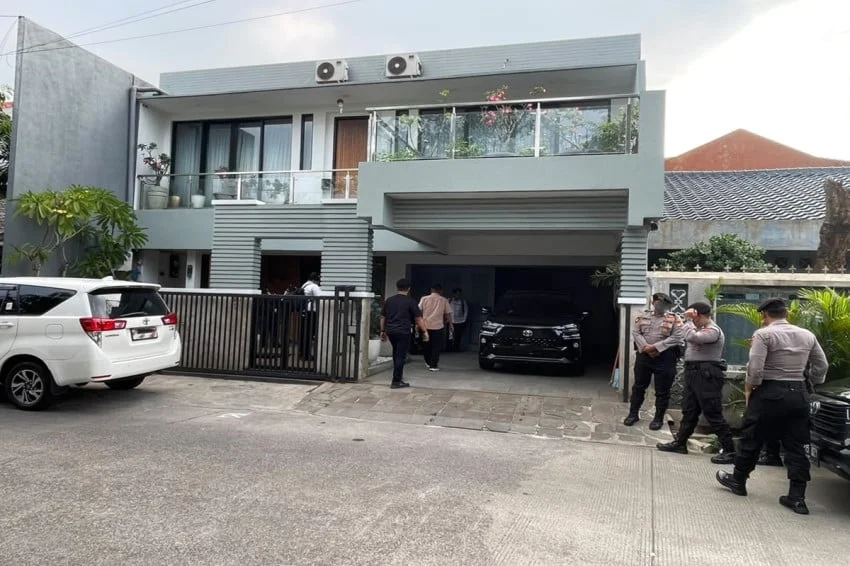
The Corruption Eradication Commission (KPK) has intensified its investigation into an ongoing bribery and corruption scandal involving high-profile public officials and law enforcement personnel. In the latest development of this high-stakes inquiry, anti-corruption investigators executed a search warrant at a private residence belonging to active law enforcement officer Ipda Yayat Sudrajat (YYS) situated in Depok, West Java. This enforcement action marks a crucial step in the broader probe concerning advance-fee bribery schemes tied to municipal infrastructure projects in Bekasi Regency, a case that has already ensnared suspended Bekasi Regent Ade Kuswara Kunang.
The raid underscores the anti-graft agency’s aggressive asset-tracing strategy as investigators dig deeper into an intricate web of illicit financial flows, political patronage, and bureaucratic corruption. As the legal net tightens around those implicated in the multi-billion rupiah scheme, the KPK continues to uncover hidden assets allegedly acquired through proceeds of systemic administrative extortion and project kickbacks.
Details of the Depok Raid and Ongoing Asset Tracking
The targeted search operation in Depok took place on Monday, September 21, 2026. According to official statements released by the anti-corruption agency, the sweep is part of an ongoing supplementary investigation branching out from the primary case file of Ade Kuswara Kunang.
Budi Prasetyo, the KPK spokesperson, confirmed the execution of the search warrant during a media briefing at the commission’s red-and-white headquarters. "Investigators have once again carried out a search at the residence of individual YYS, which is located within the Depok area," Prasetyo stated to reporters.
While investigators seized various physical and digital documents during the operation, the spokesperson noted that a comprehensive inventory of the confiscated items is still underway. Consequently, specific details regarding the exact nature and volume of the newly recovered evidence have not yet been made public to protect the integrity of the ongoing investigation.
This enforcement action in Depok is not an isolated event. It represents the second major residential search directed at Ipda Yayat Sudrajat. Previously, anti-graft investigators raided another property linked to the police officer in Cibubur, signaling that the suspect’s footprint spans multiple jurisdictions across the Greater Jakarta metropolitan area.
Uncovering a Vast Real Estate Portfolio
Beyond the immediate search and seizure operations, KPK financial analysts and investigators have trained their sights on the extensive asset holdings allegedly tied to Ipda Yayat Sudrajat. Preliminary intelligence and forensic accounting suggest that the police officer may have acted as a conduit or a beneficiary in channeling and laundering funds derived from municipal project corruption in Bekasi.
The anti-graft agency suspects that the scale of asset accumulation extends far beyond the properties searched thus far. Investigators have received intelligence indicating that the suspect holds ownership interests or beneficial control over a sprawling portfolio of luxury real estate properties.
"Investigators suspect that the individual in question possesses a substantial number of luxury assets, numbering in the dozens, which are scattered across several strategic locations," Prasetyo elaborated.

According to KPK mapping data, these contested properties are distributed across a wide geographical footprint, including South Jakarta, Bekasi, Cibubur, Depok, Bogor, Sukabumi, and Karawang. The sheer dispersion of these high-value assets highlights the sophisticated methods employed to obscure the ultimate ownership and origin of funds allegedly siphoned from public infrastructure budgets.
Background Context: The Ade Kuswara Kunang Bribery Scandal
The investigation surrounding Ipda Yayat Sudrajat is inextricably linked to the sweeping corruption case that brought down suspended Bekasi Regent Ade Kuswara Kunang. The overarching scandal revolves around systemic bribery practices concerning "ijon" projects—a colloquial term in Indonesian procurement fraud referring to advance payments or upfront kickbacks solicited from contractors in exchange for the guaranteed award of lucrative government infrastructure tenders.
Ade Kuswara Kunang, who was previously hailed as a dynamic regional leader, became the subject of a comprehensive KPK sting operation and subsequent formal investigation. The agency uncovered a deeply entrenched patronage network where municipal projects were routinely bartered for substantial illicit fees, compromising the quality of public works and undermining fair administrative governance in Bekasi Regency.
As the KPK peeled back the layers of the procurement cartel, financial audits and witness testimonies began to point toward external facilitators and intermediaries who allegedly helped launder the proceeds of the graft. Among those flagged by investigators was Ipda Yayat Sudrajat, whose professional standing as a law enforcement officer allegedly provided a veneer of protection or logistical facilitation for the illicit financial transactions.
The inquiry into Ade Kuswara Kunang’s asset network has thus expanded from simple administrative corruption into a complex multi-agency financial crime investigation. The KPK has been systematically mapping out the acquisition timelines of properties bought during the regent’s tenure, cross-referencing land registry records with banking transactions and corporate shell entities.
Chronology of Key Events
To understand the trajectory of this high-profile legal battle, it is essential to trace the chronological milestones that have defined the investigation:
- Initial Discovery and Regent Implication: The KPK launched its preliminary inquiries into Bekasi municipal projects following whistleblower reports regarding systematic kickbacks in infrastructure procurement, eventually naming Ade Kuswara Kunang as a primary suspect in a major bribery operation.
- Expansion into Asset Tracing: As the primary case moved toward trial preparation, forensic financial audits revealed complex asset-laundering patterns, leading investigators to look into third-party nominees and facilitators holding properties on behalf of key figures.
- First Residential Raid (Cibubur): KPK investigators executed their first targeted search at a property linked to Ipda Yayat Sudrajat in Cibubur, seizing initial batches of evidentiary documents and electronic data carriers.
- Second Residential Raid (Depok): Building upon intelligence gathered from the Cibubur raid and ongoing financial tracking, investigators returned with a second search warrant, targeting Yayat’s residence in Depok on September 21, 2026.
- Current Phase: The anti-graft agency continues to analyze seized digital forensics and map out the dozen-plus real estate holdings spread across West Java and Jakarta.
Broader Implications and Institutional Impact
The active pursuit of law enforcement personnel linked to regional corruption cases carries profound implications for Indonesia’s legal and administrative landscape. It highlights the persistent challenge of internal complicity, where state apparatuses intended to uphold the rule of law are occasionally compromised by lucrative entanglement with corrupt regional political elites.
For the Indonesian National Police (Polri) and the KPK, this case serves as a critical test of inter-institutional cooperation and institutional accountability. Public trust relies heavily on the transparency and thoroughness with which allegations against law enforcement officers are investigated and prosecuted. Legal experts have noted that if institutional shields are bypassed in favor of rigorous, evidence-based accountability, it sets a powerful precedent for deterring white-collar crime across all branches of public service.
Furthermore, the systemic focus on asset recovery reflects a strategic shift in Indonesia’s anti-corruption policy. Rather than relying solely on custodial sentences, modern anti-graft methodologies prioritize stripping corrupt actors and their accomplices of their ill-gotten gains. By targeting luxury properties in urban and suburban centers from Jakarta to Sukabumi, the KPK aims to dismantle the financial incentive structures that drive municipal procurement fraud.
As the legal proceedings continue to unfold, the public and media remain fixed on the KPK’s next steps. With dozens of properties identified across multiple regencies and municipalities, investigators face the formidable task of untangling property deeds, corporate nominee structures, and banking trails to establish clear paths for asset seizure and eventual restitution to the state. The coming weeks are expected to yield further disclosures as forensic accountants finalize their asset mapping and prosecutors prepare formal indictments for the expanding roster of suspects tied to the Bekasi infrastructure scandal.
