Jakarta experienced a striking transformation on Saturday night as several of its most prominent thoroughfares and landmarks, stretching from the National Monument (Monas) to the bustling Bundaran Hotel Indonesia (HI) in Central Jakarta, went dark for exactly one hour. The strategic blackout, executed as part of the capital’s commemoration of World Ozone Day, commenced precisely at 8:30 PM local time. While energy conservation initiatives of this scale typically alter the rhythm of a major metropolis, the city’s residents responded with unexpected enthusiasm, turning the darkened urban landscape into an impromptu public gathering space rather than retreating indoors.
The initiative, designed to raise public awareness regarding global climate change, atmospheric preservation, and energy efficiency, temporarily redefined the visual aesthetic of Jakarta’s commercial and historical core. Yet, rather than dampening the weekend atmosphere, the limited illumination drew crowds who embraced the rare spectacle of a dimly lit downtown Jakarta.
Public Reaction and Atmospheric Transformation
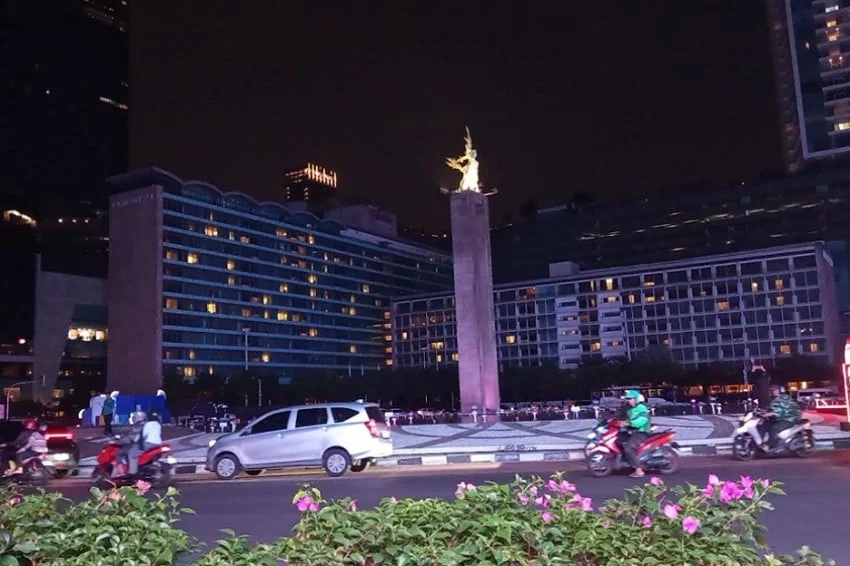
As the towering skyscrapers, digital billboards, and streetlamps surrounding the iconic Hotel Indonesia roundabout were switched off, the area was cast into a subdued, atmospheric glow primarily driven by ambient light from vehicle headlights and smartphone screens. Far from emptying the streets, the darkness encouraged pedestrians to occupy areas usually dominated by heavy vehicular traffic and fast-paced commuters.
Crowds converged on the pedestrian zones, utilizing the unusual lighting conditions to capture striking visual memories. Armed with mobile phone cameras, visitors eagerly documented the darkened skyline, posing for selfies against the backdrop of the silhouetted Welcome Monument and surrounding architectural landmarks. The stark contrast between the usual luminous glare of the capital’s commercial heart and the sudden blackout provided a novel sensory experience for residents of all ages.
Throughout the one-hour duration, ordinary civic life continued unabated. Families, groups of friends, and casual strollers took advantage of the cooler, less glaring environment to sit along the stone ledges, converse quietly, or leisurely stroll through the heart of the city. The blackout effectively transformed a major urban transit hub into a pedestrian-centric communal plaza, highlighting the public’s appetite for low-impact, walkable city spaces.
Background and Environmental Context of World Ozone Day
World Ozone Day, officially designated by the United Nations General Assembly as the International Day for the Preservation of the Ozone Layer, is observed annually on September 19th. The date commemorates the signing of the Montreal Protocol on Substances that Deplete the Ozone Layer in 1987, a landmark international environmental treaty designed to phase out the production and consumption of numerous substances responsible for ozone depletion, such as chlorofluorocarbons (CFCs).
Over the decades, the Montreal Protocol has achieved unprecedented global consensus, resulting in the steady recovery of the stratospheric ozone layer and preventing millions of cases of skin cancer and cataracts globally. However, modern commemorations of the event have expanded beyond chemical regulation to encompass broader climate action themes, including energy conservation, the reduction of carbon footprints, and the mitigation of greenhouse gas emissions that indirectly affect atmospheric stability.
For rapidly expanding megacities like Jakarta—a metropolitan area housing over ten million residents—energy consumption remains a primary driver of carbon emissions. Indonesia has committed to ambitious international climate targets, including achieving net-zero emissions by 2060 or sooner, making urban energy-saving campaigns a critical component of national environmental policy. Strategic blackouts serve not only as a symbolic gesture of conservation but also as a practical reminder of the energy required to power modern urban infrastructure.
Chronology of the Event
Planning for the Jakarta blackout involved extensive coordination between municipal authorities, provincial government agencies, and state-owned electricity enterprises. The chronology of the initiative unfolded across several distinct phases leading up to and during the Saturday night commemoration:
Weeks prior to September 19, the Jakarta Provincial Government, in collaboration with environmental bureaus and the state electricity company PT PLN (Persero), announced coordinated plans to execute a targeted power reduction across key arterial roads. Public service announcements were disseminated through mainstream media channels and municipal digital platforms to inform residents, local businesses, and motorists of the impending schedule.

By the evening of September 19, preparations were finalized. Traffic management units, regional public order officers (Satpol PP), and local security details were deployed along the designated blackout zones to ensure public safety, manage traffic flow, and assist pedestrians navigating the unlit corridors.
At precisely 8:30 PM Western Indonesia Time (WIB), municipal authorities and utility operators coordinated the simultaneous shutdown of non-essential public lighting, decorative illuminations, and billboard displays across a designated corridor stretching from the Monas area in Gambir through to the Bundaran HI intersection in Menteng.
For the next sixty minutes, the targeted zones operated under reduced illumination. Despite the lack of standard street lighting, emergency lighting and vehicular headlights maintained baseline visibility, preventing disruptions to public safety.
At 9:30 PM WIB, following the conclusion of the designated conservation hour, utility operators systematically restored power to the affected districts. Standard lighting levels returned seamlessly, bringing a swift conclusion to the symbolic environmental demonstration without registering major disruptions to the city’s electrical grid.
Official Responses and Municipal Strategy
Municipal leaders and environmental stakeholders viewed the one-hour blackout as a successful exercise in public engagement. While the actual volume of electricity saved during a localized, one-hour shutdown of decorative and street lighting is relatively modest in the context of the entire capital’s daily energy grid load, the psychological and educational impact is considered invaluable.
Urban planners and local authorities have increasingly emphasized the importance of behavioral shifts in achieving long-term sustainability goals. By making energy conservation visible and experiential, initiatives like the Monas-to-Bundaran HI blackout prompt urban residents to reflect on their personal consumption habits regarding electricity, transportation, and waste management.
Furthermore, environmental advocacy groups have noted that such public demonstrations help normalize the conversation around climate change within everyday Indonesian society. Engaging the younger demographic—who heavily populated the Bundaran HI area during the blackout—ensures that environmental consciousness is integrated into the cultural fabric of the next generation of urban leaders and consumers.
Broader Impact and Implications for Jakarta’s Urban Future
The successful execution of the World Ozone Day blackout underscores several broader implications for the future development and management of Indonesia’s capital region. As Jakarta continues to grapple with severe environmental challenges, including air pollution, traffic congestion, and the transition toward renewable energy sources, symbolic events provide a testing ground for wider policy implementations.
First, the public’s positive reception of a darkened, pedestrian-friendly city center reinforces ongoing discussions regarding the expansion of low-emission zones (LEZs) and pedestrianization projects within Jakarta. Urban designers have long argued for the reduction of vehicular dominance in commercial districts; the spontaneous transformation of Bundaran HI into a pedestrian sanctuary during the blackout demonstrated the high demand for accessible public spaces free from excessive sensory clutter.
Second, the event highlights the critical role of institutional collaboration between municipal governments and utility providers in executing large-scale urban interventions. The seamless execution of the power reduction and subsequent restoration without technical failure or public panic reflects an increasingly sophisticated infrastructure management apparatus within the capital.
Finally, as global climate pressures mount, cities in the Global South are expected to take leading roles in localized adaptation and mitigation strategies. Jakarta’s annual participation in global environmental observances demonstrates a growing alignment with international sustainability standards. While a one-hour blackout alone cannot reverse ecological degradation, it serves as a powerful catalyst for ongoing dialogue, policy reinforcement, and community participation in the vital task of environmental preservation.