
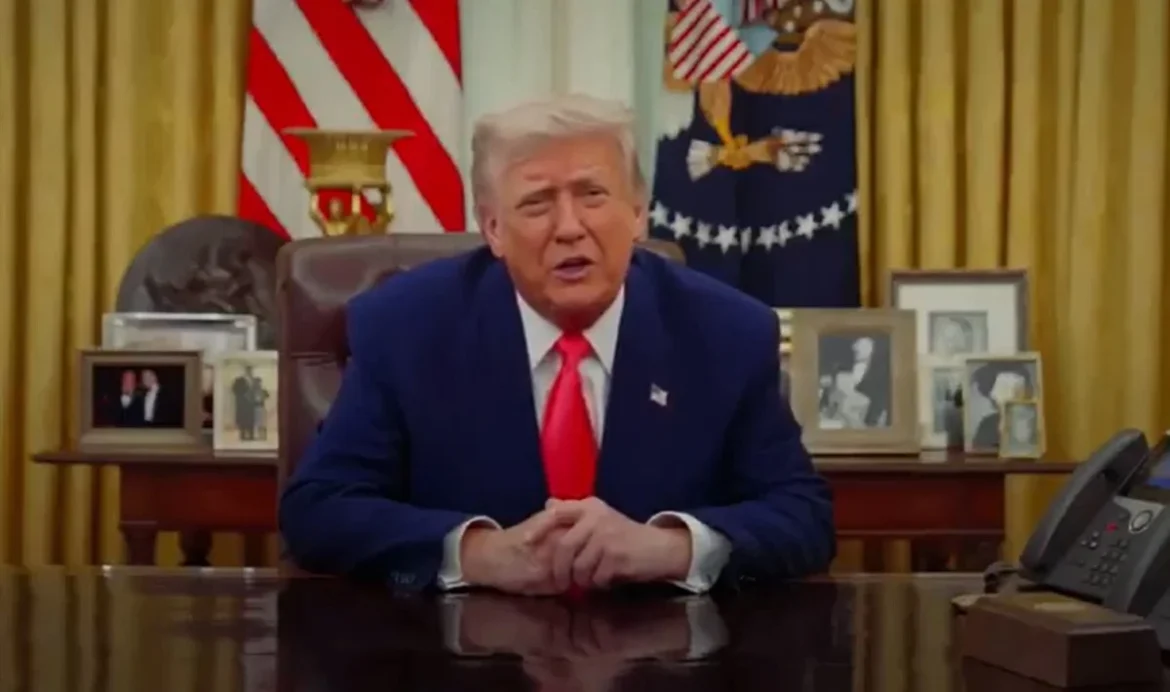
WASHINGTON – President Donald Trump announced on Wednesday, April 15, 2026, that the United States’ protracted conflict with Iran was "almost over," expressing confidence in ongoing efforts to revive stalled peace negotiations. Speaking during an interview with Maria Bartiromo on Fox Business, Trump conveyed a distinct sense of optimism regarding the diplomatic trajectory, suggesting that Tehran was "very eager" to finalize a comprehensive agreement. This declaration, made amidst persistent reports of renewed behind-the-scenes dialogue, signals a potentially pivotal moment in the fraught relationship between the two nations, though it is met with cautious anticipation by international observers and regional actors.
"I think it’s almost over, yes. I mean, I see it very close to the end," Trump told Bartiromo, underscoring his belief in the efficacy of his administration’s "maximum pressure" campaign. He further elaborated on his perception of Iran’s readiness for a deal, stating, "If I pulled out now, it would take 20 years for them to rebuild that country, and we’re not done. We’ll see what happens. I think they’re very eager to make a deal." Bartiromo later noted on Instagram that Trump’s repeated use of the past tense when referring to the "war" prompted her direct inquiry about its conclusion, highlighting the President’s conviction.
A Decades-Long Antagonism: Historical Context of US-Iran Relations
To fully grasp the gravity of President Trump’s statement, it is essential to delve into the complex and often hostile history defining US-Iran relations, a narrative stretching back more than four decades. The foundational rupture occurred with the 1979 Islamic Revolution, which saw the overthrow of the US-backed Shah Mohammad Reza Pahlavi and the establishment of an anti-Western Islamic Republic. The subsequent hostage crisis at the US embassy in Tehran cemented a deep-seated animosity that has colored every diplomatic engagement since.
Throughout the 1980s, the US quietly supported Iraq during the Iran-Iraq War, further fueling Iranian mistrust. The 1990s and early 2000s were marked by Iran’s pursuit of a nuclear program, which became a paramount concern for the international community, particularly the United States and its allies. President George W. Bush famously labeled Iran as part of an "Axis of Evil" in 2002, intensifying the rhetoric and sanctions regime.
The Obama administration, pursuing a different diplomatic path, successfully negotiated the Joint Comprehensive Plan of Action (JCPOA) in 2015. This landmark agreement, signed by Iran, the P5+1 group (China, France, Russia, United Kingdom, United States, plus Germany), and the European Union, aimed to prevent Iran from developing nuclear weapons in exchange for significant sanctions relief. While hailed by proponents as a triumph of diplomacy, critics, including then-candidate Donald Trump, argued it was fundamentally flawed, insufficient in its scope, and failed to address Iran’s ballistic missile program or its destabilizing regional activities.
The Trump Administration’s "Maximum Pressure" Campaign and Escalation
Upon taking office, President Trump swiftly moved to dismantle what he viewed as the "worst deal ever." In May 2018, the United States unilaterally withdrew from the JCPOA, reimposing and significantly expanding sanctions against Iran. This initiated the "maximum pressure" campaign, designed to cripple Iran’s economy and force Tehran to negotiate a new, more comprehensive agreement that would address its nuclear program, ballistic missile development, and regional proxy networks.
The immediate impact on Iran’s economy was severe. Oil exports, a vital source of revenue, plummeted from over 2.5 million barrels per day before sanctions to mere hundreds of thousands, drastically cutting off foreign currency earnings. The Iranian rial depreciated sharply, inflation soared, and the cost of basic goods skyrocketed. International companies, fearing US secondary sanctions, largely withdrew from Iran, further isolating its economy.
This economic squeeze was accompanied by a dangerous escalation of military tensions in the Persian Gulf and wider Middle East between 2019 and the early 2020s. Key incidents included:
- Attacks on Oil Tankers (2019): Several commercial vessels in the Strait of Hormuz and Gulf of Oman were attacked, with the US blaming Iran.
- Drone Shoot-down (2019): Iran shot down a US surveillance drone, bringing the two nations to the brink of direct military confrontation.
- Attack on Saudi Oil Facilities (2019): Drone and missile attacks on Aramco oil facilities significantly disrupted global oil supplies, which the US attributed to Iran.
- Assassination of Qasem Soleimani (January 2020): A US drone strike killed Major General Qasem Soleimani, commander of the IRGC’s Quds Force, in Baghdad. Iran retaliated with missile strikes on US bases in Iraq.
- Ongoing Proxy Conflicts: Both sides continued to support opposing factions in regional conflicts in Yemen, Syria, Iraq, and Lebanon, perpetuating a shadow war.
- Cyber Warfare: Both nations engaged in cyber espionage and attacks against each other’s critical infrastructure.
These incidents, coupled with the constant military posturing and rhetoric, fostered an environment of extreme volatility, repeatedly raising fears of a full-scale regional war.
The Path to Renewed Dialogue: Failed Attempts and Lingering Hope
Despite the escalating tensions, channels for communication and diplomatic overtures were never entirely closed, albeit often unproductive. Various international actors, including France, Japan, Oman, and Switzerland, made intermittent attempts to mediate between Washington and Tehran, seeking to de-escalate the situation and pave the way for dialogue. However, these efforts consistently foundered on fundamental disagreements. Iran demanded the lifting of all US sanctions as a prerequisite for negotiations, while the US insisted on a new deal that would comprehensively address Iran’s nuclear program, ballistic missiles, and regional activities before any significant sanctions relief.
The current reports of renewed negotiation efforts, leading up to President Trump’s April 2026 statement, suggest a potential shift in this stalemate. While specific details of these reported talks remain largely confidential, analysts speculate that they may involve indirect channels, possibly facilitated by neutral third parties. The discussions likely center on a phased approach, perhaps involving initial steps of de-escalation or limited sanctions relief in exchange for verifiable commitments from Iran regarding its nuclear enrichment levels or regional proxies.
President Trump’s assertion that Iran would take "20 years to rebuild" if he "pulled out now" underscores his belief that the maximum pressure campaign has effectively cornered Tehran. This suggests that any deal, from his perspective, would largely be on US terms, reflecting Iran’s weakened economic position and its urgent need for sanctions relief to stabilize its internal situation.
Statements from Tehran and International Reactions
While specific Iranian official reactions to Trump’s April 2026 statement were not immediately detailed, historical patterns and logical inference provide insight into Tehran’s likely public and private stances. Publicly, Iranian officials, particularly hardliners, have consistently maintained a defiant posture, rejecting what they term "economic terrorism" and insisting that the Islamic Republic will not negotiate under duress. They have repeatedly called for the unconditional lifting of all sanctions as a prerequisite for any meaningful dialogue. This public stance serves to maintain internal legitimacy and project an image of resilience.
However, the severe economic hardship inflicted by sanctions almost certainly fosters a different sentiment within certain pragmatic factions of the Iranian government and among its populace. If negotiations are indeed underway, it implies a tacit acknowledgment from some within Tehran that a diplomatic solution is necessary to alleviate the economic crisis. Any potential deal would require careful framing by the Iranian leadership to present it as a victory against external pressure rather than a capitulation. Internal divisions within Iran between hardliners, who prioritize revolutionary ideals and regional influence, and pragmatists, who seek economic stability and engagement with the international community, would undoubtedly complicate any negotiation process and the implementation of a future agreement.
Internationally, President Trump’s optimistic declaration would likely be met with a mix of cautious welcome and skepticism. European powers (E3: France, Germany, UK), along with the European Union, have consistently advocated for de-escalation and a return to diplomacy. They would likely welcome any verifiable progress towards a peaceful resolution, particularly one that strengthens nuclear non-proliferation safeguards. However, having witnessed the fragility of previous agreements, they would also emphasize the need for a durable, verifiable, and comprehensive deal.
Regional allies such as Saudi Arabia, the UAE, and Israel, who view Iran as a primary threat to their security, would likely express skepticism. They would demand that any new agreement not only address the nuclear program but also comprehensively curb Iran’s ballistic missile capabilities and its support for proxy militias across the Middle East. For these nations, a partial deal that overlooks Iran’s regional behavior would be insufficient and potentially dangerous. Russia and China, while often critical of US unilateral sanctions, would likely support diplomatic efforts, advocating for a multilateral approach and expressing concern over regional instability.
Economic Realities and Humanitarian Concerns
The economic toll of the maximum pressure campaign on Iran has been profound. Analysts estimate that sanctions led to an 80-90% reduction in Iran’s oil exports, costing the country hundreds of billions of dollars in lost revenue. This has resulted in chronic inflation, high unemployment rates, and a severe shortage of foreign currency, which has hampered imports of essential goods, including medicines and medical equipment. While humanitarian goods are technically exempt from sanctions, banking restrictions and the reluctance of international firms to engage with Iran have created significant practical barriers, exacerbating humanitarian challenges.
Beyond Iran, the prolonged tensions have also contributed to regional economic instability. Global oil markets have periodically reacted to threats in the Persian Gulf, leading to price volatility. Shipping lanes, critical for international trade, have remained vulnerable, increasing insurance costs and disrupting supply chains. A resolution to the US-Iran conflict would therefore offer significant relief, not only to the Iranian populace but also to the broader regional and global economies.
Analysis of Implications: A Precarious Peace?
President Trump’s declaration, if followed by a tangible breakthrough, carries significant implications across several dimensions. For US foreign policy, it would be hailed by supporters as a vindication of the maximum pressure strategy, demonstrating that sustained economic pressure can compel adversaries to the negotiating table. This could set a precedent for future US dealings with other nations deemed hostile. However, critics might argue that the immense economic and human cost, and the repeated near-misses with military conflict, were an unnecessarily risky path.
For Iran, a deal would represent a pragmatic shift in strategy, acknowledging the limits of its "economy of resistance" and the imperative to alleviate domestic hardship. However, any concessions would need to be carefully managed to avoid appearing as a surrender, particularly to hardline elements and the Revolutionary Guard. Such an agreement could also lead to a complex power struggle within Iran as different factions vie for influence over the country’s future direction.
Regionally, a de-escalation of tensions between the US and Iran could pave the way for reduced proxy conflicts and greater stability. However, the deep-seated geopolitical rivalries and sectarian divides that fuel many of these conflicts would likely persist, requiring sustained diplomatic efforts and confidence-building measures between regional powers. A comprehensive deal might need to include mechanisms for regional dialogue on security issues, beyond just the US and Iran.
Globally, a resolution could reinforce the importance of diplomacy, albeit one achieved under extreme pressure. It would also impact the roles of international mediators and the dynamics of multilateralism, given the US’s unilateral withdrawal from the original JCPOA. The world would watch closely to see if a new agreement is robust enough to withstand future political shifts and if it can truly usher in a new era of stability.
Even if a deal is struck, the path forward remains fraught with challenges. The implementation and verification of any agreement would be complex, requiring robust monitoring mechanisms. Furthermore, addressing the broader points of contention—Iran’s ballistic missile program, its human rights record, and its regional influence—would remain long-term diplomatic hurdles. President Trump’s statement that the conflict is "almost over" suggests a final stage, yet history demonstrates that even after agreements are reached, deep-seated mistrust and numerous obstacles can continue to test the resolve of all parties involved. The world watches with a mixture of hope and trepidation as this critical chapter in US-Iran relations potentially draws to a close.
