
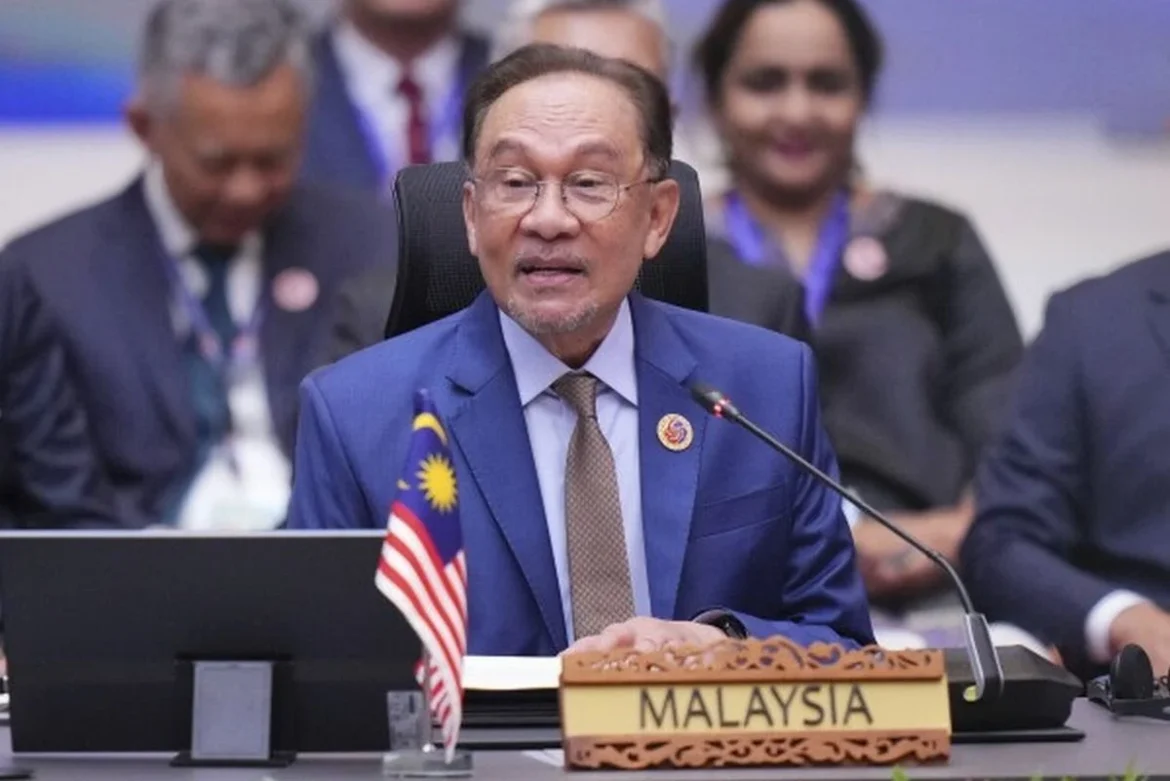
Malaysian Prime Minister Anwar Ibrahim has issued a formal statement expressing deep concern following reports of an unauthorized drone interception in the vicinity of Makkah Al-Mukarramah, Saudi Arabia. The incident, which occurred amidst a period of heightened geopolitical sensitivity in the Middle East, has drawn sharp condemnation from the Malaysian leader, who underscored the inviolability of Islam’s holiest sites and the imperative of maintaining regional stability.
The interception of the unmanned aerial vehicle (UAV) near the Grand Mosque—a site that hosts millions of pilgrims annually—represents a significant security breach. Prime Minister Anwar Ibrahim, speaking via his official social media channels on Wednesday, September 16, 2026, emphasized that any attempt to jeopardize the safety or sanctity of the city is categorically unacceptable. This reaction reflects not only Malaysia’s diplomatic stance but also the shared global concern among Muslim-majority nations regarding the protection of the Two Holy Mosques.
Contextualizing the Security Incident
The sanctity of Makkah is a cornerstone of global Islamic governance and security policy. Since the expansion of the Grand Mosque (Masjid al-Haram) and the surrounding infrastructure, the Saudi Arabian government has implemented one of the most sophisticated integrated air defense systems in the world. The detection and successful interception of the drone suggest that the Kingdom’s early warning systems remain vigilant against evolving aerial threats.
While details regarding the origin of the drone remain subject to ongoing investigation by Saudi authorities, the incident recalls a history of regional volatility. Over the past decade, the Saudi-led coalition has frequently intercepted long-range ballistic missiles and explosive-laden drones launched by regional non-state actors. These incidents have historically been linked to broader geopolitical frictions in the Persian Gulf and the Red Sea. By calling for immediate restraint, Prime Minister Anwar is signaling a diplomatic push to prevent these localized security incidents from escalating into a wider regional conflagration.
Chronology of Events and Diplomatic Response
The events of September 16, 2026, began with the detection of an unidentified drone operating in restricted airspace near Makkah. Saudi defense forces, adhering to strict protocols designed to protect civilian life and religious infrastructure, neutralized the threat before it could penetrate the immediate perimeter of the holy site.
Shortly after the confirmation of the incident, the Malaysian Ministry of Foreign Affairs, under the guidance of Prime Minister Anwar, issued a statement reinforcing its support for Saudi sovereignty. The Prime Minister’s remarks specifically highlighted three core pillars:
- Unconditional Sanctity: A declaration that no political or military objective justifies the targeting of sacred religious sites.
- Commendation of Saudi Efficiency: Recognition of the rapid response by Saudi security forces, which ensured that no casualties were reported and no structural damage occurred.
- The Call for De-escalation: An urgent appeal to all involved parties to move away from military posturing and toward a framework of dialogue.
"Malaysia stands in solidarity with the Kingdom of Saudi Arabia in its efforts to maintain security," Anwar stated. "We urge all relevant parties to exercise maximum restraint and to pursue a peaceful resolution through diplomatic channels without further delay."
Regional Security Implications
The deployment of drones as a tool of asymmetric warfare has become a recurring challenge for Middle Eastern security architectures. Analysts observe that the proliferation of low-cost, high-capability drone technology has lowered the threshold for non-state actors to execute disruptive operations.
In light of this, the international community—including members of the Organization of Islamic Cooperation (OIC)—is increasingly looking toward collaborative security frameworks. Prime Minister Anwar’s intervention serves as a reminder that the security of Makkah is not merely a domestic Saudi concern but a matter of international concern that impacts the peace of mind of the global Muslim population.

The economic implications are also significant. Makkah and Medina are central to Saudi Arabia’s "Vision 2030," which aims to significantly increase the number of pilgrims and visitors to the Kingdom. Any perception of instability could affect the global travel and tourism sector, particularly during peak pilgrimage seasons. Therefore, the swift neutralization of the drone was a critical operational success for the Saudi government, both from a security and an economic stability perspective.
The Diplomatic Strategy of Malaysia
Anwar Ibrahim’s administration has consistently utilized a "neutral but principled" diplomatic strategy. By quickly vocalizing concerns over the drone incident, Malaysia reinforces its role as a key regional voice in Southeast Asia that maintains strong ties with both the Middle Eastern powers and international partners.
The Prime Minister’s emphasis on "resolving issues through dialogue" is a consistent theme in his foreign policy. Since taking office, he has frequently advocated for multilateralism. His response to the Makkah drone incident is a practical application of this policy: acknowledging the reality of the threat while simultaneously pressuring the stakeholders to return to the negotiating table.
Broader Impact and Future Outlook
The incident serves as a critical indicator of the fragile security environment in the region. Observers suggest that the international response will likely involve increased intelligence sharing between Saudi Arabia and its allies to map out the supply chains that enable the acquisition of such drone technology.
Furthermore, the diplomatic pressure applied by leaders like Prime Minister Anwar Ibrahim serves to isolate actors who seek to use religious symbols for political maneuvering. By framing the incident as an attack on "civilian sites" and "holy places," the Malaysian government is successfully shifting the narrative from a regional territorial dispute to a violation of international norms and humanitarian standards.
As investigations into the drone’s flight path and origin continue, the international community remains expectant of a transparent report from Riyadh. Meanwhile, the incident has prompted a heightened state of alert across various regional security agencies.
Conclusion: A Call for Stability
In summary, the interception of the drone near Makkah is a stark reminder that peace in the Middle East remains precarious. Prime Minister Anwar Ibrahim’s swift and firm response highlights the necessity of protecting the world’s most sacred sites from the encroaching reach of regional conflicts.
The Malaysian government’s stance is clear: military adventurism that risks the lives of civilians or the sanctity of religious heritage is a violation of the global order. Moving forward, the focus must remain on the de-escalation of regional tensions. As Anwar Ibrahim noted, the path to peace is paved with dialogue, not with the deployment of weaponized drones. The world now watches to see how the regional players respond to these calls for restraint, hoping that the sanctity of Makkah remains preserved amidst the ongoing turbulence of the 21st-century geopolitical landscape.
The incident on September 16, 2026, will likely be studied in security circles as a case study for the necessity of integrated air defense, but for the global community, it stands as a testament to the importance of diplomatic leadership in ensuring that the most cherished sites of human faith remain protected from the dangers of modern warfare. The commitment shown by the Malaysian leadership to this cause underscores the interconnectedness of global security and the shared responsibility to safeguard the symbols of global heritage and faith.
