
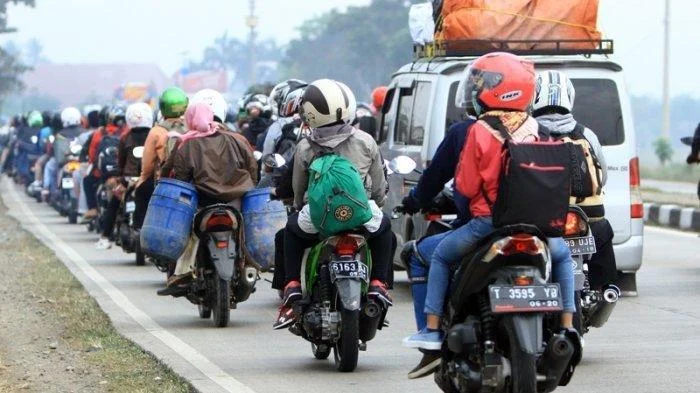
The annual migration of millions of Indonesians heading back to their hometowns for the Eid al-Fitr holiday, widely known as mudik, became a subject of intense national debate in March 2021. Breaking away from the blanket travel bans implemented during the onset of the COVID-19 pandemic in 2020, the Indonesian government officially announced that mudik would be permitted for Lebaran 1442 Hijriah. This policy shift, confirmed by Minister of Transportation Budi Karya Sumadi during a working session with House of Representatives (DPR) Commission V on Tuesday, March 16, 2021, aimed to balance economic reactivation with pandemic containment. However, the decision immediately drew scrutiny from epidemiologists and public health experts who warned of potential transmission spikes in rural areas where vulnerable populations reside.
Chronology of Policy Shifts: From Total Ban to Regulated Travel
To understand the gravity of the 2021 policy, one must examine the timeline of government interventions preceding it. In March and April 2020, as the novel coronavirus began spreading rapidly across the archipelago, the central government initially issued strong discouraging advisories before enacting a formal, nationwide prohibition on mudik in late April 2020. Law enforcement agencies set up numerous checkpoints across major arterial roads, forcing thousands of travelers to turn around to curb the importation of the virus from urban centers, particularly Jakarta, to rural provinces in Java, Sumatra, and beyond.
By early 2021, the landscape had evolved with the introduction of the national vaccination program, which commenced in January 2021. Buoyed by the rollout targeting frontline workers and senior citizens, the government began evaluating the feasibility of relaxing mobility restrictions. On March 16, 2021, Minister Budi Karya Sumadi delivered the landmark statement before Commission V of the DPR. He clarified that while the Ministry of Transportation would not actively encourage or sponsor mudik—as such promotional campaigns fall outside its administrative jurisdiction—the government would not outright prohibit citizens from traveling. Instead, the strategy shifted toward regulation, coordination, and enforcement of health protocols in collaboration with the COVID-19 Task Force.
Regulatory Framework and Screening Mechanisms
Recognizing the immense logistical challenges posed by the mass exodus, the Ministry of Transportation outlined a comprehensive framework designed to mitigate contagion risks. The strategy relied heavily on three core pillars: stringent health protocols, enhanced contact tracing, and shortened validity periods for viral screening tools.
First, adherence to health guidelines was mandated across all phases of travel—from departure terminals and transit zones to onboard vehicles and arrival destinations. Authorities enforced mandatory mask-wearing, physical distancing, frequent disinfection of public transportation infrastructure, and strict passenger capacity caps, typically limited to 50 percent to 70 percent depending on the transportation mode.
Second, to address potential passenger surges, the government coordinated with regional task forces to implement rigorous tracing protocols at major transportation hubs.
Third, the validity period for pre-travel health screenings, such as rapid antigen tests and polymerase chain reaction (PCR) swabs, was significantly compressed to ensure that travelers were not carrying the virus at the time of transit. Furthermore, the government integrated innovative local screening technologies, such as the GeNose C19 breathalyzer developed by Universitas Gadjah Mada, deploying the affordable and rapid detection devices across numerous bus terminals, railway stations, and domestic airports.
Epidemiological Concerns and Public Health Warnings
Despite the Ministry of Transportation’s assurances, the decision to greenlight mudik was met with widespread skepticism and alarm from the scientific community. Prominent epidemiologists argued that premature relaxation of mobility controls could undo months of hard-fought pandemic management.
Dr. Riris Andono Ahmad, an epidemiologist from Universitas Gadjah Mada (UGM), provided critical analysis regarding the policy’s underlying assumptions. According to Dr. Riris, the government’s permissive stance appeared to stem from an overestimation of the population coverage provided by the early stages of the national vaccination campaign. She emphasized that while immunization significantly reduces the severity of illness and hospitalization rates, it does not provide absolute immunity against contracting or transmitting the virus, particularly in crowded public spaces where adherence to health protocols wanes.
Dr. Riris noted that the core vulnerability did not lie within the vaccinated status of travelers alone, but rather in human behavior. If millions of citizens resumed traditional social gatherings, communal dining, and close-contact family visits without strict mask compliance and ventilation, rural areas would inevitably experience transmission waves mirroring those seen in major metropolitan areas during previous holiday seasons.
The Dilemma of Private Versus Public Transportation
A focal point of the epidemiological debate centered on the choice of transportation used by travelers. Public transportation systems—while carrying higher passenger volumes—are subject to regulatory oversight, mandatory screening, and centralized contact tracing. Airports, state railway stations, and official bus terminals were heavily outfitted with screening apparatuses, allowing authorities to monitor passenger health compliance systematically.
Conversely, public health experts expressed grave concern over the reliance on private vehicles, such as motorcycles and personal cars. Millions of citizens traditionally undertake long-distance journeys on motorcycles, often traveling with entire families and making unregulated stops at roadside eateries, rest areas, and local villages. Dr. Riris highlighted that without centralized checkpoints or systematic oversight, private vehicle travel serves as an invisible vector for viral transmission, introducing the pathogen directly into rural communities with limited healthcare infrastructure.
Consequently, the government and independent health experts continuously urged the public to utilize regulated public transport if travel was unavoidable, ensuring that any potential exposure could be more easily traced by health authorities.
Broader Socioeconomic Implications and Outlook
The 2021 mudik debate underscored the delicate balancing act facing governments worldwide: navigating the tension between macroeconomic recovery, psychological well-being, and public health preservation. For millions of Indonesians, mudik is not merely a holiday ritual but a profound cultural and psychological necessity tied to familial solidarity and religious observance after a year of isolation.
However, public health officials maintained that the macro-level risks outweighed individual desires. Epidemiological projections indicated that the cumulative impact of unregulated mobility during a period when national vaccination coverage remained below herd immunity thresholds could trigger localized surges, placing immense strain on regional healthcare facilities.
Ultimately, the events surrounding the March 2021 policy announcement served as a critical precursor to subsequent national policy adjustments. As infection rates fluctuated throughout the year, the government’s approach to holiday travel continued to adapt, reinforcing the lesson that institutional preparedness, rigorous screening, and individual compliance remain indispensable pillars in managing public health crises during major cultural milestones.
