
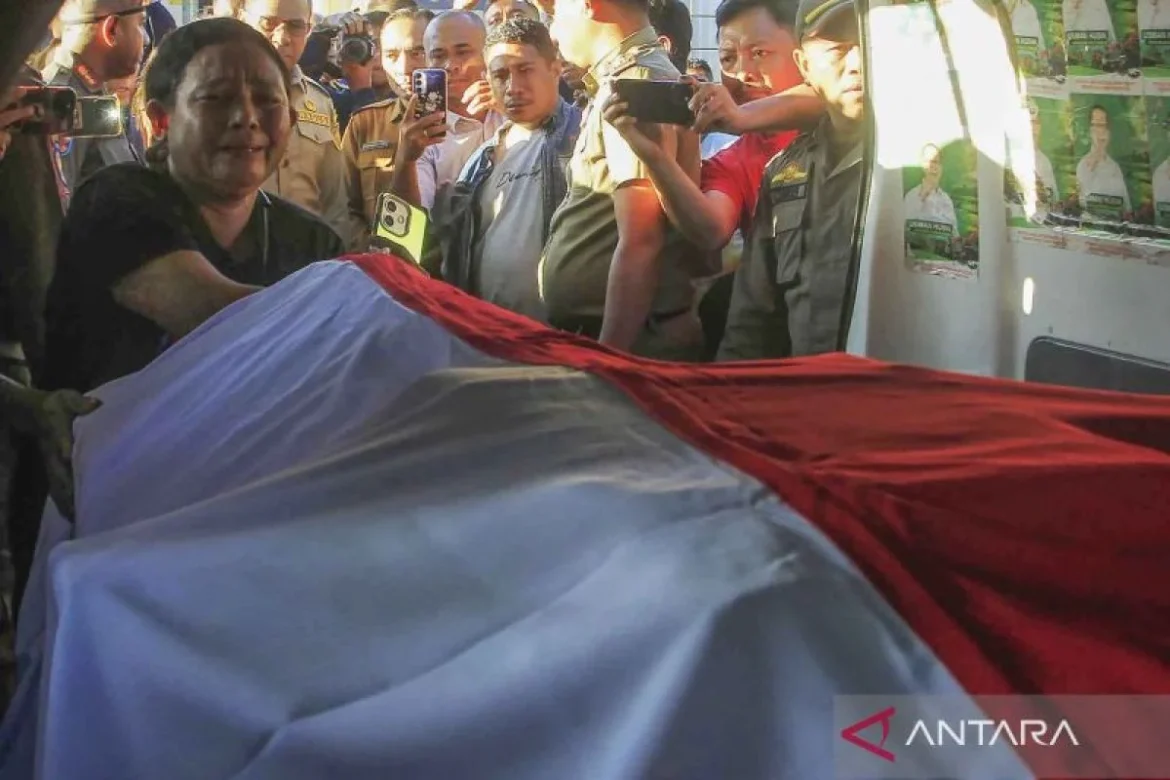
The peaceful mission to provide agricultural aid to the remote communities of the Muliama District in Jayawijaya, Papua Pegunungan, ended in profound tragedy on Wednesday, September 9, 2026. A dedicated team from the Jayawijaya Agriculture Department, tasked with the noble objective of distributing livestock and farming supplies to local residents, was ambushed by an unidentified armed group. The attack resulted in the deaths of three government officials—Aprida Rapi, Alfonsius Albinus Mehan, and Wili Mbuik—an event that has sent shockwaves through the Indonesian civil service and ignited urgent calls for a review of security protocols for public servants working in conflict-prone regions.
The Chronology of the Attack
The incident occurred as the convoy was navigating the transit route toward the Kimbim region. Based on preliminary reports from the Papua Regional Police, the officials were traveling in an official vehicle designed to facilitate the transport of agricultural aid. According to witnesses and initial forensic evidence collected by law enforcement, the ambush occurred in a remote segment of the Muliama District.
The attack appeared to be calculated, suggesting that the assailants may have been tracking the movement of the government vehicle. Law enforcement officials at the scene recovered three bullet casings of varying calibers, indicating that multiple shooters were likely involved in the operation. The precision of the attack suggests a high level of coordination, a hallmark of the armed factions that have long operated within the mountainous terrain of the Papua region.
By the time security forces arrived to secure the area, the perpetrators had already retreated into the dense forest, leaving behind a grim scene. The bodies of the three victims were recovered and transported to Wamena, where they underwent post-mortem procedures before being prepared for return to their respective families.
Profiles of the Fallen Public Servants
The loss of these three individuals represents a significant blow to the agricultural development efforts in the Jayawijaya Regency. Each victim brought unique skills and commitment to the region’s food security programs.
Aprida Rapi (49)
As the Head of the Livestock Division for the Jayawijaya Agriculture Department, Aprida Rapi was a pillar of the local government. A native of Makale in Tana Toraja, she had dedicated her career to the advancement of animal husbandry in Papua. Her colleagues described her as a tireless civil servant who prioritized the welfare of the farmers she served. Her death leaves a significant void in the leadership of the department, as she was instrumental in planning the very distribution mission that claimed her life.
Alfonsius Albinus Mehan (35)
Dr. Alfonsius Albinus Mehan was a trained veterinarian whose expertise was vital to the success of livestock health programs in the highlands. Originally from the Sikka Regency in East Nusa Tenggara, he had moved to Papua to contribute to the regional development goals. His work involved not only the delivery of livestock but also the training of local farmers in animal disease prevention and herd management. His passing is a loss for both the local community and the veterinary profession.
Wili Mbuik
Wili Mbuik was a young civil servant (CPNS) who had only recently embarked on his career path with the Jayawijaya government. Hailing from Rote Ndao, East Nusa Tenggara, Wili represented the younger generation of public servants choosing to serve in the challenging environment of the Papua Pegunungan province. His death underscores the dangers faced by entry-level bureaucrats who are often sent to the front lines of regional administrative duties.
The Broader Security Context in Papua
The assassination of these three officials occurs against a backdrop of increasing instability in the Papua region. In recent months, authorities have been on high alert, particularly in anticipation of anniversaries or political movements that have historically been associated with heightened activity by armed insurgent groups.
The term "Black September" has been mentioned in official warnings by the Papua Regional Police, referring to a period often characterized by increased tensions and civil unrest. While authorities have urged the public to remain calm and avoid being provoked by misinformation, the reality on the ground remains volatile. This incident follows a series of sporadic attacks that have targeted not only military and police installations but increasingly, civilian infrastructure and government employees.
Official Responses and Government Condemnation
The response from the central government was swift and unequivocal. Minister of Agriculture Andi Amran Sulaiman expressed his deepest condolences to the families of the victims. In a formal statement, he emphasized that the officials were performing a humanitarian duty, seeking to alleviate poverty and improve the quality of life for the people of Papua through the provision of agricultural resources.
"The safety of our personnel must be a non-negotiable priority," the Minister stated, calling for a comprehensive review of the security arrangements for civil servants performing duties in high-risk areas. He further urged law enforcement agencies to conduct an exhaustive investigation to ensure that those responsible for this heinous act are brought to justice.
Similarly, the Ministry of Human Rights has demanded a thorough investigation, highlighting that the targeting of public servants who are engaged in civilian support missions is a direct affront to the rule of law and the humanitarian mission of the state.
Analysis: Implications for Regional Development
The murder of these officials presents a complex dilemma for the Indonesian government. Papua Pegunungan, as a relatively new province, relies heavily on the mobility of civil servants to implement the central government’s infrastructure and development programs. If government officials are no longer able to move safely between districts to distribute aid, the development gap between the highlands and the rest of the country will inevitably widen.
There are several critical implications to consider:
- Security-Development Nexus: The event illustrates the difficulty of implementing development policies in areas where security remains fragile. The "soft approach" of economic development is often countered by armed groups who view the presence of the state—even in the form of agricultural aid—as an encroachment on their influence.
- Psychological Impact on Personnel: The morale of civil servants stationed in Papua is likely to be severely shaken. Many staff members, particularly those from outside the region, may request transfers, leading to a "brain drain" of qualified personnel from areas that need them the most.
- Logistical Challenges: Future missions will likely require military or police escorts, which increases the cost of public service delivery and may further alienate the local population if the presence of security forces is perceived as heavy-handed.
The Path Forward: Investigation and Accountability
The Papua Regional Police are currently conducting a forensic analysis of the evidence recovered from the scene. Investigators are working to identify the specific group responsible, as several factions operate within the mountainous region, each with varying degrees of autonomy.
Authorities have pledged to track down the perpetrators, but they have also acknowledged the difficulty of navigating the rugged geography of the Muliama District. The investigation will also focus on intelligence failures: whether the risk profile of the route was properly assessed and why the convoy was traveling without adequate security, given the known volatility of the area.
As the nation mourns the loss of these three civil servants, the incident serves as a grim reminder of the high human cost of development in Indonesia’s easternmost provinces. For the families of Aprida, Alfonsius, and Wili, the tragedy is a personal catastrophe. For the state, it is a strategic and moral crisis that necessitates an immediate and robust response to ensure that the mission of public service does not continue to be paid for in blood. The investigation into the September 9 attack remains ongoing, with a national spotlight fixed on the ability of the government to restore order and protect those who serve the public interest in the face of violent opposition.
