
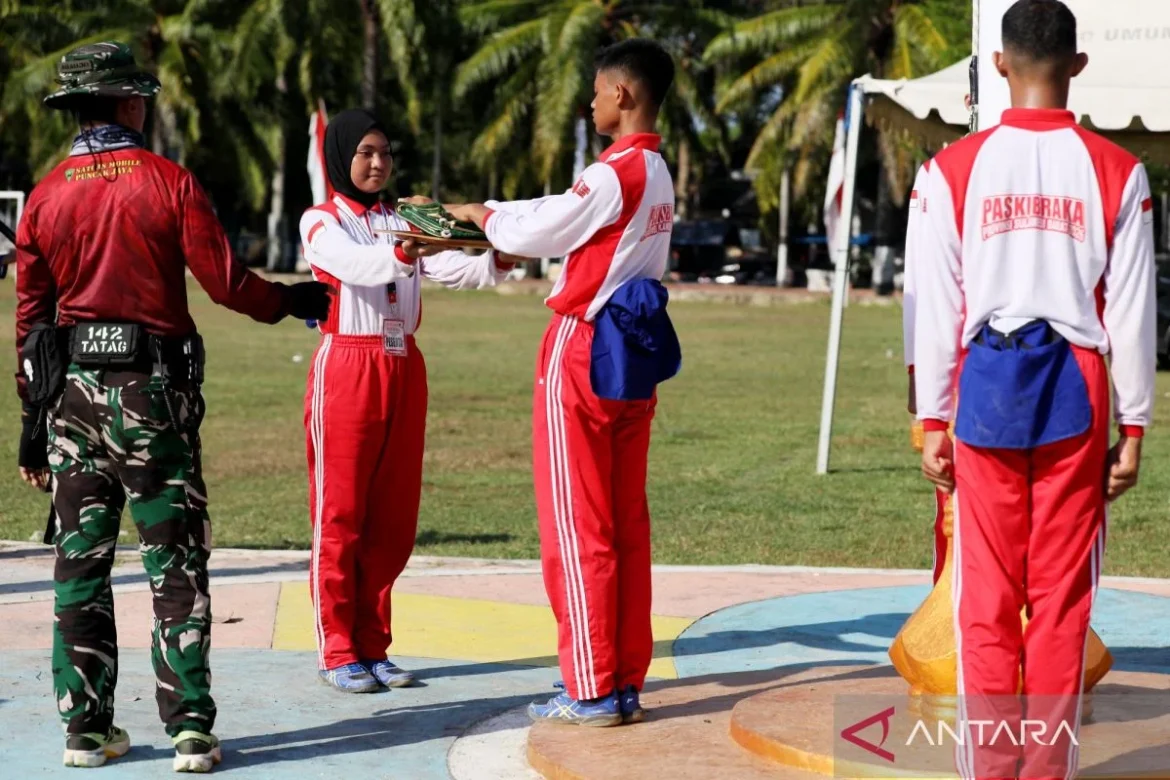
The distinction between Paskibra and Paskibraka remains a frequently misunderstood subject in Indonesian civic life, particularly as the nation approaches the annual commemoration of its independence on August 17. While both terms are fundamentally linked to the solemn duty of raising the Merah Putih—the Indonesian national flag—they occupy vastly different tiers in terms of administrative structure, legal standing, and operational scope. Clarifying these differences is essential for public understanding of the institutional mechanisms that support national identity and youth development in the archipelago.
Defining the Core Terminology
Paskibra is an acronym for Pasukan Pengibar Bendera, which translates to the Flag Hoisting Troop. This term serves as a broad, generic descriptor for any group or organization tasked with the ceremonial raising of the national flag. These units are ubiquitous across Indonesia’s educational, governmental, and private landscapes. In schools, Paskibra functions as an extracurricular activity designed to cultivate discipline, physical fitness, teamwork, leadership, and a sense of national responsibility among students. Because it is a decentralized activity, Paskibra units operate independently, adhering to the internal regulations of their respective institutions.
Conversely, Paskibraka stands for Pasukan Pengibar Bendera Pusaka, or the Troop for the Hoisting of the Heirloom Flag. Unlike the general Paskibra, Paskibraka is a specialized, state-sanctioned program of immense national importance. It is governed by a rigorous legal framework, most notably Presidential Regulation Number 51 of 2022, which mandates the program as a vehicle for character building and the ideological cultivation of Pancasila values. Paskibraka members are not merely participants in a school club; they are representatives of the state selected through a stringent, multi-tiered selection process that spans district, provincial, and national levels.
Historical Evolution: From Yogyakarta to the National Stage
The genesis of the Paskibraka program is deeply rooted in the early, precarious years of the Indonesian Republic. In 1946, while the national capital was temporarily relocated to Yogyakarta due to security concerns, President Sukarno entrusted Major (Navy) Husein Mutahar with the responsibility of organizing the first Independence Day commemoration at the Gedung Agung.
Mutahar envisioned that the flag should be carried by representatives of the youth from diverse regions, symbolizing national unity. Due to the logistical constraints of the era, he selected five youths currently in Yogyakarta to perform the duty. This small group laid the conceptual foundation for what would eventually become a sophisticated national institution.
The evolution continued in 1967 when Mutahar was once again tasked with organizing the flag-raising ceremony. He introduced the iconic formation of three groups: the Pasukan 17 (the 17-member escort), the Pasukan 8 (the 8-member core unit), and the Pasukan 45 (the 45-member guard). This arrangement was intentionally symbolic, representing the date of the Proclamation of Independence: August 17, 1945.
It was not until 1973 that the term "Paskibraka" was officially adopted, proposed by Idik Sulaeman. The term was constructed as a linguistic fusion of "PASukan" (troop), "KIBar" (hoist), "bendeRA" (flag), and "PusaKA" (heirloom). Over the subsequent decades, the program transitioned from a purely ceremonial entity into a structured pipeline for youth leadership, emphasizing the internalisation of the state philosophy, Pancasila.
Comparative Analysis of Operational Frameworks
The differences between Paskibra and Paskibraka can be categorized into four primary domains: scope of duty, selection process, institutional status, and mission focus.
Scope and Jurisdiction
Paskibra serves a localized function. It is a vital component of local school ceremonies, company anniversaries, or community events. Its influence is confined to its immediate environment. Paskibraka, however, is tasked with the high-stakes responsibility of state ceremonies, including the commemoration of the Proclamation of Independence and the annual Hari Lahir Pancasila. Its reach is national, with members representing their provinces at the Presidential Palace in Jakarta.
The Selection Pipeline
For Paskibra, recruitment is typically an internal school matter, often based on interest and basic physical aptitude. Paskibraka, by contrast, operates under a highly competitive selection mechanism. Candidates must meet specific physical criteria, possess academic excellence, and demonstrate a profound understanding of national history and ideology. The process is standardized, ensuring that the selected participants meet the high performance expectations required for a broadcasted state event.
Legal and Institutional Standing
Paskibra lacks a singular, overarching national mandate, functioning instead as a grassroots movement. Paskibraka possesses a distinct legal identity supported by the aforementioned Presidential Regulation No. 51/2022. This regulation dictates the program’s curriculum, the treatment of the "Purna Paskibraka" (alumni), and the integration of ideological training, ensuring that the institution remains aligned with national strategic objectives.
The Role of Purna Paskibraka in Nation-Building
Once members complete their service, they transition into the status of Purna Paskibraka. This is not merely a label of retirement; it is a commitment to a life of civic engagement. The Purna Paskibraka community acts as a massive, nationwide network of individuals who have undergone intensive leadership training.
In the eyes of policymakers and social observers, these alumni are viewed as a critical talent pool for future governance and public service. The program’s curriculum, which now includes mandatory modules on the Pancasila ideology, aims to ensure that these youths become stewards of the state’s fundamental principles in their professional and private lives. The persistence of Purna Paskibraka organizations, such as those seen in historical sites like Gedung Joang 45, serves as a testament to the enduring influence of the training received during their tenure.
Societal Implications and Institutional Impact
The confusion between these two terms is often a reflection of how deeply both are embedded in the cultural consciousness of the Indonesian public. The sight of youth in crisp white uniforms, marching in precise formation, is a powerful visual icon of Indonesian sovereignty.
From an administrative perspective, the distinction is crucial for resource allocation. While local schools and institutions independently fund and manage their Paskibra units as part of their extracurricular budgets, the state provides significant resources for the Paskibraka program, recognizing it as a strategic asset for youth development.
The media often plays a significant role in blurring these lines, frequently using the terms interchangeably when reporting on local Independence Day preparations. However, journalists and educators are increasingly emphasizing the distinction to ensure that the public understands the specific, elevated nature of the Paskibraka program.
Future Outlook for Youth Ceremonial Programs
As Indonesia moves toward its centenary in 2045, the role of youth-led flag ceremonies remains as relevant as ever. The Paskibraka program is undergoing continuous modernization to ensure it remains appealing to a digital-native generation. This includes the integration of more robust ideological education and the utilization of digital platforms for the selection and training processes.
Meanwhile, the Paskibra movement continues to thrive at the grassroots level, acting as a nursery for the civic virtues of discipline and patriotism. Whether through the local schoolyard ceremony or the grandeur of the Presidential Palace, both Paskibra and Paskibraka contribute to a shared national narrative. By understanding their distinct roles—the former as a widespread pillar of school character building, and the latter as a prestigious state-led cadre development program—the public can better appreciate the complex, multi-layered infrastructure that supports the celebration of Indonesian independence.
Ultimately, the distinction is not meant to diminish the value of either group. Rather, it serves to clarify the hierarchy of responsibilities that allows for both the local celebration of national pride and the formal, state-led continuity of the Republic’s most sacred ceremonial traditions. As these young citizens march in unison, they represent not only the historical weight of the past but also the future trajectory of a nation committed to the ideals of Pancasila.
