

JAKARTA – The designation of former Junior Attorney General for Special Crimes (Jampidsus) Febrie Adriansyah as a suspect in an alleged corruption and money laundering (TPPU) case is widely perceived as a testament to pure law enforcement, rather than an act of criminalization. This sentiment was strongly articulated by Edi Saputra Hasibuan, a prominent Criminal Law Observer from Bhayangkara Jakarta University, who emphasized the Attorney General’s Office’s (Kejagung) commitment to professionalism and transparency throughout the process. The high-profile nature of this case, involving a former top prosecutor responsible for combating financial crimes, has drawn significant public and expert scrutiny, underscoring the ongoing battle against corruption within Indonesia’s governmental apparatus.
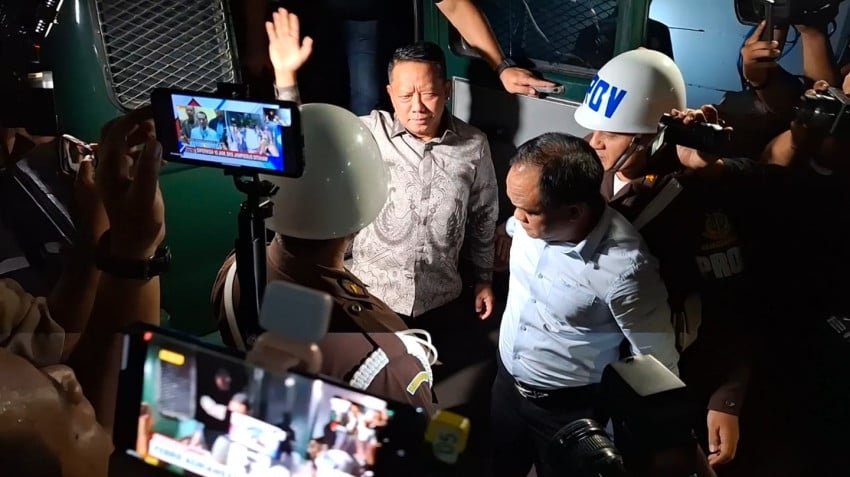
The arrest and subsequent detention of Febrie Adriansyah, which saw him escorted into the KPK Red and White Building in Jakarta on the evening of Friday, July 24, 2026, marks a pivotal moment in Indonesia’s anti-corruption efforts. Hasibuan lauded the investigative procedures undertaken by Kejagung, highlighting their adherence to criminal procedural law (KUHAP) and their commitment to due process. "The legal process conducted by the Attorney General’s Office investigators so far demonstrates professionalism, transparency, and adherence to the provisions of criminal procedural law," Hasibuan stated on Saturday, July 25, 2026. He further added, "However, we will continue to monitor this case to ensure it delivers a sense of justice for the community." This statement reflects a cautious optimism, acknowledging the gravity of the allegations while advocating for continued oversight.
Hasibuan, who previously served as a member of the National Police Commission (Kompolnas) from 2011 to 2016, firmly believes that Kejagung’s decision to name Febrie Adriansyah as a suspect and proceed with his detention is predicated on robust evidence of criminal activity. He referenced Article 1 Paragraph 14 of the KUHAP, which defines a suspect as "a person who, because of his actions or circumstances, based on initial evidence, can reasonably be suspected of being a perpetrator of a criminal offense." This legal foundation is crucial, as it mandates that such a designation is not arbitrary but grounded in demonstrable facts and preliminary findings from the investigation. The implications of a former Jampidsus being implicated in such a serious offense are far-reaching, potentially influencing public perception of justice institutions and the efficacy of anti-corruption measures.
The Significance of the Jampidsus Position
Febrie Adriansyah’s former role as Jampidsus places him at the apex of Indonesia’s special crime prosecution efforts. The Jampidsus division within the Attorney General’s Office is tasked with handling high-profile and complex cases involving corruption, money laundering, human rights violations, and other critical financial crimes that have significant public impact. This division is often at the forefront of national headlines, leading investigations into powerful individuals and corporations. The appointment to such a position requires immense trust, integrity, and a proven track record of fighting crime. Therefore, the alleged involvement of a former Jampidsus in corruption and money laundering sends a stark message about the pervasive nature of corruption, even within institutions designed to combat it.
The Attorney General’s Office itself is a crucial pillar of Indonesia’s legal system, acting as the state prosecutor and holding powers of investigation and prosecution across various criminal domains. Its Special Crimes division, led by the Jampidsus, is particularly vital for maintaining public confidence in the state’s ability to hold powerful figures accountable. The current case involving Febrie Adriansyah could be viewed in two ways: either as a severe blow to the integrity of the institution or as a strong demonstration of its commitment to internal reform and its willingness to prosecute even its own, regardless of rank or past position. The latter interpretation aligns with Edi Saputra Hasibuan’s assessment of Kejagung’s professionalism.
Chronology of Events and Allegations
While specific details of the alleged corrupt acts and money laundering scheme are yet to be fully disclosed by Kejagung, the general timeline suggests a thorough investigative process leading up to Febrie Adriansyah’s detention. The public typically learns of such high-level investigations only after significant progress has been made, often when enough preliminary evidence has been gathered to name a suspect.
- Prior to July 2026 (Investigation Phase): The Attorney General’s Office, likely through its internal investigative units or specialized anti-corruption task forces, initiated an investigation into alleged corruption and money laundering activities. This phase would have involved intelligence gathering, analysis of financial transactions, interviews with potential witnesses, and collection of documentary evidence. Given the complexity often associated with high-level financial crimes, this investigative period could have spanned several months or even years.
- July 24, 2026 (Suspect Designation and Detention): Based on the culmination of their investigation, Kejagung officially designated Febrie Adriansyah as a suspect. This decision signifies that investigators found sufficient initial evidence to link him to the alleged criminal acts. Following this designation, Febrie Adriansyah was detained, reportedly at the KPK Red and White Building, a common practice for suspects in high-profile corruption cases to ensure their presence for further legal proceedings and prevent obstruction of justice. The image depicting him being escorted highlights this critical moment.
- July 25, 2026 (Expert Commentary and Public Reaction): The day after his detention, legal experts like Edi Saputra Hasibuan provided their analysis, emphasizing the legal validity and professionalism of Kejagung’s actions. This period also saw initial reactions from various stakeholders, including anti-corruption advocates and the general public, all closely watching the unfolding events.
The specific allegations against Febrie Adriansyah are expected to fall under the ambit of Indonesia’s Law on Corruption (Law No. 31 of 1999 as amended by Law No. 20 of 2001) and the Law on Money Laundering (Law No. 8 of 2010). These laws define a broad range of corrupt acts, including bribery, embezzlement, extortion, abuse of power leading to personal gain, and illicit enrichment. Money laundering charges typically follow, as ill-gotten gains from corruption are often "cleaned" through various financial transactions to obscure their illegal origins. The scale and nature of the alleged offenses, considering Febrie’s former position, are likely substantial.
Broader Context of Anti-Corruption Efforts in Indonesia
Indonesia has a long and challenging history with corruption. Despite significant efforts by institutions like the Corruption Eradication Commission (KPK) and the Attorney General’s Office, corruption remains a persistent issue, impacting economic development, public services, and overall governance. International organizations frequently highlight Indonesia’s challenges in combating graft. For instance, Transparency International’s Corruption Perception Index (CPI) consistently places Indonesia in the lower-middle ranks, indicating that while progress has been made, systemic issues persist. In recent years, Indonesia’s CPI score has hovered around 34 out of 100, ranking it outside the top 100 countries globally. This data underscores the critical importance of cases like Febrie Adriansyah’s, which test the resolve and impartiality of state institutions.
The Indonesian government has repeatedly affirmed its commitment to eradicate corruption, often emphasizing a "zero tolerance" approach. High-profile arrests, especially those involving government officials or law enforcement personnel, are often presented as evidence of this commitment. However, the true test lies in the successful prosecution and conviction of such individuals, ensuring that justice is not only served but also seen to be served. The public’s trust in state institutions, particularly those responsible for upholding the law, is intrinsically linked to their perceived ability to act without fear or favor, even when prosecuting their own.
Official Responses and Calls for Transparency
While Kejagung has not released a detailed official statement on the specific evidence against Febrie Adriansyah at this early stage, their actions inherently convey a message of resolute enforcement. Implicit in their decision to name a suspect and detain him is a commitment to upholding the rule of law and demonstrating that no one is above it. It is expected that the Attorney General’s Office will reiterate its dedication to a fair and transparent investigation, assuring the public that all procedures are followed meticulously.
Civil society organizations and anti-corruption watchdogs are likely to welcome the move, albeit with calls for sustained vigilance. Organizations such as Indonesia Corruption Watch (ICW) or Transparency International Indonesia would typically emphasize the need for:
- Full transparency: Regular updates on the investigation’s progress, without compromising judicial integrity.
- Independent oversight: Ensuring that the investigation remains free from political interference or undue influence.
- Protection of whistleblowers: Encouraging and protecting individuals who come forward with information related to the case.
- Asset recovery: A strong focus on recovering any assets illicitly gained through corruption and money laundering.
These groups often see such cases as critical opportunities to strengthen the legal framework and institutional capacity for fighting corruption. For them, the prosecution of a former Jampidsus is not just about one individual, but about sending a powerful deterrent message across the entire bureaucracy.
On the other hand, Febrie Adriansyah’s legal team would undoubtedly be preparing a robust defense. Their statements would likely emphasize the presumption of innocence, the need for irrefutable evidence, and the right to a fair trial. They might also challenge the procedural aspects of the investigation or the sufficiency of the evidence presented by the prosecution. The legal battle is expected to be protracted and complex, given the high stakes and the legal expertise of the individuals involved.
Legal Process and Next Steps
Following the designation of Febrie Adriansyah as a suspect and his detention, the legal process will unfold in several stages:
- Further Investigation: Kejagung investigators will continue to gather evidence, interview more witnesses, conduct forensic audits, and analyze financial records. This phase aims to strengthen the case before it is handed over to the public prosecutor.
- Case File Completion: Once the investigation is deemed complete, the case file (P-21) will be transferred from the investigative unit to the public prosecutor’s office within Kejagung.
- Prosecution Stage: Prosecutors will review the case file, potentially conducting further inquiries if needed, before drafting an indictment.
- Trial: The case will then proceed to court, where judges will preside over the proceedings, hearing arguments from both the prosecution and the defense. This stage will involve the presentation of evidence, witness testimonies, and expert opinions.
- Verdict and Sentencing: If convicted, Febrie Adriansyah would face penalties prescribed by the anti-corruption and money laundering laws, which can include lengthy prison sentences and substantial fines.
- Appeals: Both the prosecution and the defense have the right to appeal a verdict to higher courts, including the High Court and ultimately the Supreme Court, ensuring multiple layers of judicial review.
The entire process, from investigation to a final, legally binding verdict, can take several years, especially for complex cases involving high-ranking officials and intricate financial schemes.
Implications for Governance and Public Trust
The case of Febrie Adriansyah carries significant implications for Indonesia’s governance and public trust in its institutions.
- Strengthening Rule of Law: If handled transparently and fairly, with a conviction based on solid evidence, this case could significantly reinforce the principle that no one is above the law, regardless of their position or influence. This would be a powerful message for good governance.
- Impact on Kejagung’s Reputation: While initially challenging, the successful prosecution of a former Jampidsus could ultimately bolster Kejagung’s reputation as a fearless and impartial law enforcement agency, capable of internal cleansing. Conversely, any perceived irregularities or failures in the prosecution could severely damage its credibility.
- Public Trust: Public trust in the judiciary and law enforcement is fragile. High-profile corruption cases often serve as a barometer for this trust. A fair and just outcome in this case could restore confidence, while a perceived miscarriage of justice could further erode it.
- Deterrence: The prosecution of such a senior official could serve as a strong deterrent to other officials contemplating corrupt practices, signaling that even those at the highest echelons are not immune to prosecution.
- Political Ramifications: While the case is presented as purely legal, the involvement of a high-ranking official always carries potential political ramifications, influencing public discourse and potentially affecting future political dynamics or policy decisions related to anti-corruption.
- Economic Impact: Corruption hinders economic development by diverting resources, discouraging investment, and creating an uneven playing field. Addressing high-level corruption can signal a more stable and predictable business environment, potentially attracting greater foreign and domestic investment.
In conclusion, the designation and detention of Febrie Adriansyah as a suspect in a corruption and money laundering case represent a critical juncture for Indonesia. As highlighted by Edi Saputra Hasibuan, the Attorney General’s Office has a profound responsibility to conduct this investigation with the utmost professionalism, transparency, and adherence to legal principles. The outcome of this case will not only determine the fate of a prominent former official but will also significantly shape the trajectory of Indonesia’s ongoing fight against corruption and its commitment to fostering a just and accountable society. The nation, along with international observers, will be closely watching as the legal proceedings unfold.
