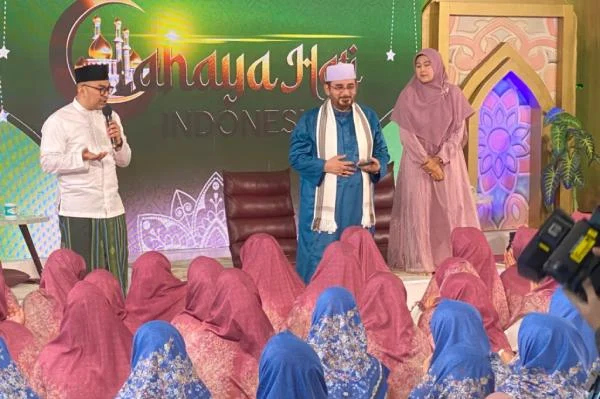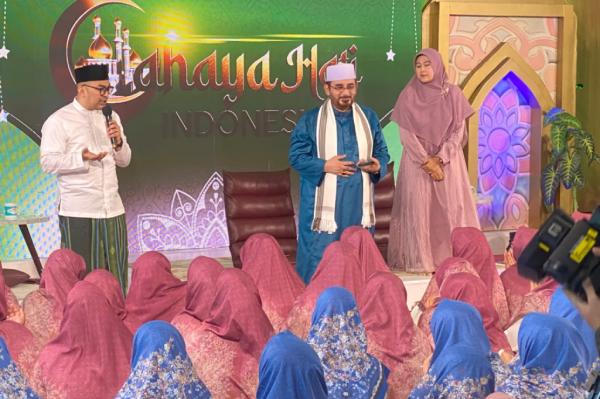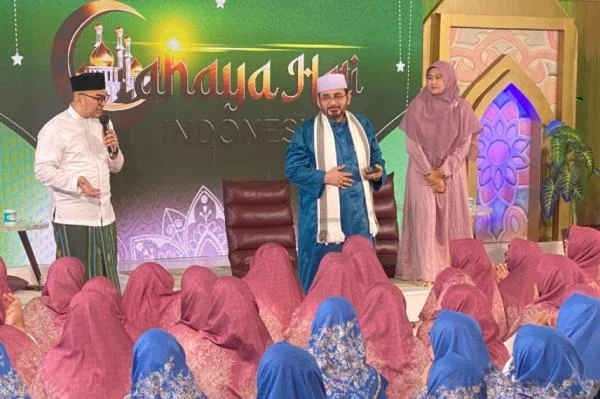
The landscape of religious broadcasting in modern television has long been populated by standard lecture formats, motivational speeches, and conversational panel discussions. However, finding a program that bridges deep scriptural scholarship with accessible public engagement remains a unique challenge in contemporary media production. Addressing this gap, prominent Islamic scholar Habib Nabiel Al Musawa recently highlighted the distinct broadcast identity of Cahaya Hati Indonesia, a flagship religious program aired on iNews TV. Following his live engagement and public discourse at Masjid Jami Nuurusan Saadah in Bekasi Utara, Bekasi City, Habib Nabiel shared profound insights into what sets this television program apart from conventional religious programming across national networks. His remarks draw attention to a deliberate structural choice: prioritizing comprehensive Quranic exegesis, known as tafsir, before transitioning into general spiritual counseling and public outreach.
The Growing Need for Contextual Religious Media in Indonesia
Television remains one of the most influential mediums for cultural and religious dissemination in Indonesia, reaching millions of households across diverse demographics. As religious broadcasting has evolved, programmers have continually sought ways to maintain viewer engagement while delivering substantive spiritual education. In an era dominated by short-form digital content and rapid social media soundbites, traditional television programs face the dual challenge of retaining audience attention and preserving intellectual and spiritual depth.
Cahaya Hati Indonesia has successfully navigated this complex media environment by positioning itself not merely as an entertainment or general talk show format, but as an educational and formative platform. By taking the production directly to local communities and neighborhood mosques, the program fosters a sense of direct participation, breaking down the physical and psychological barriers between high-level religious scholars and everyday citizens. This on-the-ground methodology ensures that the spiritual messages delivered are deeply rooted in the lived realities, socioeconomic conditions, and everyday concerns of the Indonesian populace.
Chronology and Background of the Bekasi Engagement
The statements made by Habib Nabiel Al Musawa were articulated on Sunday, November 8, 2026, following a major live recording and community gathering for Cahaya Hati Indonesia at Masjid Jami Nuurusan Saadah, located in the Bekasi Utara district of Bekasi City. The event drew hundreds of local residents, community leaders, and enthusiastic congregants who gathered to participate in the live broadcast and religious discourse.
The schedule for the day followed a meticulous production timeline standard to high-profile televised community events. Early morning preparations began with technical crew setups, sound testing, and community coordination, ensuring that the local mosque could comfortably accommodate both the live congregants and the mobile broadcasting unit. As proceedings commenced, local religious figures and community elders welcomed the iNews TV production team, setting a communal and devotional tone.
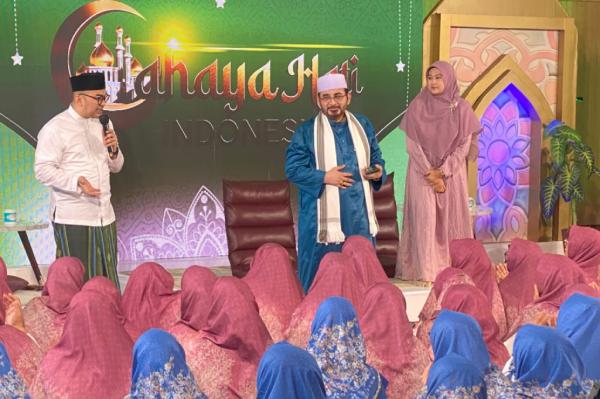
Habib Nabiel took center stage during the primary segment, delivering a powerful and engaging tausiah that resonated deeply with the attendees. The live interaction between the speaker and the audience demonstrated the program’s signature format—engaging directly with congregants, addressing contemporary societal questions through a spiritual lens, and anchoring every piece of advice directly to foundational Islamic texts. Once the recording concluded and the live broadcast wrapped, media representatives gathered to speak with the participating scholars, prompting Habib Nabiel to share his analytical perspectives on the unique positioning of Cahaya Hati Indonesia within the broader Indonesian television market.
The Distinctive Value Proposition: Prioritizing Quranic Tafsir
Elaborating on his appreciation for the program, Habib Nabiel emphasized that the defining characteristic of Cahaya Hati Indonesia lies in its pedagogical structure. Unlike many television broadcasts that rely primarily on generalized motivational speeches or situational anecdotes, Cahaya Hati Indonesia systematically integrates Quranic exegesis into its core format.
According to Habib Nabiel, every substantive segment and scholarly discussion is intentionally preceded or underpinned by a detailed exploration of tafsir. This methodological choice ensures that viewers are not simply receiving superficial behavioral guidance, but are instead being equipped with a rigorous, textually grounded understanding of the Quranic verses being discussed. By guiding the audience through the contextual background, linguistic nuances, and theological implications of specific passages, the program elevates the intellectual literacy of its viewing public.
"I want to convey this to all iNews viewers as well, so this Cahaya Hati iNews, Cahaya Hati Indonesia, is truly an extraordinary program. I have yet to find its equivalent on other television stations," stated Habib Nabiel during his interview with journalists following the Bekasi event. He underscored that the fusion of academic tafsir with accessible public communication fills a critical void in contemporary Islamic broadcasting, making complex theological concepts digestible without diluting their scholarly integrity.
Broader Industry Context: Audience Reception and Scholarly Appreciation
The commendation offered by Habib Nabiel Al Musawa does not exist in a vacuum; it aligns with a growing chorus of positive feedback from various religious scholars, community leaders, and regular viewers who have interacted with the Cahaya Hati Indonesia production over its tenure on iNews TV. Previous broadcasts from locations such as Masjid Baitul Mu’minin and other community hubs have similarly documented overwhelming public enthusiasm, marked by packed courtyards, active question-and-answer sessions, and sustained community engagement.
Other prominent religious figures, such as Ustadz Abdul Kaafi, have similarly voiced appreciation for the program’s ability to tailor educational content to the immediate social conditions of contemporary society. This shared ethos among participating scholars points to a deliberate editorial strategy by iNews TV: designing religious programming that is responsive, empathetic, and educationally robust. By decentralizing studio-based productions and traveling directly to neighborhood mosques across the region, the network bridges the gap between high-level theological discourse and grassroots communal life.

Implications for the Future of Religious Broadcasting in Indonesia
The success and critical acclaim of Cahaya Hati Indonesia offer vital lessons for the future of religious media production in Indonesia and the wider Southeast Asian region. As media consumers become increasingly discerning, the demand for authentic, substantive, and intellectually rigorous content continues to rise. Programs that underestimate their audiences by offering simplistic or repetitive messaging risk losing relevance in an increasingly competitive digital landscape.
Conversely, the model championed by iNews TV—combining on-the-ground community engagement with serious scriptural study like tafsir—demonstrates that audiences possess a strong appetite for substantive religious education. When complex theological frameworks are presented with clarity, empathy, and practical relevance, viewers respond with sustained loyalty and enthusiastic participation.
Furthermore, the integration of local mosques into national television broadcasts serves a dual purpose: it revitalizes community spaces as centers of active intellectual and spiritual life, while simultaneously providing national television audiences with an authentic window into grassroots Indonesian Islamic culture. This symbiotic relationship between broadcaster, scholar, and community strengthens social cohesion and promotes religious literacy on a national scale.
Conclusion
The insights shared by Habib Nabiel Al Musawa following the Cahaya Hati Indonesia event at Masjid Jami Nuurusan Saadah highlight an important benchmark in Indonesian religious television. By refusing to compromise on depth and insisting on the foundational role of Quranic tafsir within its broadcast framework, the program has established a unique standard for spiritual media. As iNews TV continues to take its production into local communities across the country, initiatives like Cahaya Hati Indonesia prove that television can remain a powerful, edifying force for cultural enrichment, spiritual growth, and intellectual development in modern society.