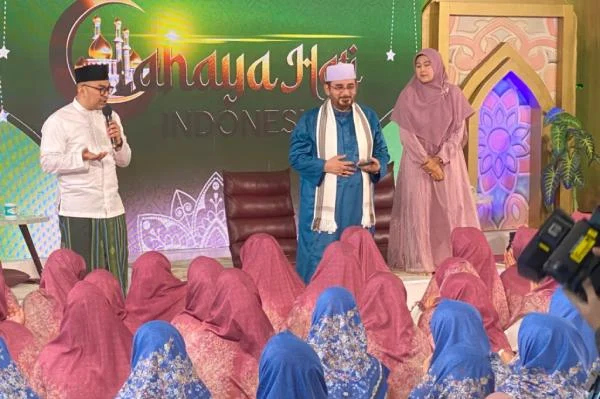
The landscape of television broadcasting in Indonesia has continually evolved to accommodate the spiritual needs of its vast Muslim majority, blending traditional Islamic values with modern media production standards. Within this dynamic sector, religious programs have emerged as a cornerstone for community engagement and moral education. Among the most prominent offerings in recent years is Cahaya Hati Indonesia, a flagship religious broadcast aired on iNews TV. The program has successfully captured the public imagination, securing a dedicated following both through terrestrial and digital television broadcasts as well as on-site congregation participation.
Recently, the host of Cahaya Hati Indonesia, renowned public figure and presenter David Chalik, shed light on the core elements that set the program apart from other religious broadcasts in the Indonesian media ecosystem. Speaking on Sunday, November 8, 2026, at the Nuurus Saadah Mosque in Bekasi City, West Java, Chalik emphasized that the program’s distinct identity lies in its deep-rooted commitment to foundational Islamic scholarship, specifically through structured Quranic exegesis, or tafsir.
The Distinctive Strength of Cahaya Hati Indonesia
According to David Chalik, the defining feature of Cahaya Hati Indonesia is its deliberate choice to ground every discourse and tausiah (religious lecture) in comprehensive Quranic tafsir before expanding into contemporary social and moral issues. This pedagogical approach bridges the gap between classical theological texts and the daily realities faced by modern Indonesian Muslims. While many television programs opt for general motivational speaking or generalized spiritual reminders, Cahaya Hati Indonesia maintains an educational rigor that appeals to viewers seeking a deeper, textually supported understanding of their faith.
"I see that religious programs, particularly Cahaya Hati Indonesia, possess a distinctiveness that serves as the primary strength of the program itself," Chalik stated during the community gathering at the Nuurus Saadah Mosque. He further explained that this methodological choice provides the audience with a reliable framework for interpreting religious texts, ensuring that the guidance delivered by invited scholars remains authentic, contextual, and directly tied to the Holy Quran.
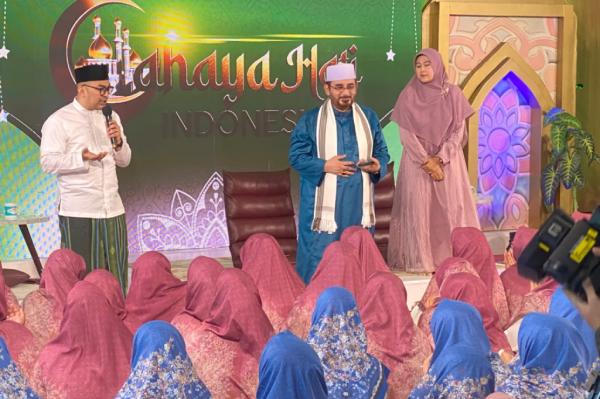
This unique broadcasting strategy has transformed the program from a conventional passive viewing experience into an interactive, community-driven event. The integration of live studio or on-site mosque audiences creates an atmosphere of communal worship and shared learning, which resonates deeply with viewers watching from their homes across the archipelago.
Overwhelming Public Enthusiasm and Community Engagement
The success of any television program is ultimately measured by its reception among the target audience, and Cahaya Hati Indonesia has consistently demonstrated robust engagement metrics. Chalik pointed out that the tangible enthusiasm of the public serves as undeniable proof of the program’s resonance. This enthusiasm manifests in two distinct ways: the high turnout of local congregations at on-location shooting venues, and the sustained viewership numbers recorded by iNews TV.
"We can measure this from two key indicators," Chalik explained. "First, look at the tremendous enthusiasm of the congregation present directly at the mosque during our recordings. Second, observe the consistent public interest from viewers watching via television broadcast. And what is the defining characteristic that drives this? It is the dedicated inclusion of Quranic tafsir studies."
The on-location format, which frequently brings the production crew and esteemed clerics directly into community neighborhoods and local mosques, fosters a sense of inclusivity and accessibility. Rather than isolating religious discourse within sterile television studios, Cahaya Hati Indonesia embeds itself within the social fabric of local communities, allowing residents to participate directly in the recording sessions, ask questions, and engage in direct dialogue with the visiting scholars.
A Tradition of Scholarly Excellence and Contextual Education
The enduring appeal of Cahaya Hati Indonesia is also supported by its roster of respected religious scholars, ustadzs, and habibs who bring diverse backgrounds, deep theological training, and engaging delivery styles to the screen. Over the course of its broadcast run, the program has frequently received accolades from prominent Islamic figures who recognize its value in contemporary Indonesian society.

For instance, prominent religious leaders such as Habib Nabiel Al Musawa have previously highlighted the distinct advantages of the program, noting that its format offers spiritual and educational depth that is rarely replicated across standard commercial television programming. Similarly, scholars like Ustadz Abdul Kaafi have publicly praised the show for its ability to deliver religious education that directly addresses the practical conditions, social challenges, and moral dilemmas experienced by ordinary citizens in their day-to-day lives.
By prioritizing issues that matter to the grassroots community—ranging from family ethics and economic integrity to social empathy and modern technological morality—the program ensures that ancient religious principles remain relevant and actionable in a rapidly changing world. The synthesis of rigorous scholarly commentary with practical life application has established Cahaya Hati Indonesia as a trusted source of spiritual guidance for families nationwide.
The Role of iNews TV in Promoting Quality Religious Content
As part of Media Nusantara Citra (MNC Group), iNews TV has consistently positioned itself as a leading news and infotainment network that also places significant emphasis on cultural and spiritual programming. The network’s investment in high-quality religious broadcasts like Cahaya Hati Indonesia reflects a broader strategic commitment to providing balanced, family-friendly content that caters to the spiritual demographics of Indonesia.
In an era where television networks face stiff competition from digital streaming platforms and social media content creators, traditional broadcast networks must innovate to retain viewer loyalty. By combining high production values, professional television hosting, respected clerical authorities, and live community engagement, iNews TV has successfully carved out a niche for premium religious broadcasting.
Furthermore, the integration of digital extensions—such as official WhatsApp channels for daily news updates, social media highlights, and catch-up viewing options on digital platforms—ensures that the program reaches a multi-generational audience. Younger viewers who consume media primarily through smartphones can easily access snippets, full episodes, and moral reflections, thereby extending the program’s educational footprint beyond traditional television households.
Broader Implications and Future Outlook
The sustained popularity of programs centered around Quranic tafsir, such as Cahaya Hati Indonesia, signals a broader cultural trend among Indonesian Muslims. There is an increasing public appetite for substantive, knowledge-based religious programming that goes beyond superficial motivation and delves into the linguistic, historical, and contextual dimensions of Islamic scripture.
Media analysts and cultural observers suggest that this demand for intellectual depth in religious media helps fortify communities against misinformation and extremist interpretations. When viewers are regularly exposed to structured tafsir delivered by certified, moderate scholars, they develop a more nuanced understanding of their faith that emphasizes tolerance, community welfare, and personal accountability.
Looking forward, the success of initiatives like the community outreach events at the Nuurus Saadah Mosque in Bekasi demonstrates the viability of hybrid broadcasting models. By merging on-the-ground social outreach with large-scale media distribution, television networks can foster genuine human connections while delivering enriching content on a mass scale.
As Cahaya Hati Indonesia continues its broadcast run on iNews TV, led by experienced presenters like David Chalik and supported by a rotating cast of esteemed religious educators, it remains a notable example of how television can serve as a constructive medium for moral education, community building, and spiritual enrichment in contemporary Indonesia.